
What should I ask a brand designer before hiring?
Ask who will do the work, which similar projects they have done, what the process and number of revisions are, exactly what you will receive, when it will be finished, whether the price is fixed, and whether you will own all rights after payment.
How do I compare two brand designer quotes?
Line up the deliverables, the number of concepts and revisions, the timeline and the ownership terms for each quote. Compare price only after the scope matches.
Should a brand designer include strategy?
For a new company or a rebrand, yes. A visual identity built without positioning and audience work tends to look generic. If strategy is not included, bring your own positioning to the kickoff.
Who owns the logo after a branding project?
You should, after final payment. Make sure the contract transfers all rights to the delivered work and that you receive editable source files.
What are red flags when hiring a brand designer?
No full case studies, a price before any questions, unlimited revisions with no process, vague ownership terms, and very low prices for a complete identity.
Before you hire a brand designer, ask questions that show who will do the work, how they think, what you get and what it costs.
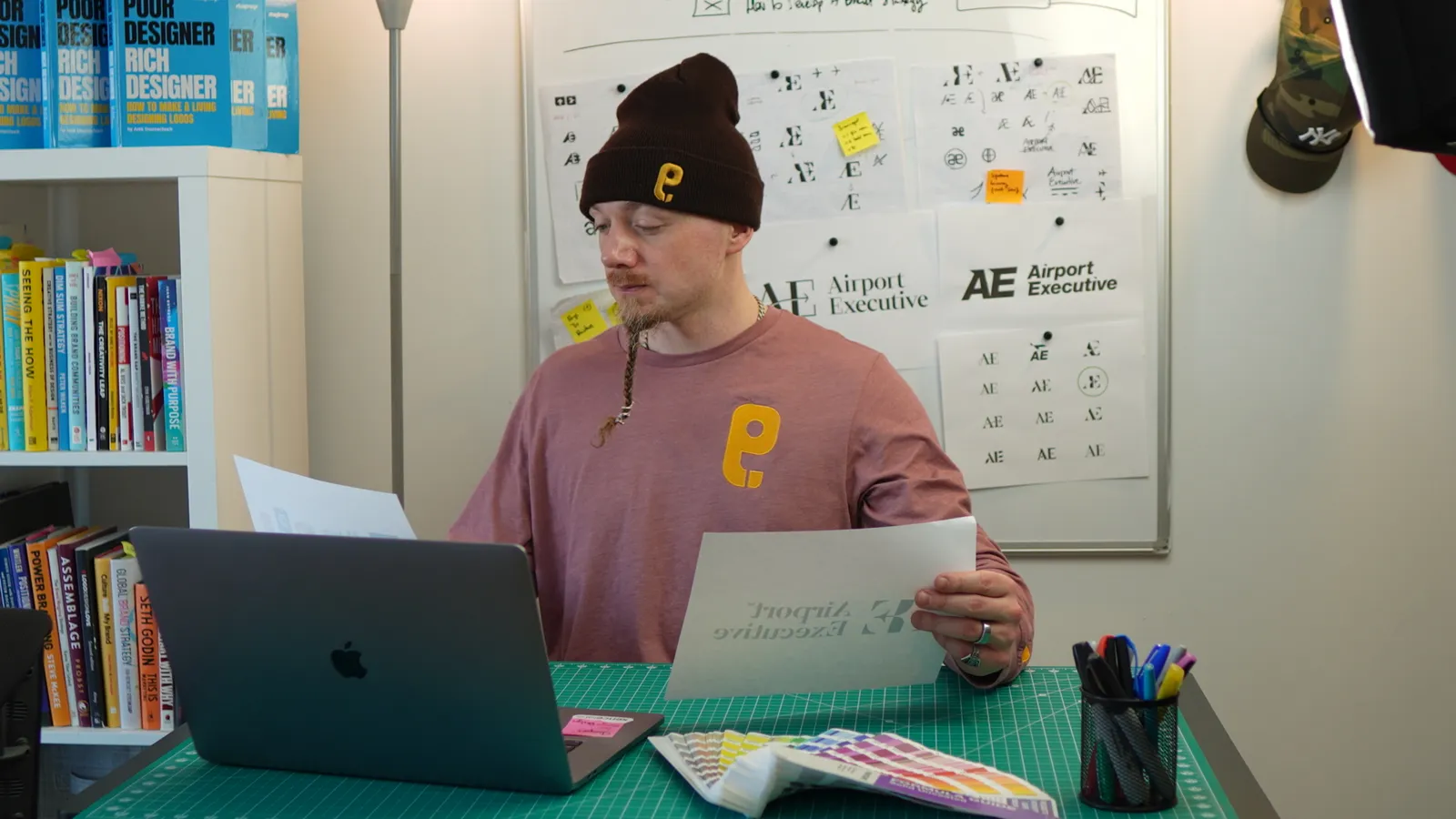
A portfolio shows taste, but it does not tell you how a designer works with a founder on a deadline.
These 20 questions cover the six things that decide whether a branding project goes well: fit, process, scope, timeline, price and ownership.
Under each question you will find why it matters and what a good answer sounds like, so you can compare designers on the same terms.
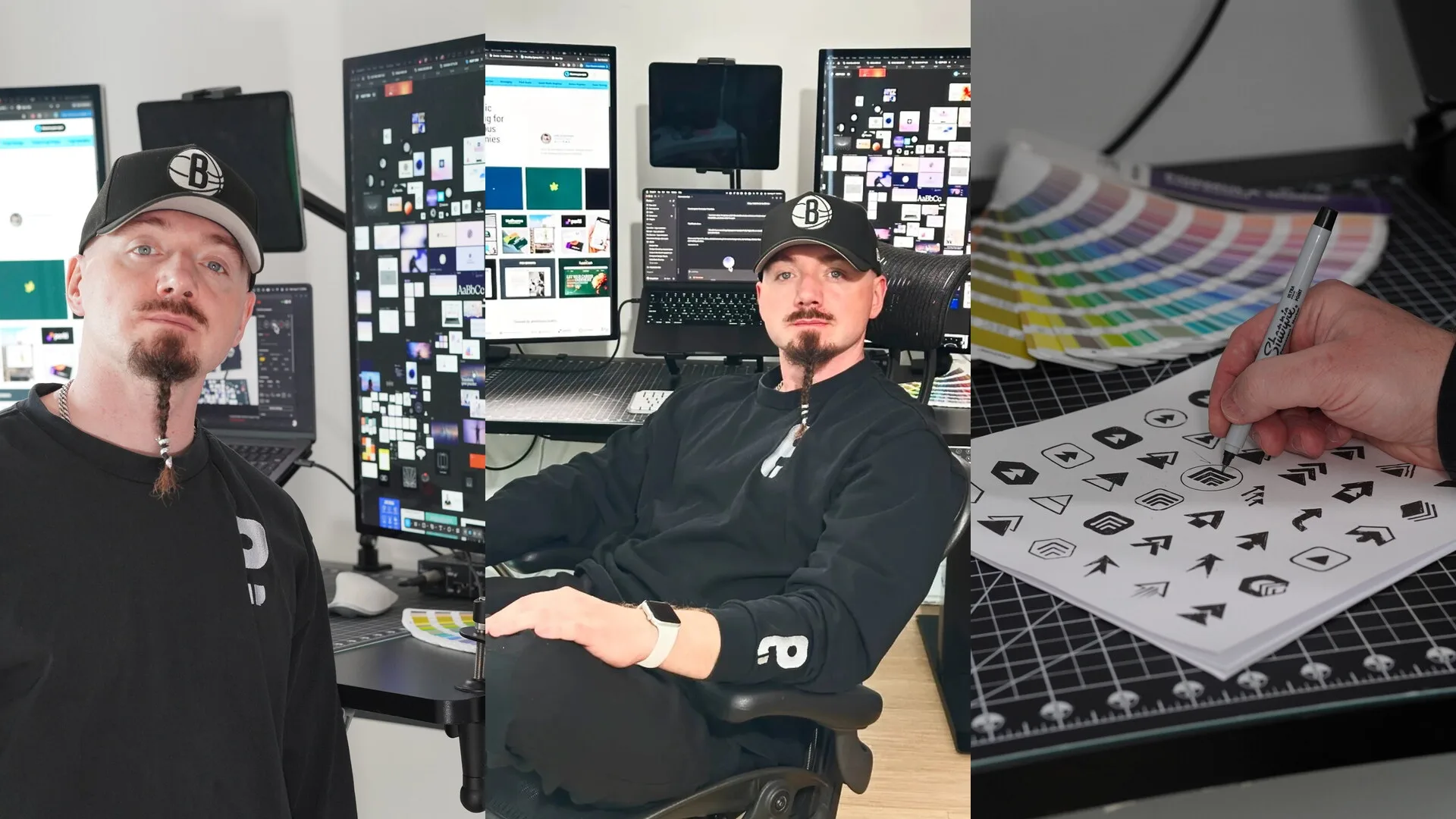
Disclosure: I am a senior brand designer myself, so at the end I answer the same questions for my own Brand Sprint, kept separate from the checklist.
Questions about fit and experience
Start by checking that the designer has solved a problem like yours, not just made attractive logos.
1. Who will actually design my brand?
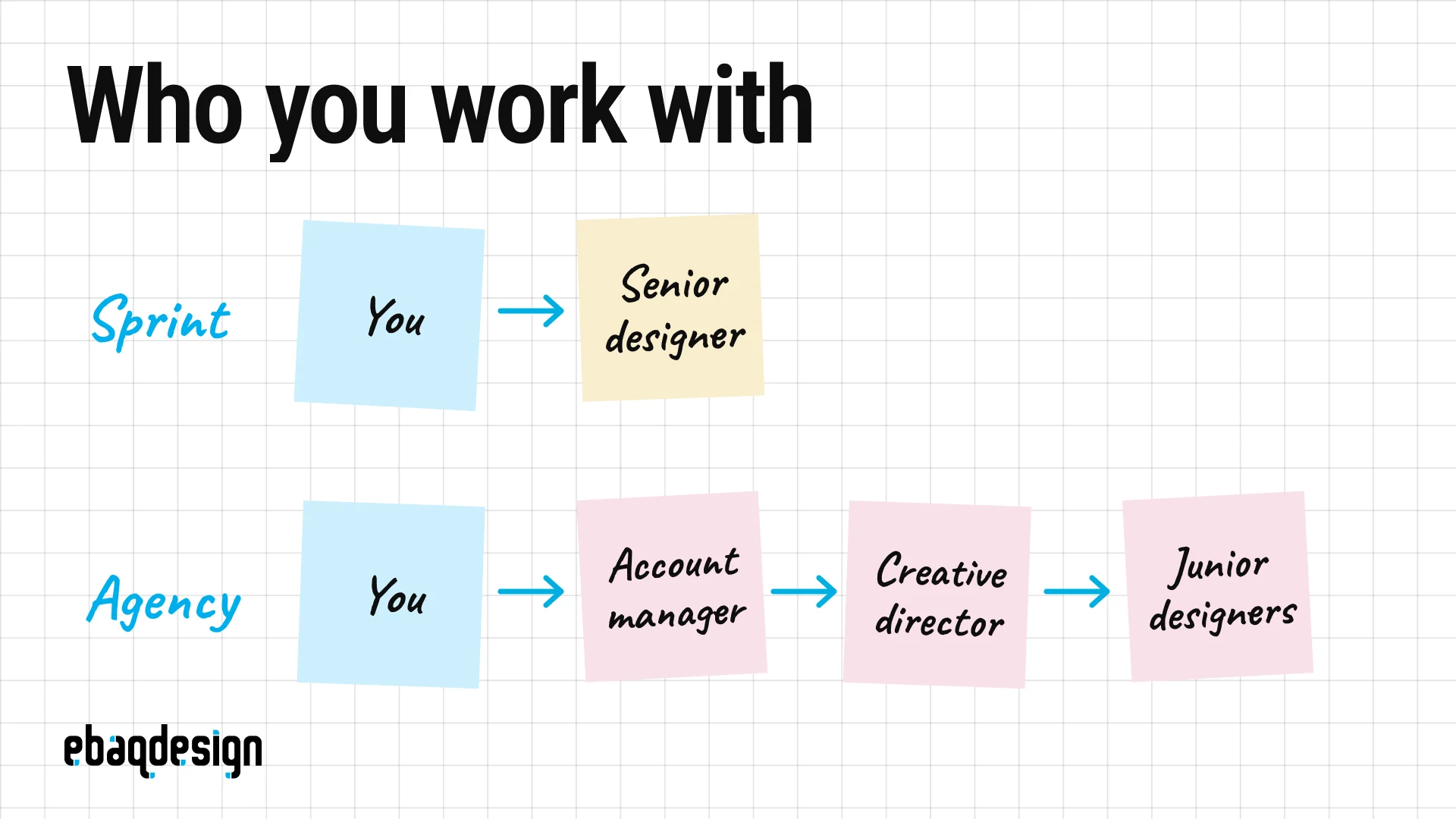
Agencies and some freelancers sell with a senior person and deliver with a junior one or a subcontractor.
A good answer: A name, and confirmation that this person does the strategy, concepts and final files.
2. Have you designed for a company at our stage or in our market?
A seed-stage SaaS startup needs a different brand from a luxury hotel or a consumer packaged good.
A good answer: Two or three relevant projects, with what the client needed and what changed after launch.
3. Can I see a full identity system, not just logos?
A logo on its own says little about whether the designer can build colours, type, layouts and guidelines that hold together.
A good answer: A case study showing the logo applied to a website, a deck, social posts and printed pieces.
4. Can I speak to a past client?
References tell you about deadlines, communication and how feedback was handled, which a portfolio never shows.
A good answer: One or two contacts, or public reviews on Google, Clutch or Contra that name the project.
Questions about process
A clear process is the best predictor of a calm project, because it shows the designer has done this many times.
5. What happens in the first week?
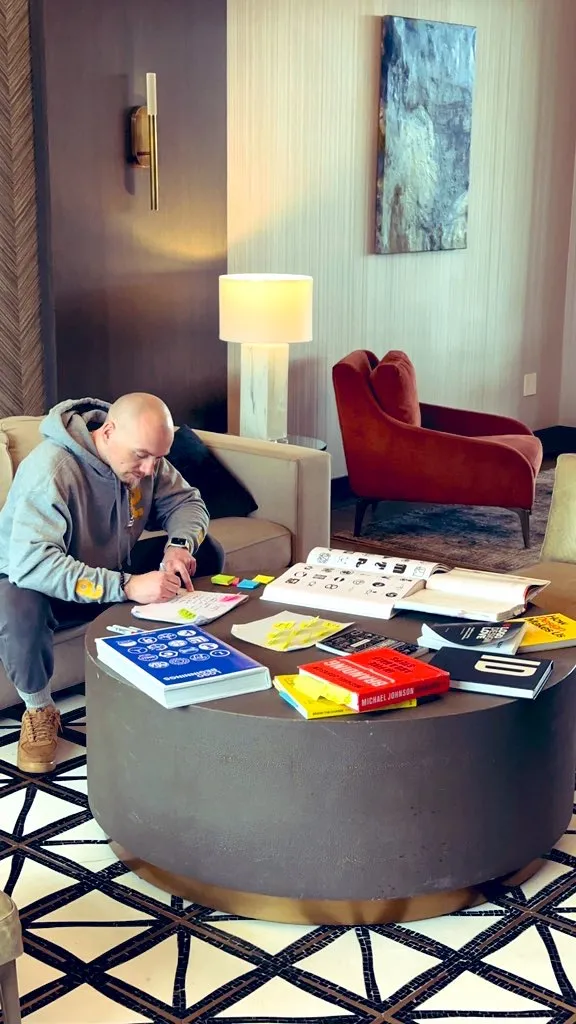
Good projects start with questions about your business, audience and competitors before any drawing.
A good answer: A kickoff call or workshop, a short written brief or strategy summary, and a date for the first concepts.
6. How many concepts will I see, and how are they presented?
One option leaves you no choice, and twenty unexplained options leave you no direction.
A good answer: A small number of distinct directions, each shown in real use, with the reasoning behind it.
7. How many rounds of revisions are included?
Unclear revision terms are the most common source of surprise invoices.
A good answer: A specific number of rounds, or revisions included within an agreed scope, written into the proposal.
8. Who makes decisions on our side, and when do you need them?
Branding slows down when feedback comes from a committee or arrives late.
A good answer: A named decision-maker on your side and fixed review dates in the schedule.
Questions about scope and deliverables
Two quotes can only be compared when you know exactly what each one includes.
9. What exactly will I receive at the end?
"Brand identity" can mean a logo file or a full system with guidelines and templates.
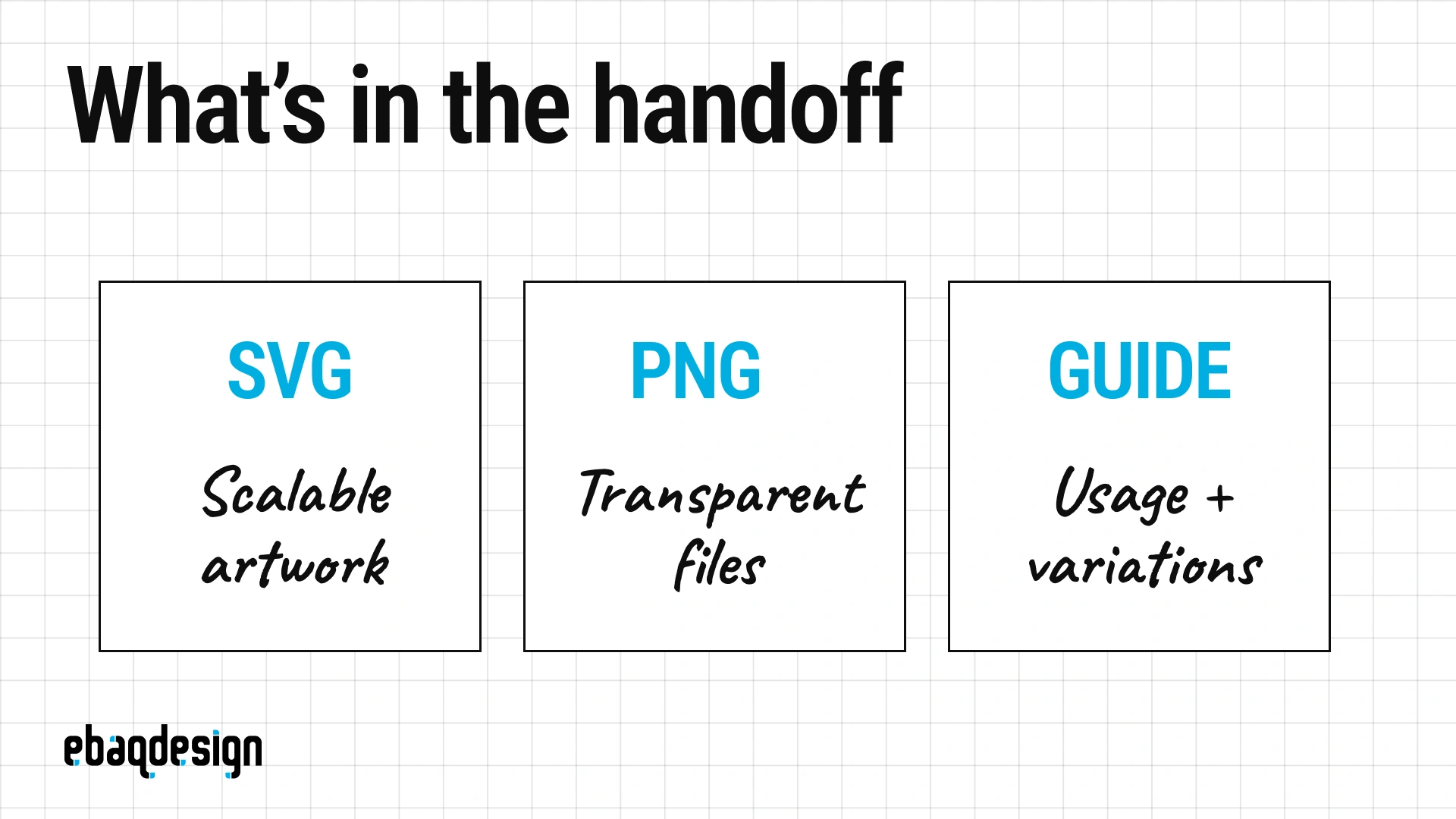
A good answer: A written list: logo variations, colour palette, typography, guidelines, and named assets such as business cards, social templates or a deck.
10. Do you include brand strategy or messaging?
A visual identity without positioning often looks good and says nothing.
A good answer: Either a strategy step in the scope, or a clear note that you need to bring the positioning yourself.
11. Can you also design the website and pitch deck?
Handing the brand to a different web designer often loses the details that made it work.
A good answer: A yes with examples, or the names of partners they work with and who manages them.
12. Which file formats will I get?
Your team, printers and developers all need different files.
A good answer: SVG and PNG logos in dark and light versions, plus editable source files such as Figma or Illustrator.
Questions about timeline
Founders usually hire a brand designer because a launch, a raise or a sales push has a date.
13. When can you start, and when will it be finished?
A great designer who cannot start for two months may not fit your deadline.
A good answer: A start date and a delivery date, with the review dates in between.
14. What would make the project run late?
Honest designers know their own risks, such as slow feedback or missing content.
A good answer: Specific risks and what each side does to avoid them.
15. Can it be done faster if we need it to be?
Some studios run focused sprints, while others only work in long phases.
A good answer: A realistic fast option with a fixed scope, not a promise to do the same work in half the time.
Questions about price and contract
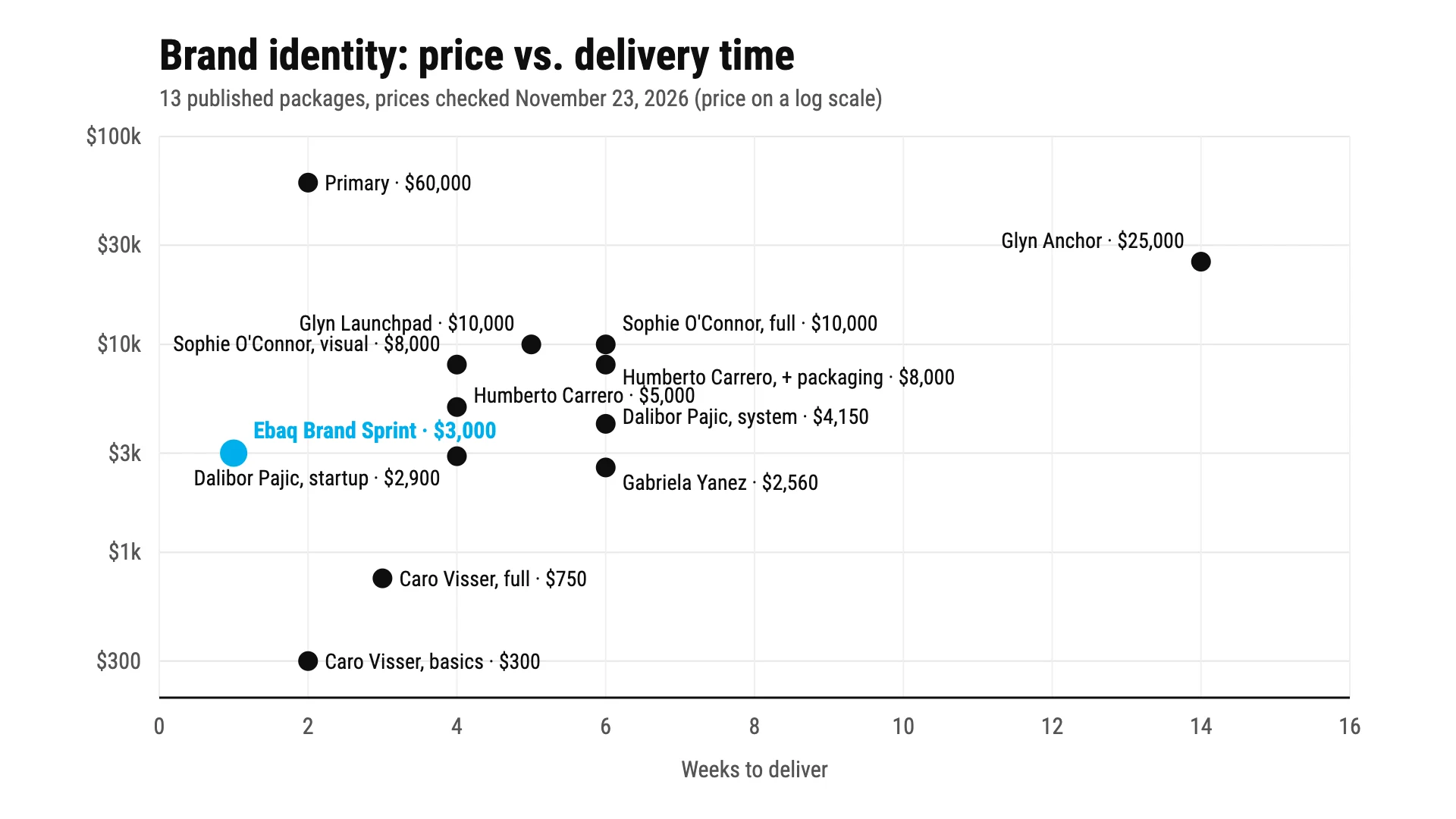
Price only means something next to scope and timeline, so ask about all three together.
16. Is the price fixed or hourly?
Hourly billing can make a branding project grow without anyone deciding it should.
A good answer: A fixed total for an agreed scope, or a clear estimate with a cap.
17. What would cost extra?
Extra rounds, new assets or rush work are common add-ons that change the final bill.
A good answer: A list of what is outside the scope and the rate for each.
18. What are the payment terms?
Payment terms tell you how much risk you carry if the project stalls.
A good answer: A deposit, a final payment on delivery, and what happens if you cancel.
Questions about ownership and handoff
Your brand is an asset, so make sure you own it outright when the project ends.
19. Will we own all rights to the final work?
Some designers keep rights to logos or charge for full ownership, which matters for trademarks and fundraising due diligence.
A good answer: Full transfer of rights to the delivered work after final payment, written into the contract.
20. What support do we get after launch?
New hires, a website or a trade show booth will need the brand applied in ways nobody planned for.
A good answer: Guidelines your team can follow without the designer, and a clear way to book follow-up work.
Red flags to watch for
Some answers should make you pause before you sign anything.
No case studies, only logos. It usually means the designer has not built full systems.
A price before any questions. A quote without a brief is a guess.
Unlimited revisions. It sounds generous, but it often means no clear process.
Vague ownership terms. If the contract does not say you own the work, assume you might not.
Very low prices for a "full identity". A few hundred dollars buys a logo, not a brand system.
A one-page checklist to copy
Copy these into your notes and score each designer you talk to.
- Who does the work, by name?
- Relevant projects at our stage or in our market?
- A full identity system in the portfolio?
- A past client or public reviews?
- What happens in week one?
- How many concepts, and how many revision rounds?
- The full list of deliverables and file formats?
- Strategy or messaging included?
- Website and pitch deck available?
- Start date, delivery date and review dates?
- Fixed price, extras and payment terms?
- Full ownership of rights after payment?
How I answer these questions
Since I wrote this list, here are my own answers, so you can compare them with anyone else you talk to.
You work with me, Arek Dvornechuck, a senior brand designer in Brooklyn with over 20 years of experience, previously at Chermayeff & Geismar & Haviv.
A complete brand identity or rebrand is delivered in one week for a flat $3,000, with several logo concepts, a logo animation, colours, typography, guidelines and launch assets.
Websites and pitch decks add weeks at the same weekly rate, and the scope and total are agreed before work starts.
You own all rights to the delivered work after final payment, with editable source files.
See the Brand Sprint, my pricing and past work, or compare options in best senior freelance brand designers.
Ready to build a brand people remember?
Tell me what you’re launching, changing, or trying to make look better.