
Logo Design
Branding Package For Small Businesses & Startups in 2026
Published on Sep 10, 2026
Table of contents
- What is a branding package?
- What is included?
- What does the branding process look like?
- How much does a branding package cost?
- My $3,000 branding package
- Frequently asked questions
Introduction
A useful branding package gives your small business the files and rules to look consistent wherever customers find you.
My current identity package is $3,000 for approximately one week, with a logo package, typography system, color palette, and an online one-page style guide.
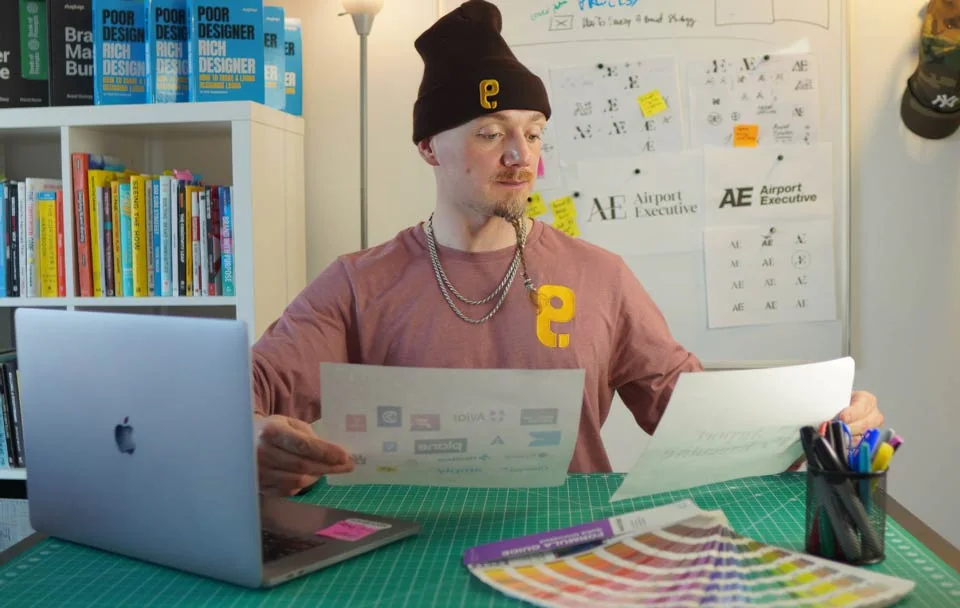
That means knowing which logo to put on your website, which fonts to use in a presentation, and how to keep your next piece of marketing consistent with the last.
I design identities for small businesses and startups, from professional services to software companies.
Below, I explain what clients receive, which extras need a separate scope, and how to compare proposals.
What is a branding package?
A branding package is a coordinated collection of brand assets and usage guidance built around your business.
The core visual identity usually includes a logo system, colors, typography, and a guide explaining how they work together.
Discovery connects those choices to your audience, positioning, and the impression you want to create.
Broader packages can also include messaging, imagery, templates, websites, or motion, but the phrase “branding package” does not promise a standard list.
You might need one when launching a business, repositioning an existing company, or preparing a more consistent presence for a campaign.
Start with the places your customers actually meet your brand, then agree on specific deliverables before design begins.
What is included in a branding package?
My core package covers the visual identity; the examples below also show how it can grow into a broader launch.
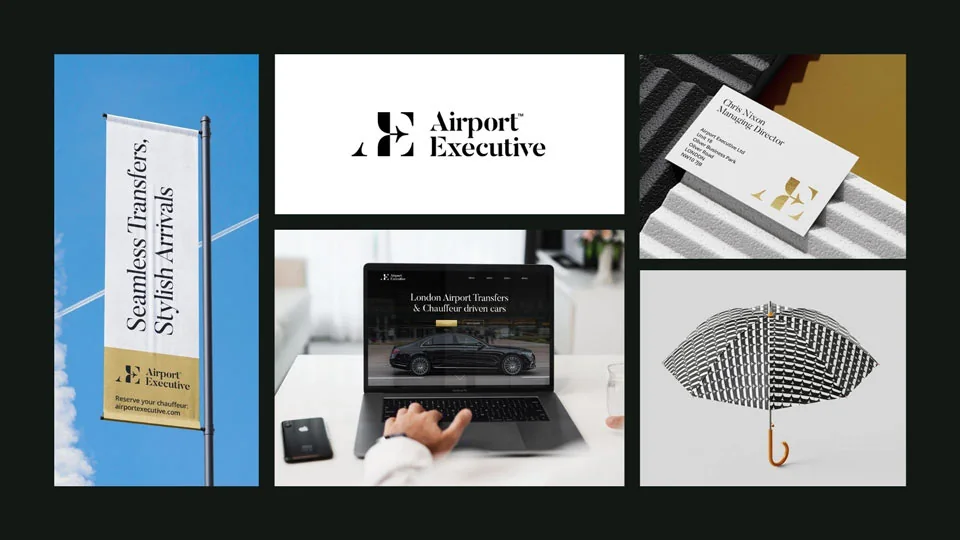
The Airport Executive example connects the same identity across stationery, a website, and other applications.
Notice how the logo and visual language carry across those formats; your own first applications might be a presentation and a landing page instead.
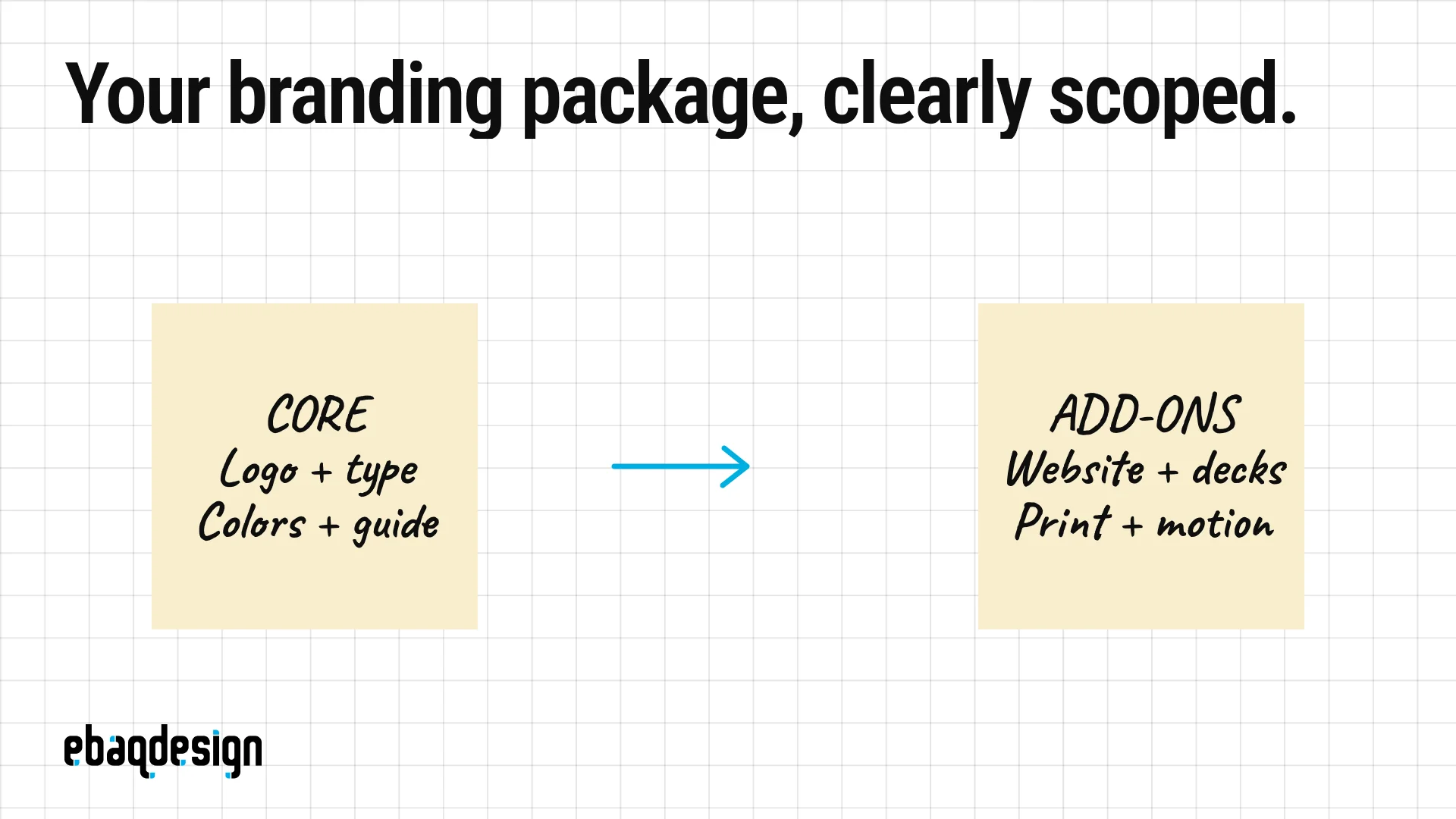
Core identity and optional additions
For $3,000, my focused package includes discovery and creative direction, a logo package, typography, a color palette, and an online one-page style guide.
A website, messaging project, stationery, decks, custom imagery, or motion can be added to the proposal.
Before starting, we agree on the exact logo versions, file formats, feedback process, and deliverables so both sides know what completion means.
1. discovery and creative direction
Discovery establishes what the identity needs to communicate and who it needs to reach.
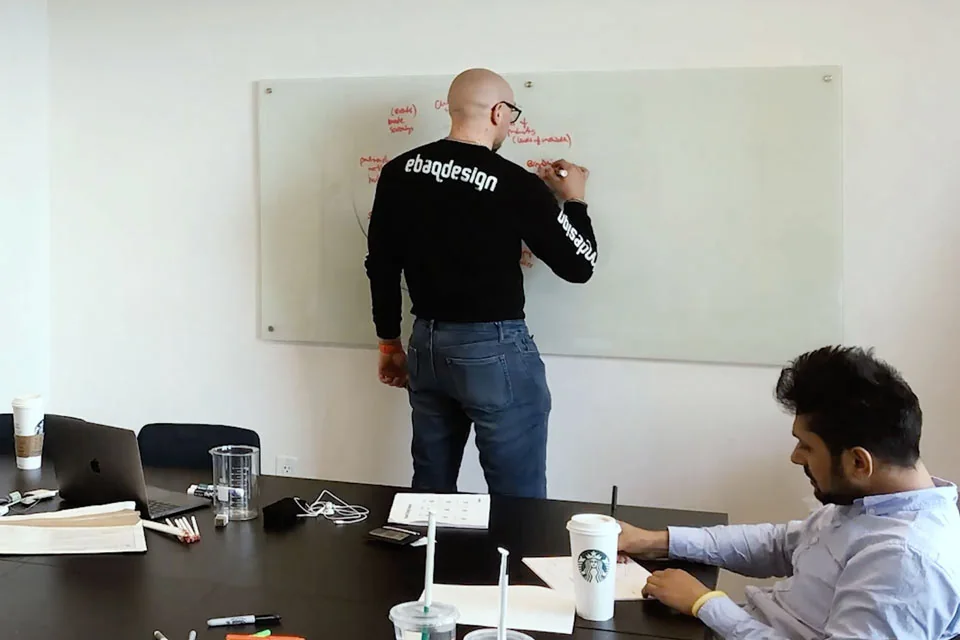
I ask about your vision, ideal customers, offer, competitors, and the reason for launching or changing the brand.
For a rebrand, we also discuss what people already recognize and what should remain.
- Who are you trying to attract?
- What makes your offer meaningfully different?
- What should people feel or understand at first glance?
- Where will the identity be used first?
The useful output is an agreed brief and direction, so feedback has a shared reference.
2. logo design and logo versions
You receive an approved logo system that works across the formats your business uses.
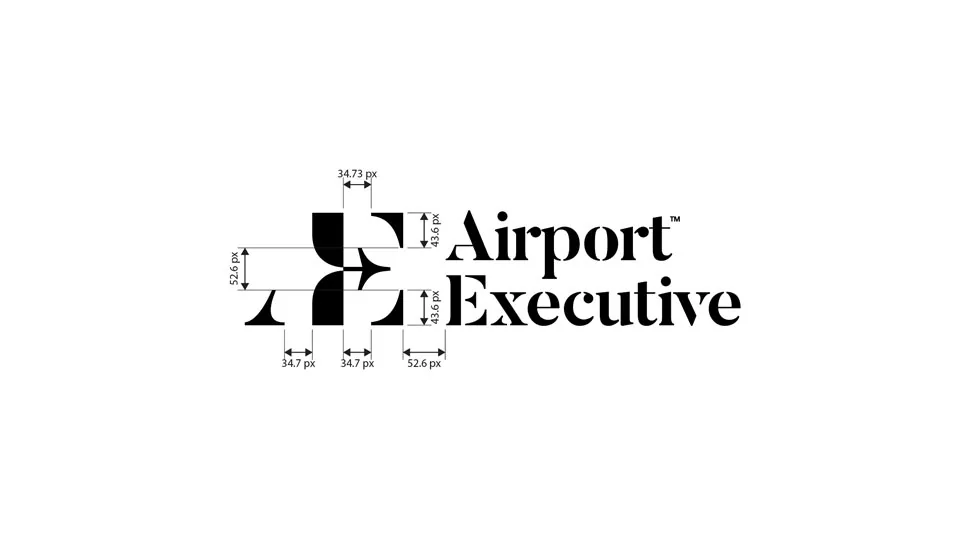
The Airport Executive construction graphic shows attention to spacing and alignment; those details help a mark feel deliberate at different sizes.
A package can include the primary logo, a secondary arrangement, and a compact mark or favicon where the design supports one.
Color, black, and reversed white versions help you use it on different backgrounds without improvising.
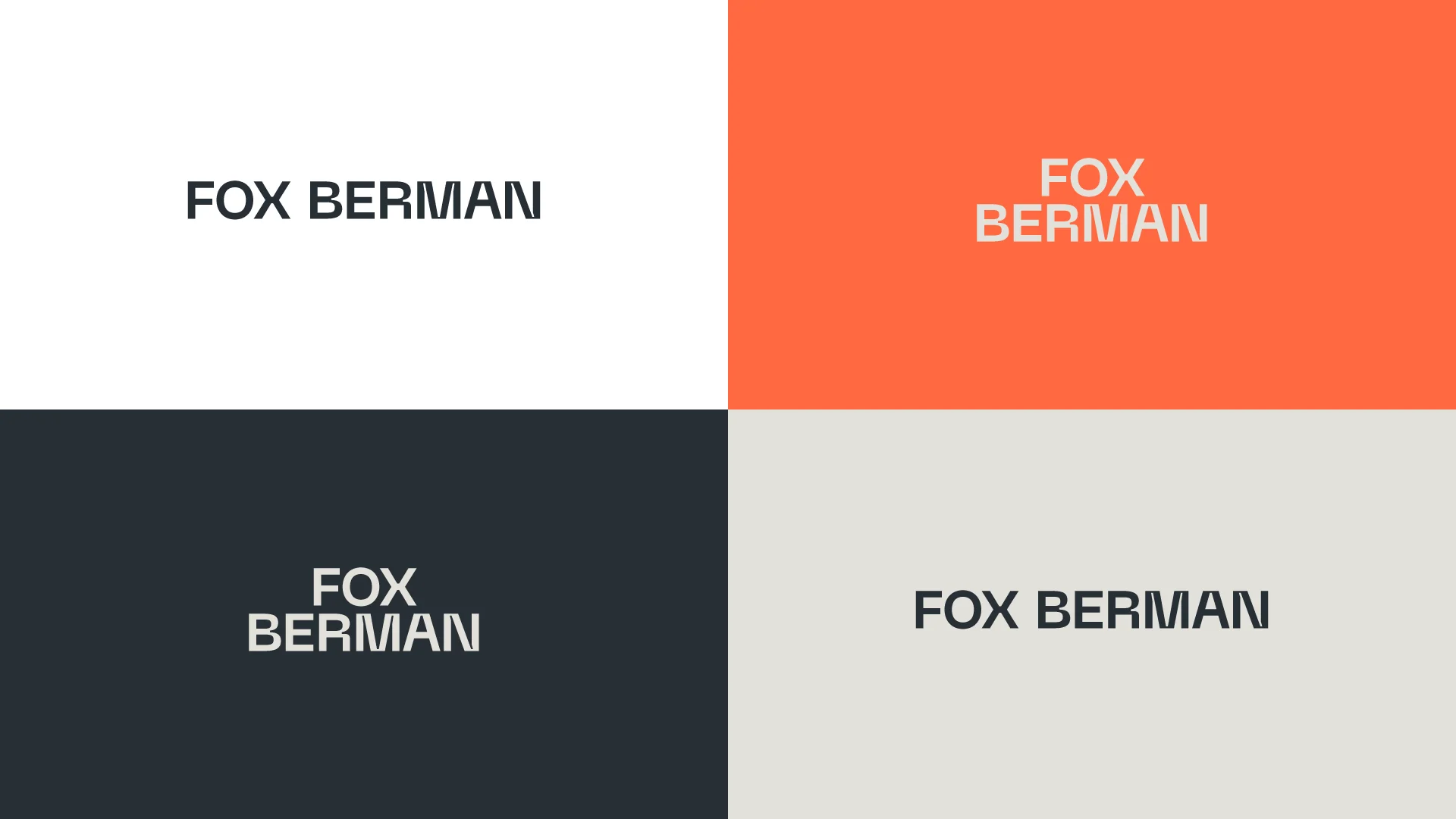
The Fox Berman example shows how alternative arrangements make one identity usable in spaces with different proportions.
Vector files keep the mark sharp at different sizes, while transparent PNG exports are convenient for everyday documents and digital use.
The goal is a simple, memorable, appropriate identity that stays legible in the places you need it.
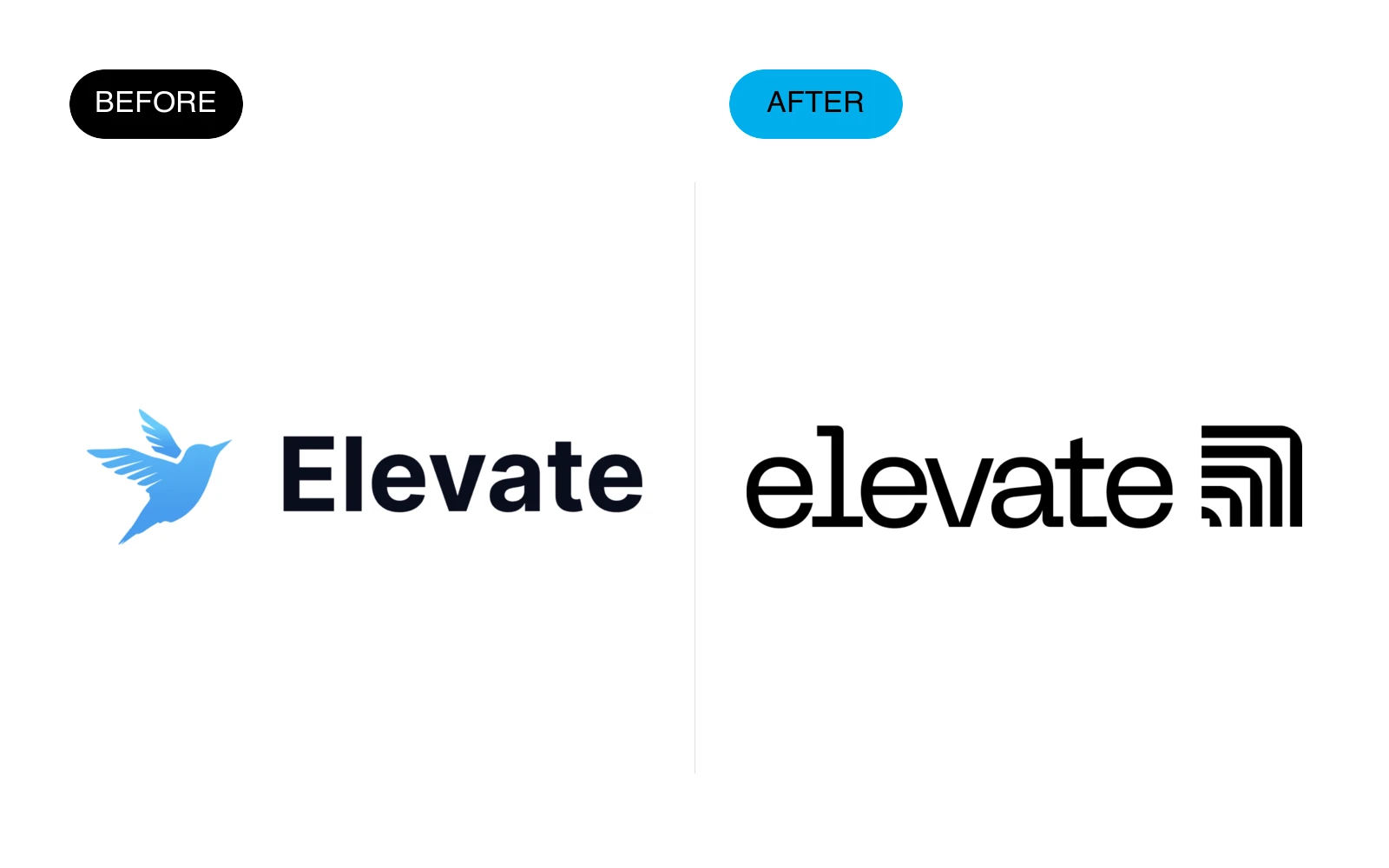
A rebrand can also preserve a useful idea while improving its execution, as this real Elevate comparison shows.
3. brand messaging
The visual direction needs a clear understanding of what your business stands for.
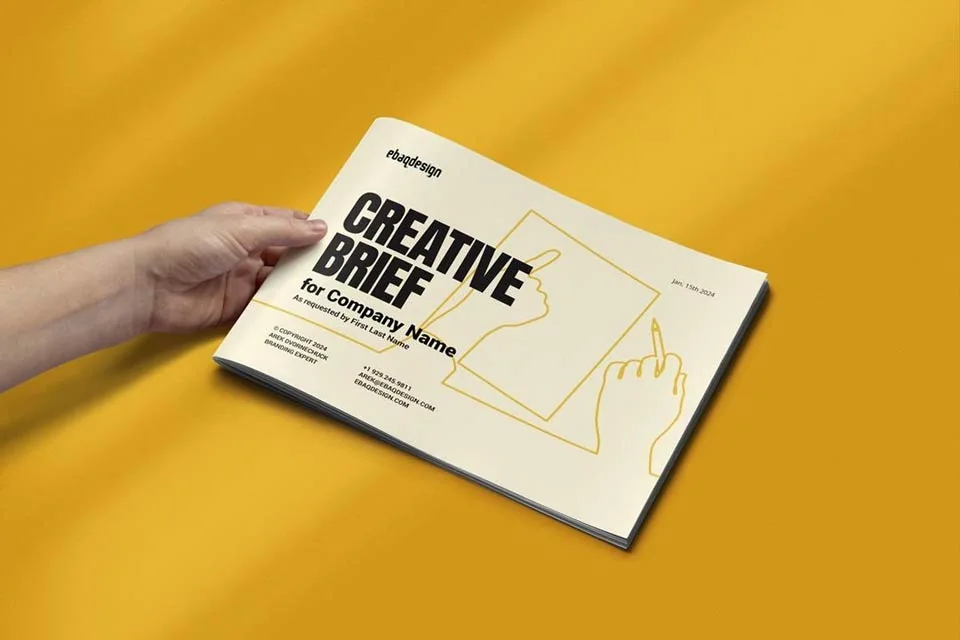
Your existing positioning, offer, and audience inform the brief and the identity presentation.
A dedicated messaging project can go further into a value proposition, tagline, brand voice, or website copy.
Ask whether you will receive a brief that guides the design or finished copy your team can publish.
4. color palette
A useful palette tells you which colors to use and how to combine them.
In the Fox Berman example, orange gives the identity energy while dark and light neutrals support text and backgrounds.
Your handoff should identify primary, supporting, and neutral colors with usable color values, rather than a screenshot of swatches.
HEX and RGB support digital work; print specifications should match the agreed production needs.
A palette also needs guidance about emphasis and background combinations so every new design does not become a fresh color experiment.
5. typography system
Typography gives your business a consistent voice across headlines, body copy, and smaller supporting text.
I specify the typefaces, weights, and hierarchy that suit the identity and its likely applications.
For example, your team should know how a presentation heading differs from a paragraph or a caption.
The handoff identifies font sources and any licensing needs so your developer and team can use the correct versions.
Commercial font purchases are a separate consideration to confirm in the proposal.
6. icons, illustrations, and photography direction
Supporting assets should solve a real communication need for your business.
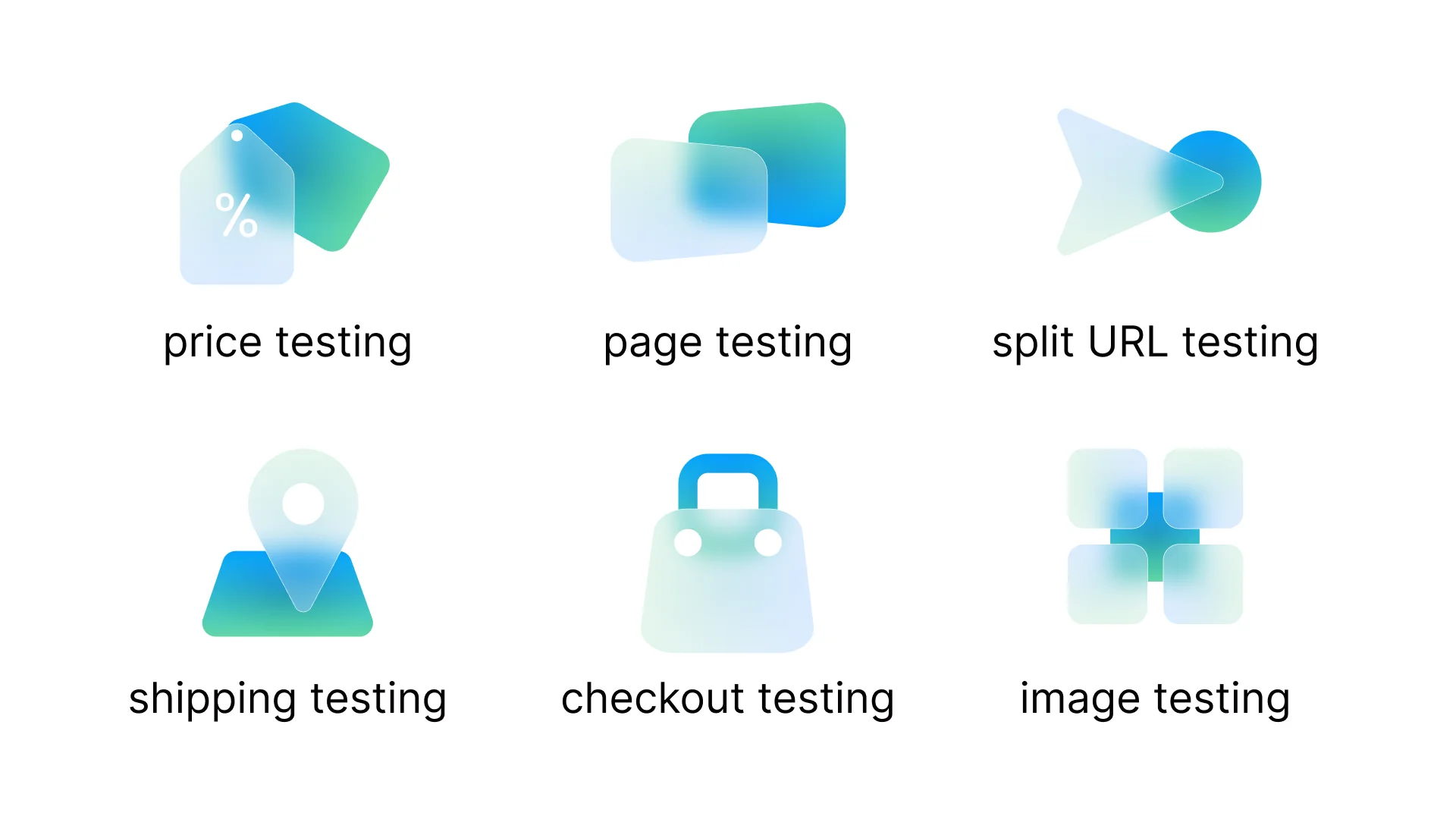
Elevate’s feature icons share a visual style while helping explain different kinds of testing.
A service business might instead need photography direction, a pattern, or a small illustration set.
For photography, useful direction covers subject matter, cropping, lighting, color treatment, and the space needed for text.
That gives a photographer or marketing team something concrete to follow when creating the next image.
Photography direction does not automatically include a photo shoot, image licensing, or a library of illustrations.
7. brand style guide
The guide brings the approved identity into one reference your team can share.
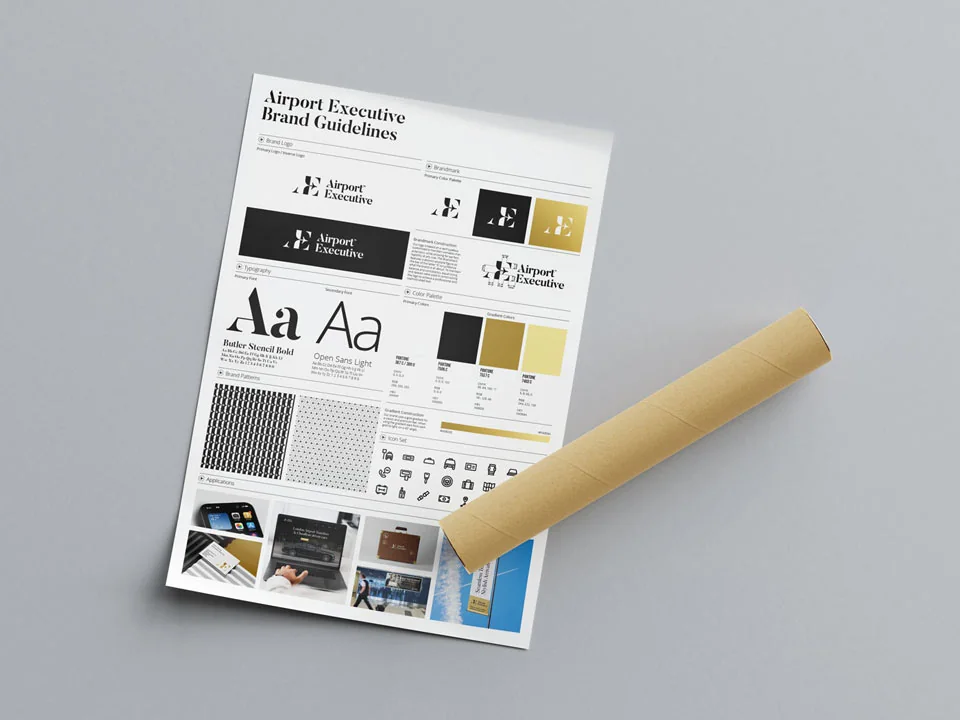
My core package includes an online one-page style guide covering the logo system, typography, color palette, and essential usage rules.
It answers everyday questions such as which logo belongs on a dark background and which typeface to use for a heading.
A comprehensive guide adds depth through more application examples, detailed imagery direction, messaging rules, or guidance for a larger team.
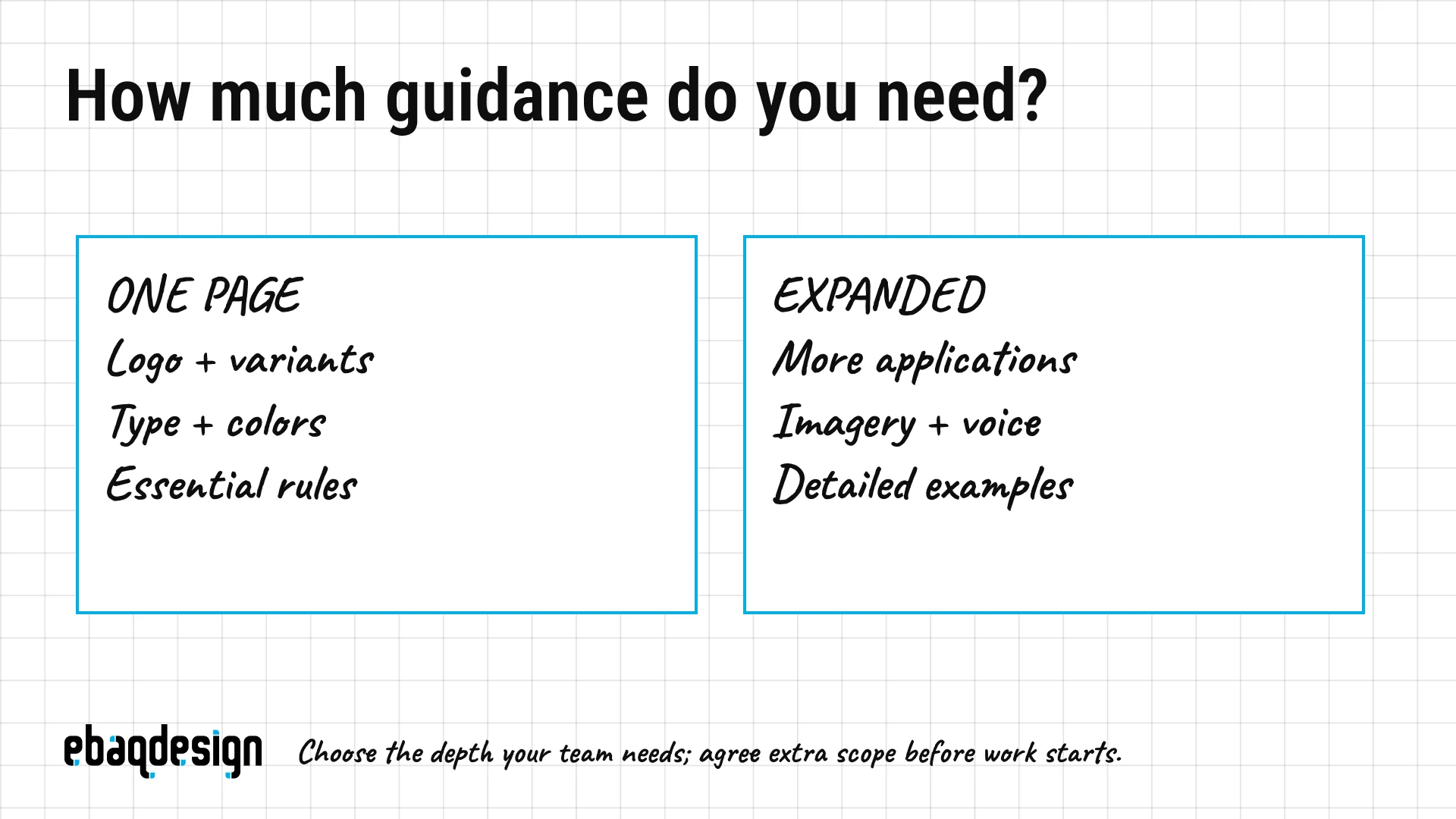
The difference is the breadth of decisions documented, not whether the guide is a website or a PDF.
8. stationery, presentations, websites, and motion
Once the identity is established, we can apply it to the materials your business needs next.
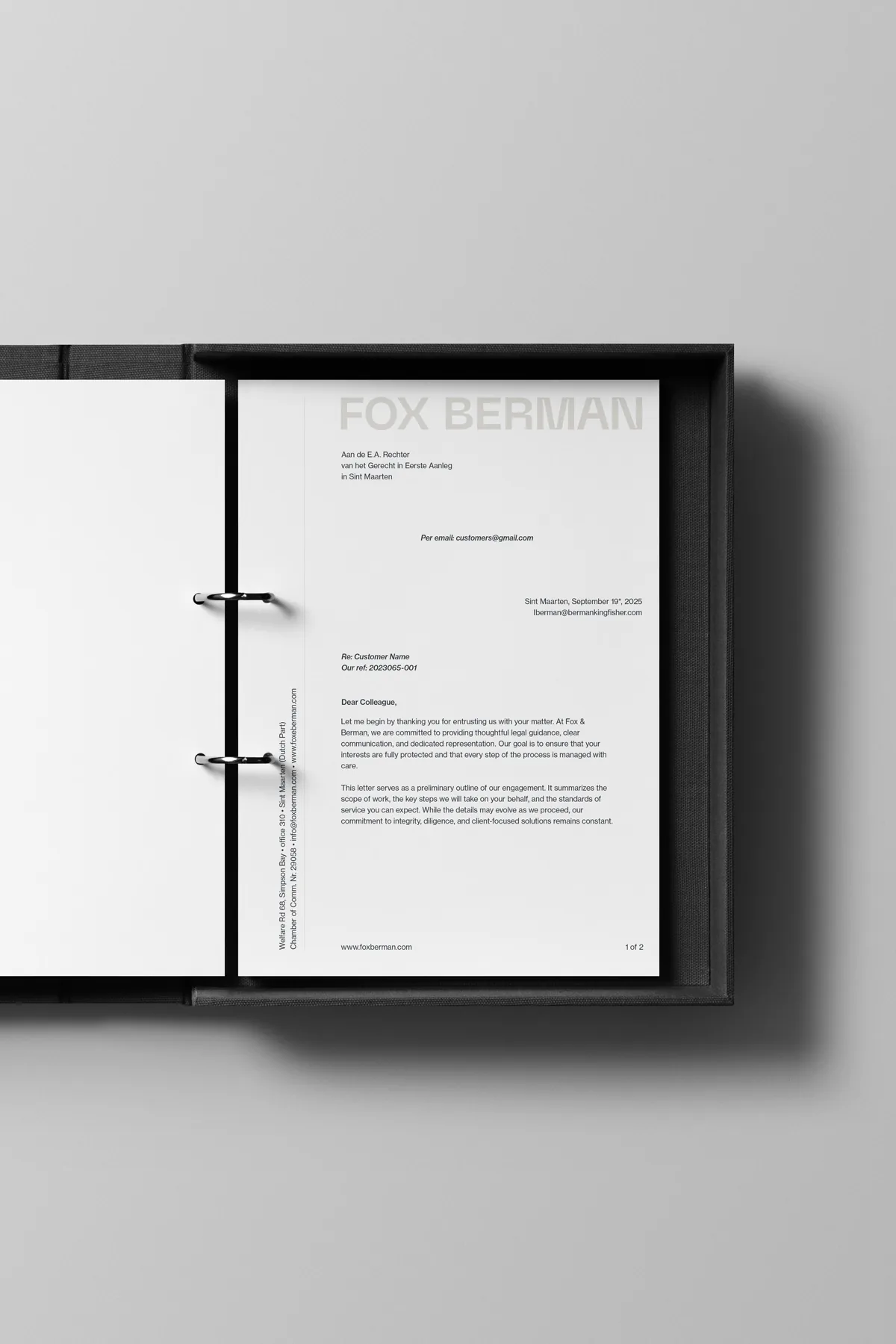
Additional scope can include business cards, letterhead, stationery, pitch decks, presentation templates, or a homepage or landing page.
For a template, specify the editable format and the layouts your team will reuse; a polished mockup alone is not a working template.
For a website, clarify whether the deliverable is design, development, or both.
Motion can bring the same system into social posts, presentations, or a website.
What does the branding process look like?
My process moves from understanding your vision to delivering a system you can use.
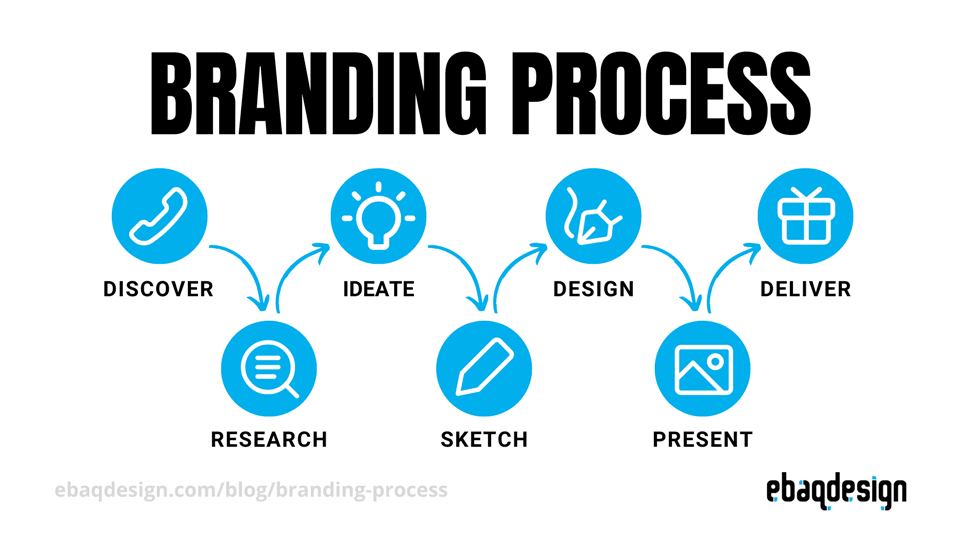
For the focused package, these stages fit into approximately five working days, with scope agreed and feedback available when needed.
1. discover
We discuss your business, audience, goals, and current materials, then decide what success looks like.
Bring the materials you already use and explain what is changing; we turn that context into a brief you can review.
2. research
I review competitors and relevant references to identify a clear creative direction.
We discuss which references suit your audience and which would make your business look too similar to competitors.
3. ideate
I explore visual ideas that connect the brief to a distinctive identity.
The brief acts as the filter, so the exploration stays connected to your business rather than personal taste alone.
4. sketch
I develop and refine promising logo ideas before moving them into finished digital form.
Sketching helps test the underlying idea before time goes into polished artwork.
5. design
I build the logo, typography, and colors together, testing how they behave as a system.
You see how the direction works in relevant applications, not only as an isolated logo.
6. present and refine
I present the identity in context, explain the reasoning, and make the scoped refinements we agree on.
Consolidated feedback from the decision-maker helps the project stay focused and on schedule.
Tell me what supports the brief and what needs clarification; agree in the proposal how revision rounds and changes of direction will be handled.
7. deliver
I organize the approved assets and complete the online guide by the end of the planned week.
We check the handoff against the agreed deliverables so you know which assets to share with your team or developer.
Added deliverables, a change of direction, or delayed feedback can extend the schedule.
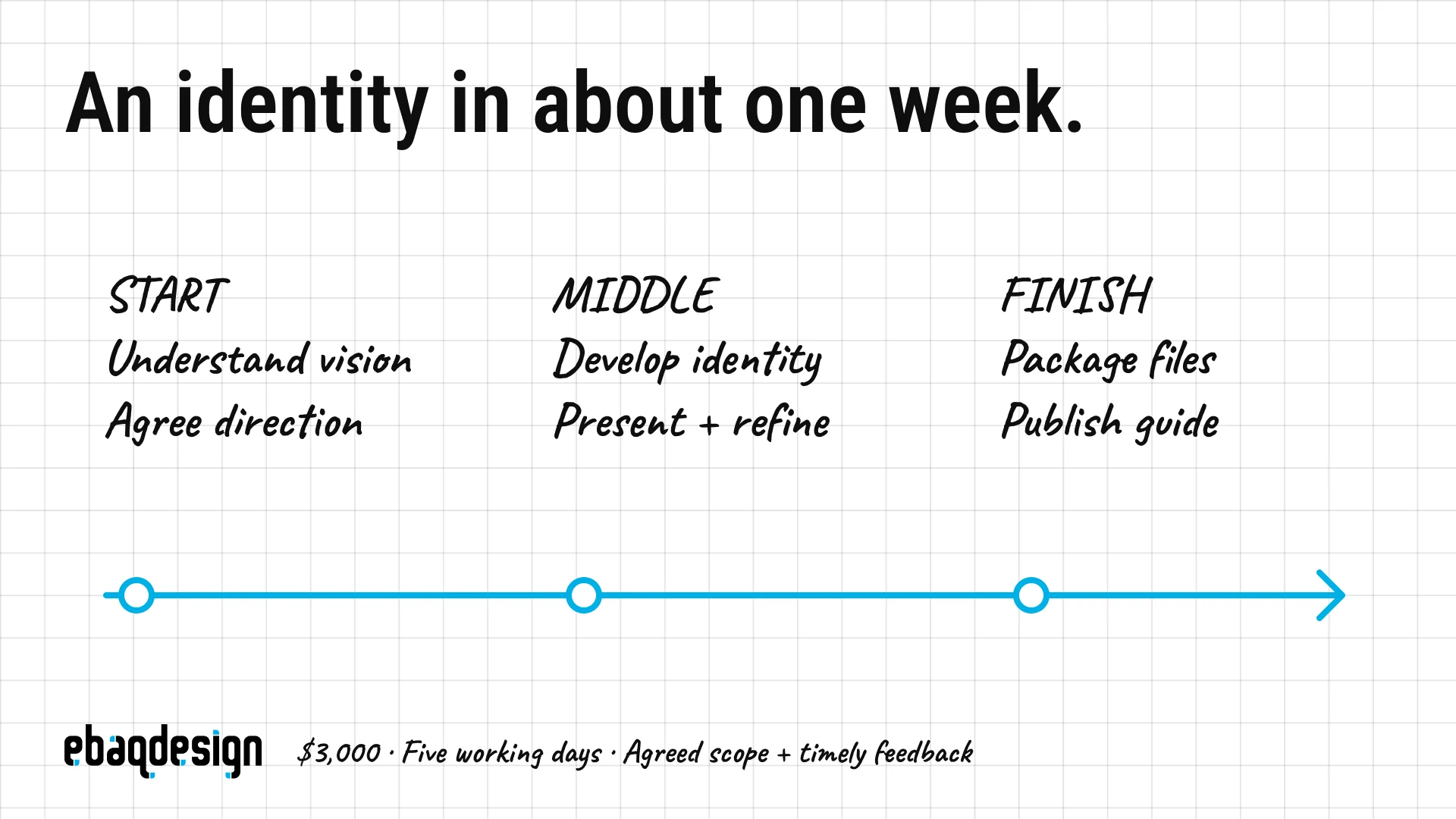
For the detailed walkthrough, see my branding process.
How much does a branding package cost?
Compare the actual scope and deliverables before comparing prices.
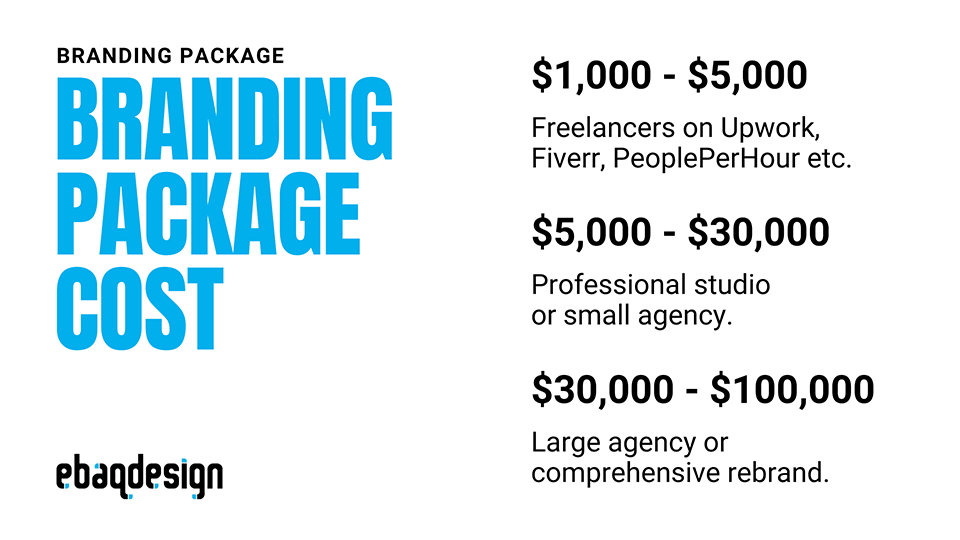
The original graphics below illustrate broad budget tiers, not fixed minimums for freelancers or agencies.
Smaller offers can fall below those brackets, while a larger project can exceed them; the advertised examples that follow show why the deliverables matter.
Here are public provider examples checked on September 10, 2026; these are advertised offers, not a market average or a quality ranking.
- Evoke Studio advertises a package starting at $500, including logo variants, colors, font pairing, a PDF guide, business cards, email signature, and social templates, with a stated 10–14 business day turnaround.
- Pujol Design lists a $1,500 Starter Brand Kit with logo, palette, font pairing, icons, and a simple style sheet, and a $3,000 Full Identity Package with a logo suite, colors, fonts, social templates, and brand guide.
- Ebaqdesign: $3,000 for approximately one week focused on the agreed core identity and online one-page guide, with additional applications scoped separately.
Confirm current pricing, currency, revisions, licensing, and final outputs directly with each provider.
For a fuller pricing breakdown, read how much a logo costs.
Choosing a freelancer or studio
Look for relevant completed work, a clear process, and a proposal that names the files, refinement limits, schedule, and total fee.
A freelancer can deliver a thoughtful identity, and a studio can offer a narrow package; assess the work and scope rather than assuming quality from the business label.
Use Behance’s branding portfolios to inspect real applications, then discuss your own needs directly.
Freelancers
Working directly with a freelance designer gives you one point of contact for the identity.
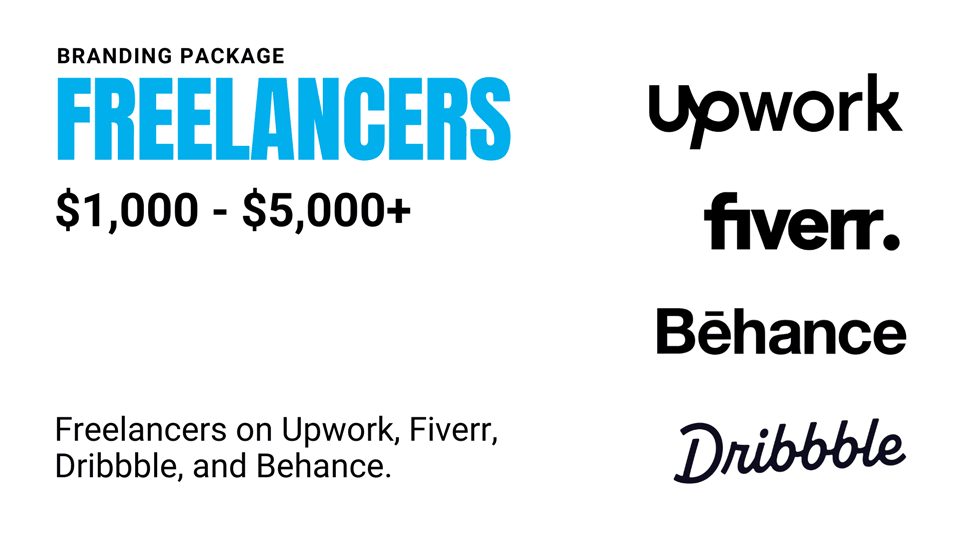
Review completed projects and ask who handles strategy, design, and production before agreeing on the scope.
Small studios and agencies
A small studio can bring several specialists together around your brand.
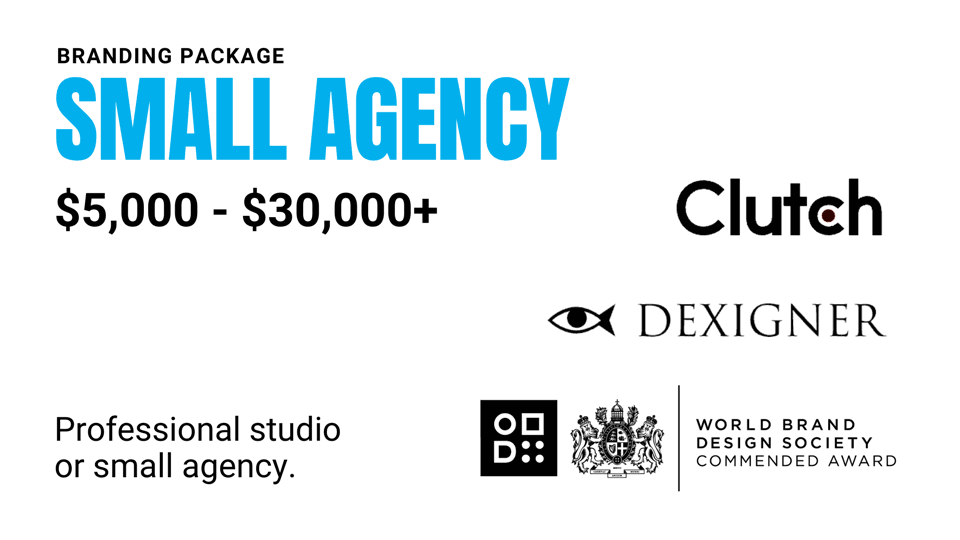
Check which services are included and which are supplied by outside collaborators, especially when you need messaging or a website.
Larger agencies
A larger agency may suit a project with multiple stakeholders, markets, or launch requirements.
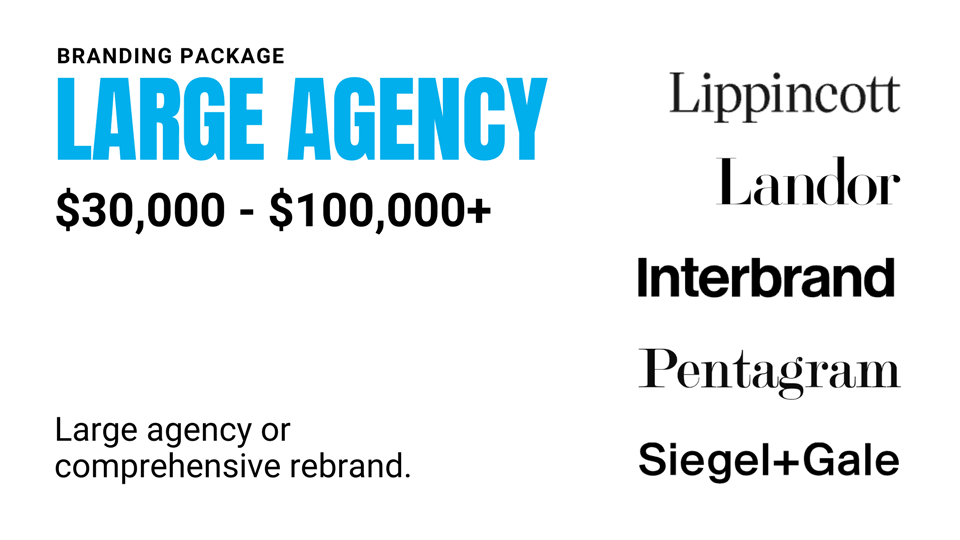
Ask how the team will manage research, approvals, and rollout, and whether that level of support fits your business.
What to check in a branding proposal
Compare proposals against the same questions before choosing a designer.
- Deliverables: Which logo versions, guide, and applications are included?
- Usable files: Which editable and exported formats will your team receive?
- Rights and licenses: What rights transfer, and are fonts or third-party assets licensed separately?
- Feedback: How many directions and revisions are included, and how are additional changes handled?
- Schedule: What must you supply, who approves the work, and what happens if feedback is delayed?
- Total cost: What is included in the fee, and how are additions quoted?
My $3,000 branding package
My focused package is designed for small businesses and startups that need a cohesive identity they can put to work.
It suits a focused launch or refresh where the business can make timely decisions and start with the core identity.
If you need naming, extensive research, several stakeholder approvals, or a full website rollout, discuss a broader project and schedule with me.
For $3,000 and approximately five working days, we understand your vision, develop and present the identity, make scoped refinements, and hand over the approved package and online one-page guide.
The core covers logo versions, typography, colors, and essential guidance.
Your proposal records the deliverables and the feedback needed to keep the project moving.
A website, pitch deck, stationery suite, extensive illustrations, or animation can be added with an appropriate fee and schedule.
Tell me what you are launching and which materials you need first.
Frequently asked questions
Can I get a branding package without a website?
Yes, the $3,000 core identity package can stand on its own.
Website design or development is an additional scope, so you can use the identity with your existing site or build a new site later.
What should I prepare before we start?
Bring your existing brand assets, a description of your audience and offer, useful references, and the materials you need first.
Identify who will approve the work and discuss your launch date so we can agree on a realistic schedule.
What files will I receive?
The handoff includes the agreed logo versions and formats, typography and color specifications, and the online style guide.
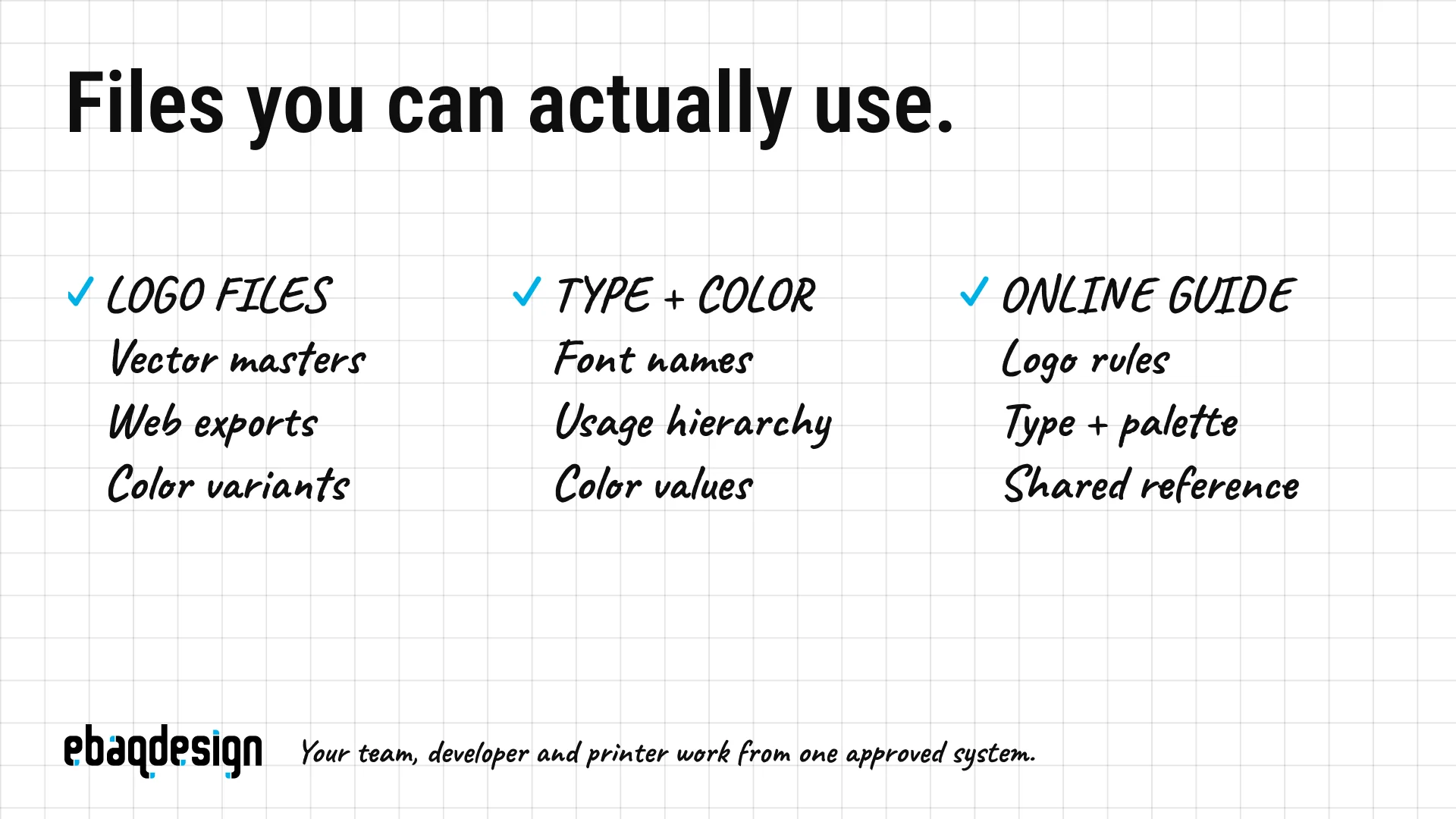
For example, your developer needs scalable logo artwork and color values, while your team may use transparent PNGs in documents.
Any additional templates should arrive in the editable format agreed for your workflow.
How are revisions and ownership handled?
Ask for revision limits, usage rights, source-file delivery, and any third-party licensing costs to be written into the proposal.
Those details should be agreed before the work begins rather than inferred from a portfolio example.
Conclusion
My advice is to choose the identity you can put to work now, with clear rules for using it as your business grows.
Compare the actual deliverables, look at relevant work, and make sure you understand the feedback and handoff process.
If you need a focused identity for your small business or startup, get in touch and tell me about your business, launch timing, and the materials you need first.
We can discuss whether my $3,000 package fits or whether your project needs a broader scope.
Ready to build a brand people remember?
Tell me what you’re launching, changing, or trying to make look better.