
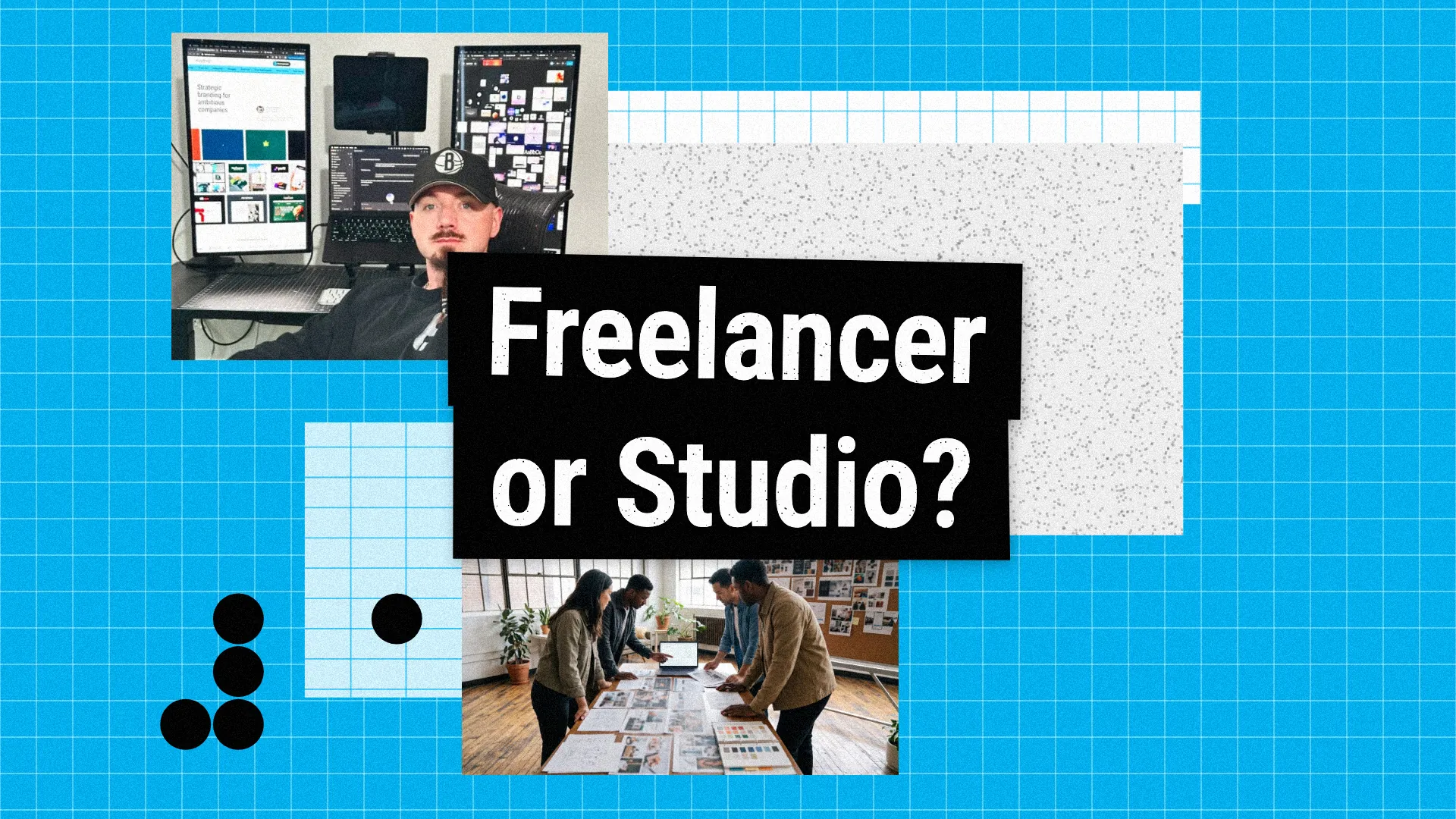
Is it better to hire one senior freelancer or a small studio?
For a focused brand identity with one decision-maker, a senior freelancer is usually better: one experienced person, a faster timeline and a lower price. A small studio is better when the project spreads across research, a large website, packaging and ongoing work at the same time.
Is a freelance designer cheaper than a design studio?
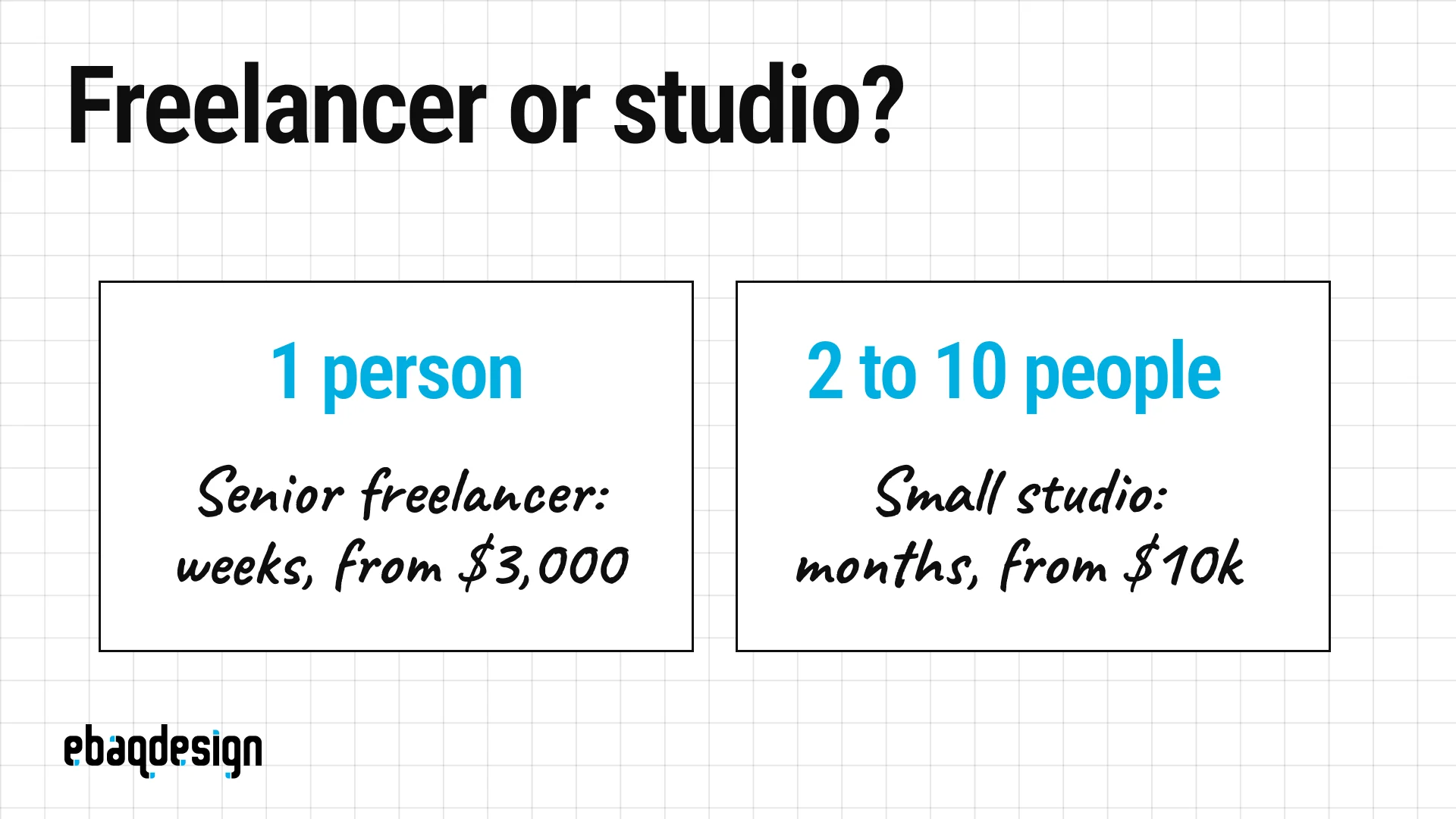
Usually, yes. Published brand identity packages from senior freelancers range from about $3,000 to $10,000, while small studios start around $10,000 and go to $25,000 or more. The difference mostly pays for more people and coordination.
What counts as a small design studio?
A small studio is usually a team of about 2 to 10 people led by a founder or creative director, with designers and sometimes a strategist, developer or project manager.
What is the biggest risk of hiring a freelancer?
Capacity. One person can be booked up, sick or on holiday, and the project pauses. Ask how they handle busy periods and whether they outsource any work.
What is the biggest risk of hiring a small studio?
That the senior person who pitched you is not the one doing the work. Ask exactly who will design your project and ask to see that person's own portfolio.
For a focused brand identity with one decision-maker, a senior freelancer is usually the better choice.
You get one experienced person from the first call to the final files, a shorter timeline and a lower price.
A small studio is the better choice when the work spreads across several jobs at once, such as research, a large website, packaging and ongoing content.
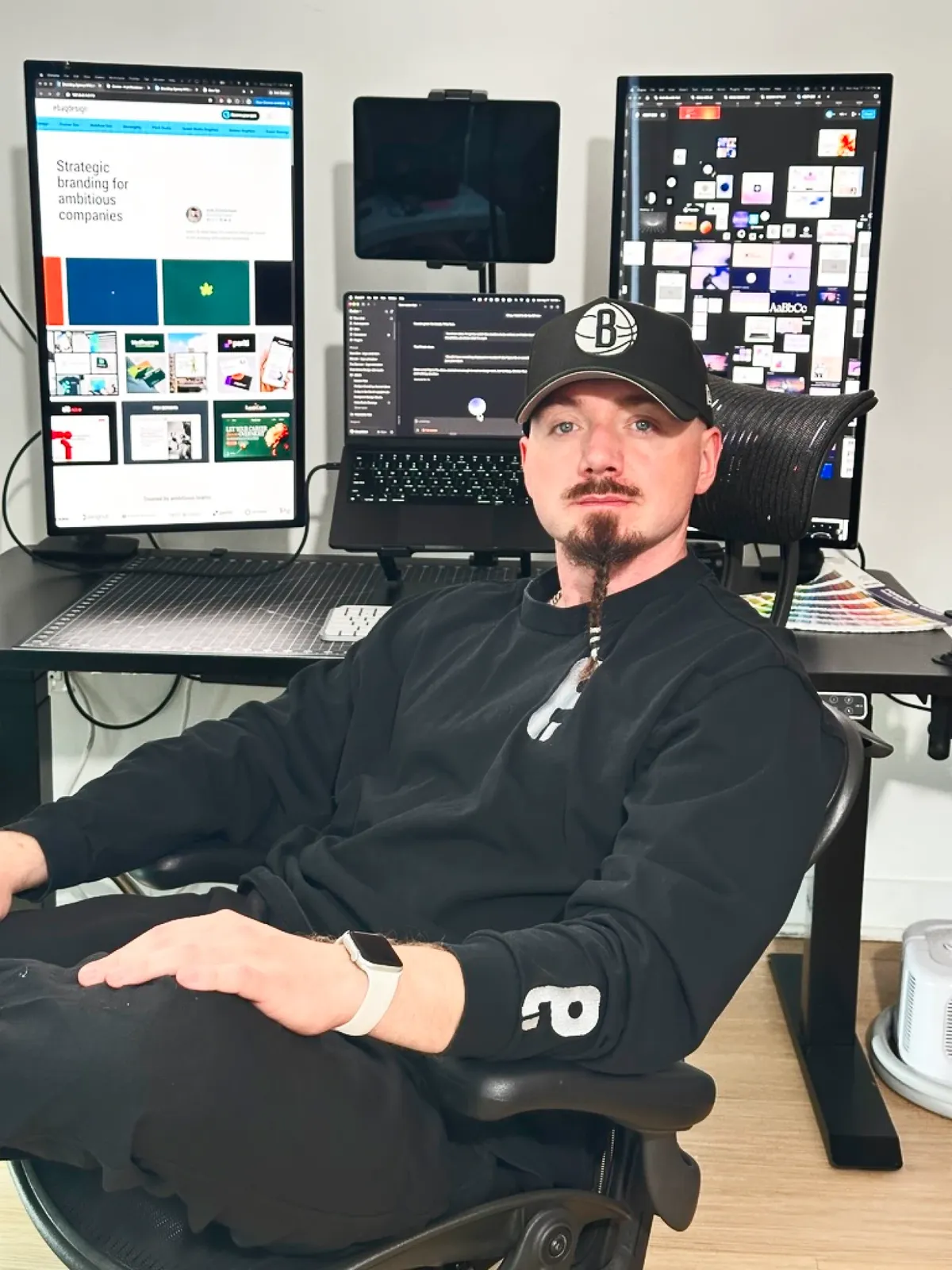
I'm Arek Dvornechuck, a senior brand designer in New York.
I work solo, so I have a stake in this question, and I'll tell you when a studio is the better fit.
Key takeaways
- A senior freelancer gives you one person's judgment, faster decisions and usually a lower price.
- A small studio gives you more hands, more skills under one roof and cover if someone is away.
- Real prices for a brand identity: senior freelancers from $3,000 to $10,000 in 1 to 6 weeks, small studios from about $10,000 to $25,000 in 5 weeks to 4 months.
- The biggest risk with a freelancer is capacity; the biggest risk with a studio is that seniors sell the work and juniors do it.
- For a much larger rollout, compare a freelancer with a full agency instead.
What is the difference between a senior freelancer and a small studio?
A senior freelancer is one experienced designer who runs the whole project, usually with 8 or more years of brand work.
They talk to you, set the direction, design everything and hand over the files.
A small studio is a team of roughly 2 to 10 people, usually led by a founder or creative director.
A typical studio has one or two senior designers, a few mid-level or junior designers, and sometimes a strategist, a developer or a project manager.
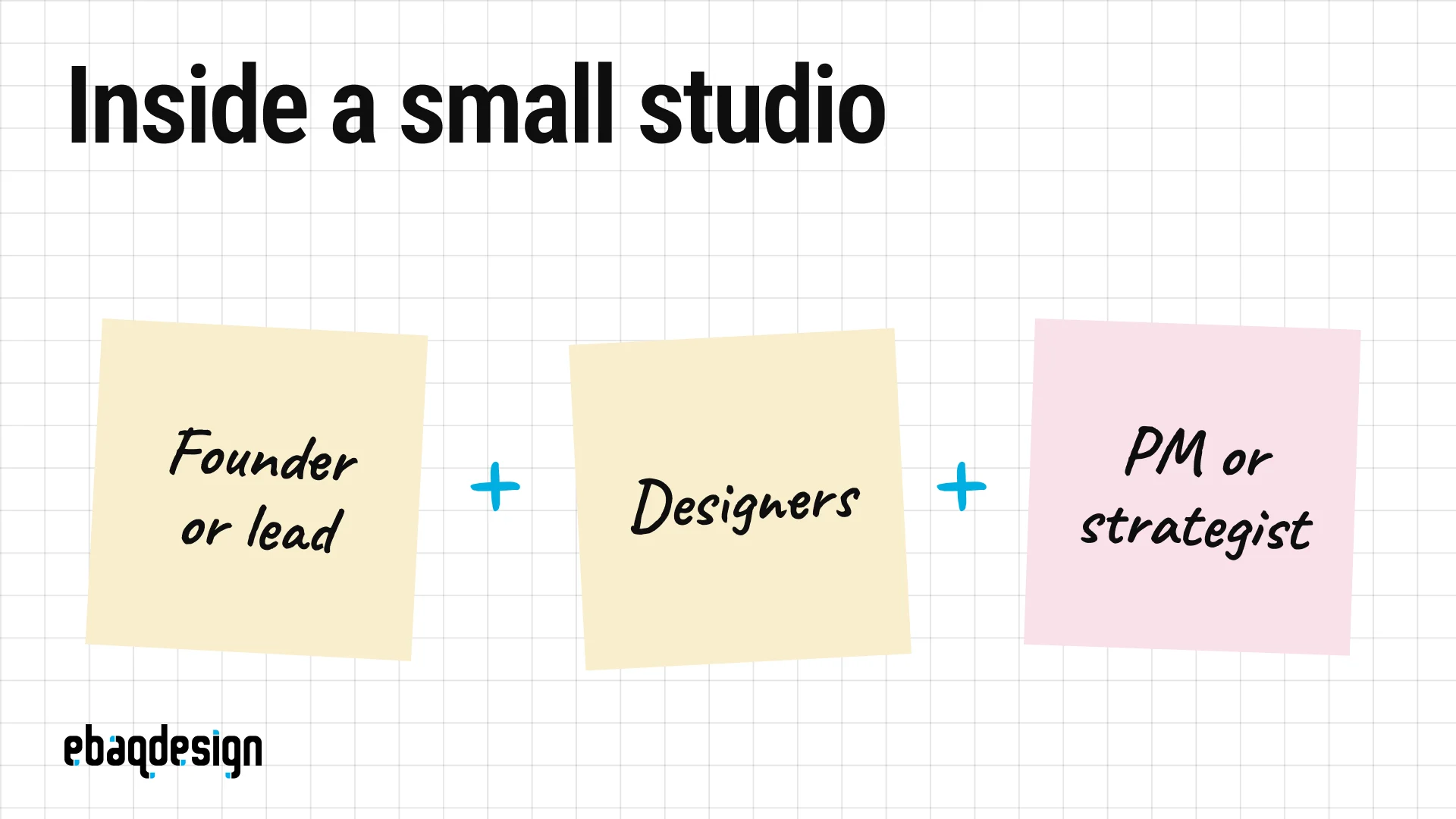
The question is not who is better, but how much of your project needs more than one person at the same time.
Senior freelancer vs small studio at a glance
| Senior freelancer | Small studio | |
|---|---|---|
| Who does the work | The senior person you hired, start to finish | A team; the founder may lead while others design |
| Typical identity price | $3,000 to $10,000 | About $10,000 to $25,000 and up |
| Typical timeline | 1 to 6 weeks | 5 weeks to 4 months |
| Communication | Direct with the designer | Often through a lead or project manager |
| Capacity | One project at a time, or a few | Several people working in parallel |
| Skills | Deep in one area, plus trusted partners | Broader mix under one roof |
| If someone is sick | The project pauses | Someone else can step in |
| Best for | Startups and small teams that need a strong identity fast | Bigger scopes with many deliverables at once |
When a senior freelancer is the better choice
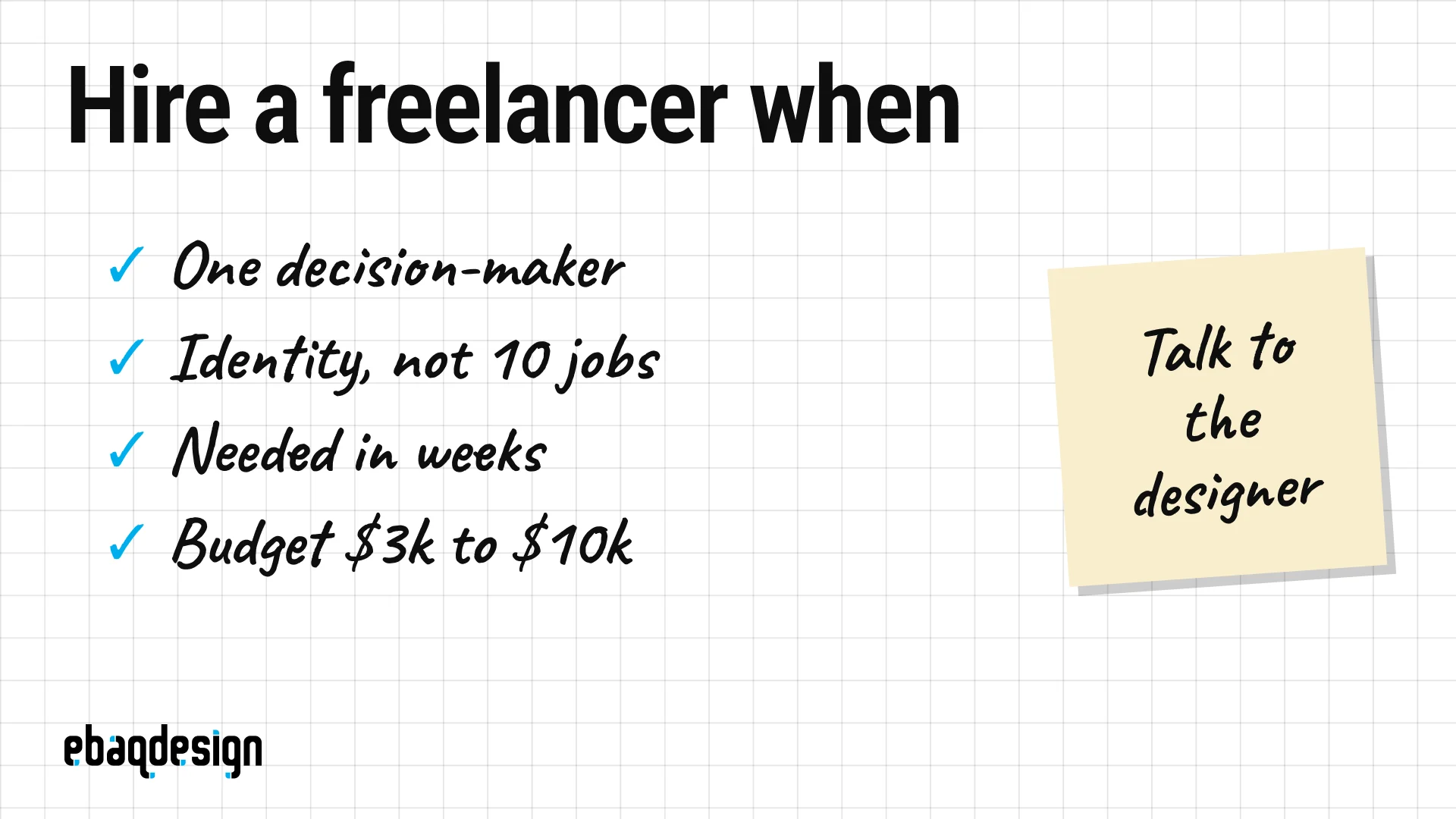
Hire a senior freelancer when most of these are true:
- You need a logo, visual identity and guidelines, not ten things at once.
- One founder or a small team makes the decisions.
- You want to talk to the person who designs, not to an account manager.
- You need it in weeks, because you are launching, raising or rebranding before a deadline.
- Your budget is $3,000 to $10,000.
The main advantage is that the person who understood your business on the first call is the same person who draws every version.
Nothing gets lost in a handover, and feedback turns into changes the same day.
When a small studio is the better choice

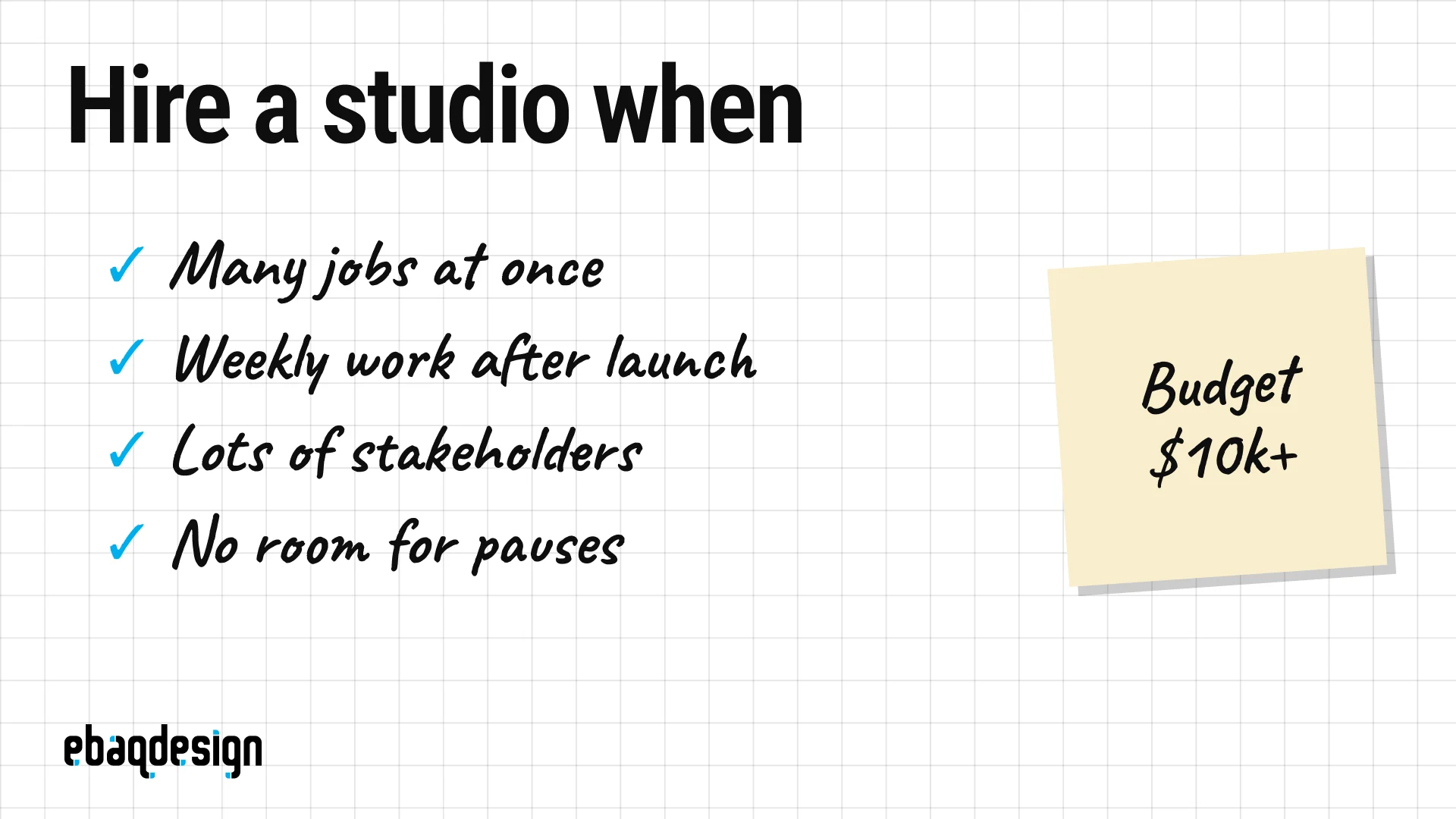
Hire a small studio when most of these are true:
- The project includes several big pieces at the same time, such as research, a large website, packaging and a campaign.
- You need ongoing work every week after the launch, not a one-off project.
- Many people on your side need workshops, presentations and updates.
- You cannot risk a pause if one person gets sick or busy.
- Your budget starts around $10,000 and the timeline is a few months.
The main advantage is capacity: a studio can design, build and produce in parallel.
What each one costs
These are real, published prices for a brand identity, from my brand identity cost comparison.
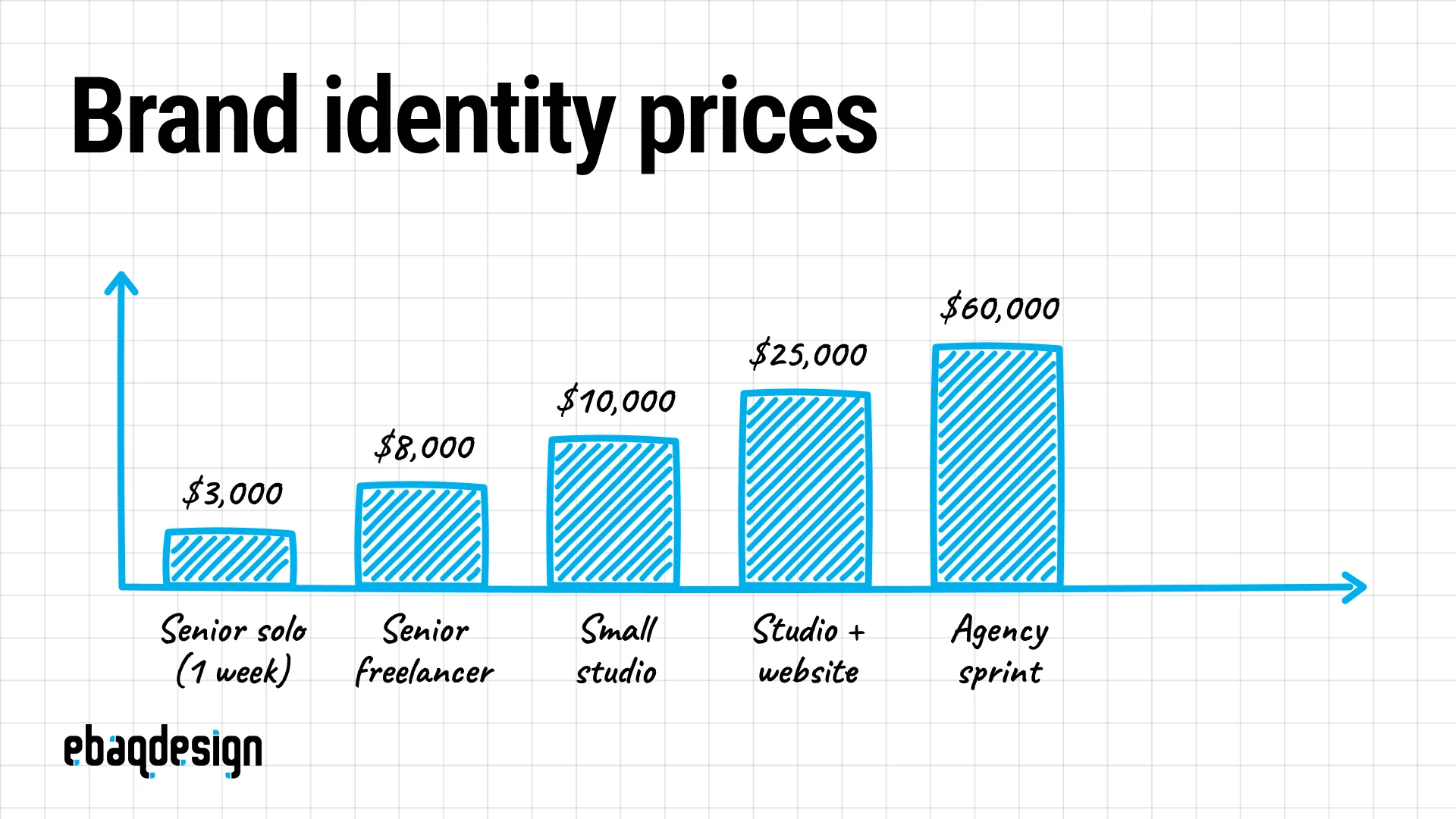
- Senior freelancers: from $3,000 for a complete identity, around $8,000 for a visual identity in four weeks, up to $10,000 for a full identity toolkit in six weeks.
- My Brand Sprint: $3,000 for a complete identity in one week, from one senior designer.
- A small studio (Glyn): $10,000 for positioning, identity and a landing page in five weeks, or $25,000 with a website and launch video over three to four months.
- A larger agency (Primary): $60,000 for a full brand in a two-week sprint.
Beginners on Upwork or Fiverr will quote you a few hundred dollars, but they don't have the experience to build a brand that lasts.
A senior designer who knows what they are doing starts around $3,000.
A studio is not more expensive because it is greedy; you pay for more people, more coordination and more cover.
If you only need what one senior person can do, you pay for capacity you won't use.
For timing, see how long branding takes.
The hidden risks on each side
Both options carry risks, and most of them are easy to check before you sign.
With a freelancer:
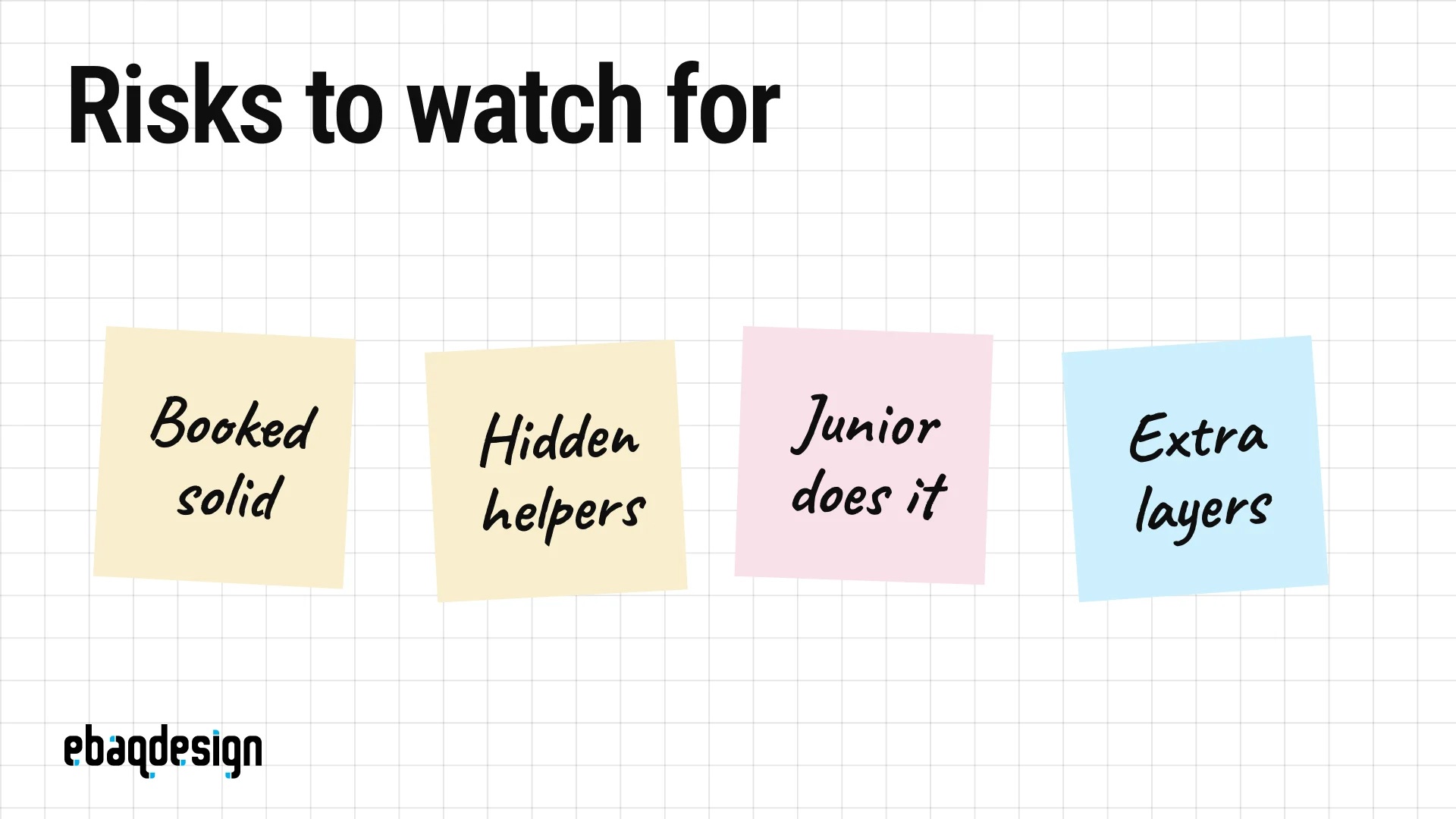
- Capacity: one person can be fully booked, sick or on holiday.
- Hidden outsourcing: some freelancers pass work to others without telling you.
- Gaps in skills: one person may be great at logos but weak at web or motion.
With a small studio:
- Bait and switch: the founder pitches and a junior designer does the work.
- Layers: feedback can pass through a project manager before reaching the designer.
- Minimums: many studios don't take projects under a set budget, so you may be sold a bigger scope than you need.
Questions to ask before you hire either
A few direct questions sort out most of these risks.
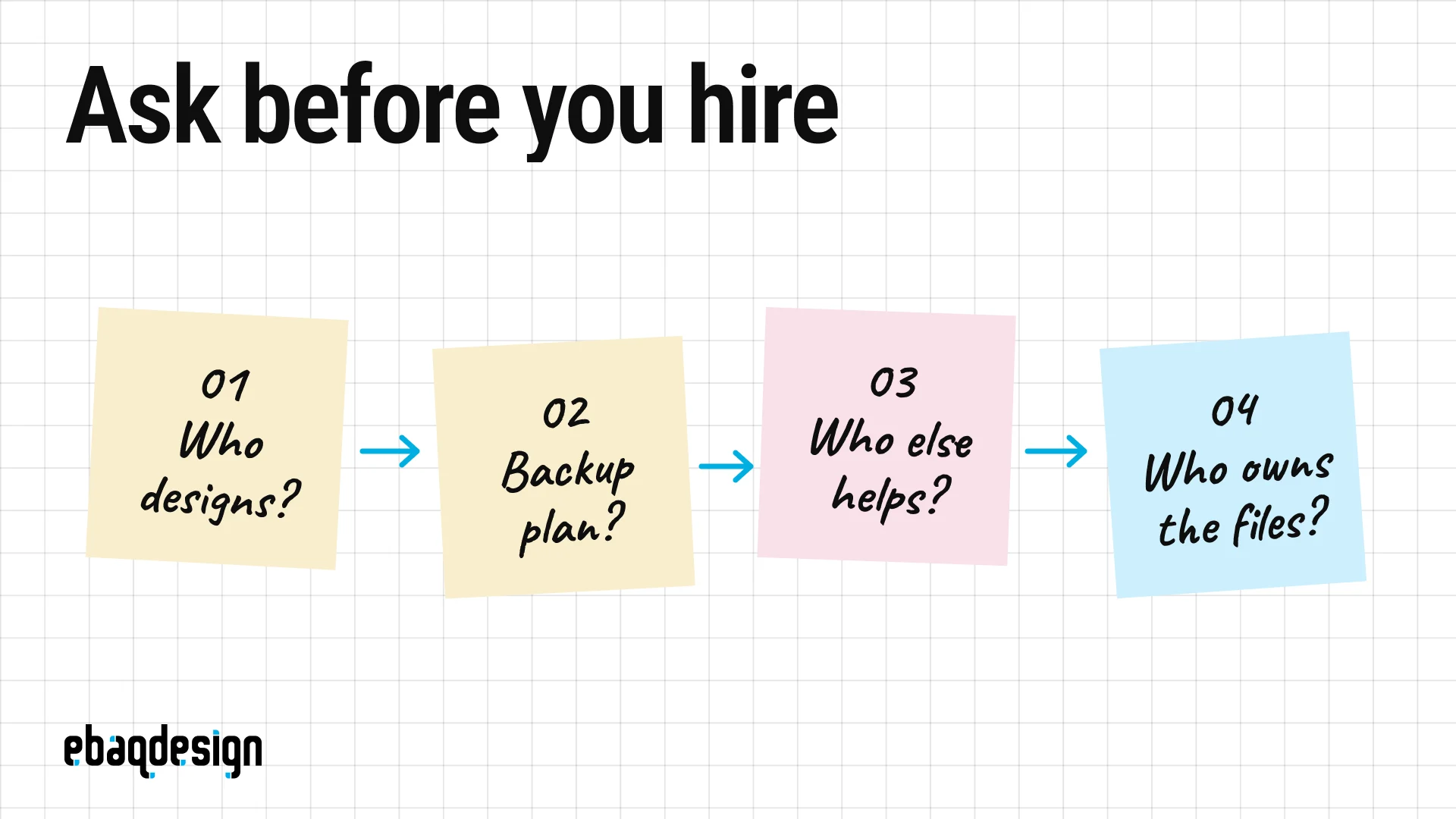
- Who exactly will design my project, and can I see their own work?
- What happens if you are sick or the project runs late?
- Which parts do you do yourself, and which do you outsource or hand to someone else?
- How many rounds of feedback are included, and how fast do you turn changes around?
- What files do I get at the end, and do I own everything?
- Can I speak to a past client with a similar project?
The answers matter more than the label: some freelancers run a small team of trusted partners, and some studios are really one person with a big website.
Where I fit
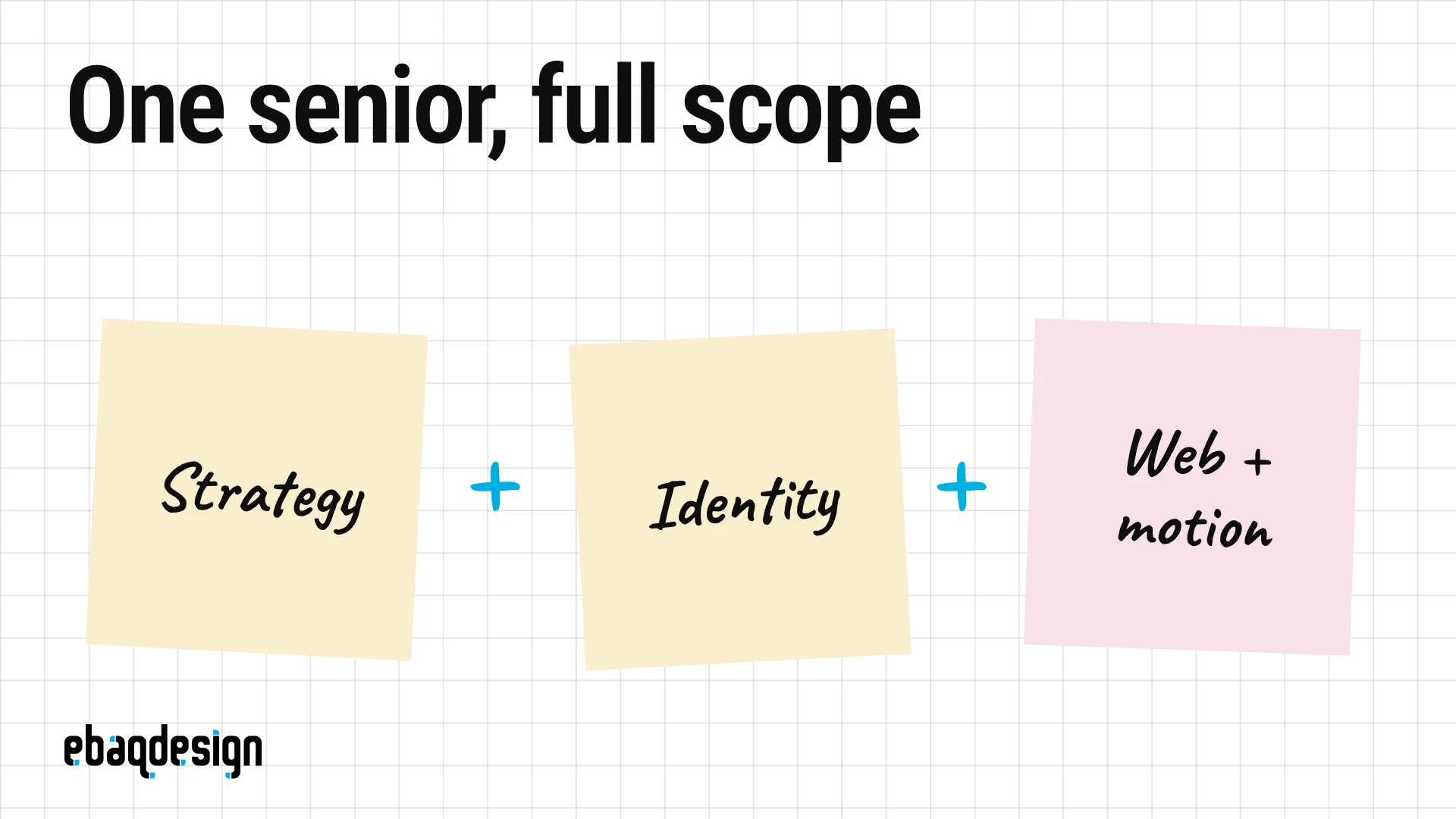
I work solo and cover strategy, identity, motion and web design in Framer, Webflow and Next.js.
For a startup or a small team that needs a strong identity fast, that is usually the right setup.
When a project needs more people at once, I bring in specialists I trust and manage them myself, or I tell you on the call that a studio or an agency is the better fit.
If you are still choosing, see my list of the best senior freelance brand designers and how a brand sprint compares with an agency.
Ready to decide?
If your project is a brand identity for a startup or a small business, a senior freelancer will usually get you there faster and for less.
If it is a big, multi-part rollout with ongoing work, a small studio is worth the higher price.
See my past work and schedule a call, and I'll tell you honestly which one your project needs.
Ready to build a brand people remember?
Tell me what you’re launching, changing, or trying to make look better.