
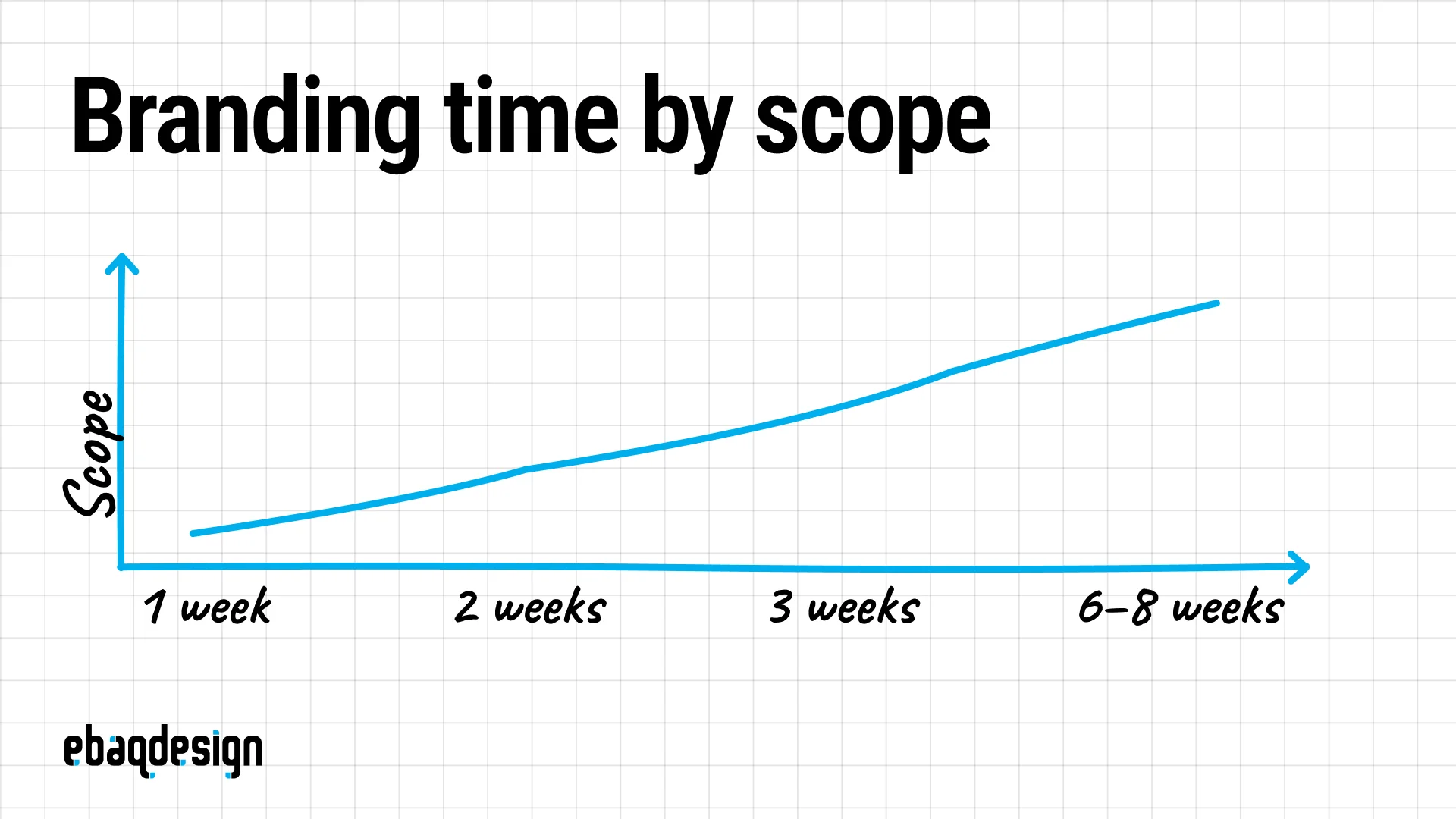
A brand identity takes one week with a senior designer working on a fixed scope, and three to nine months or more with many traditional agencies.
A brand plus a website usually takes three to five weeks in my studio.
Across ten real client projects, my timelines ran from two to eight weeks, depending on how much we built beyond the identity.
I'm Arek Dvornechuck, a senior brand designer in Brooklyn, and I run Ebaq Design, so every number in this guide comes from my own client work.
Key takeaways
- A brand identity or rebrand: one week, guaranteed, when the scope is agreed up front.
- Brand plus website: three to five weeks, one week of design and one or two of development after the identity.
- Bigger projects with packaging, templates or larger sites: six to eight weeks.
- Typical agency identity projects, in my experience: three to nine months or more.
- What really sets the pace is how fast decisions get made, not how fast the designer draws.
How long does each part of branding take?
Branding isn't one task, so it helps to split the timeline into the pieces you actually buy.
| Part of the project | Time with me | What you get |
|---|---|---|
| Brand identity (the Brand Sprint) | 1 week, guaranteed | Several logo concepts, final logo files, logo animation, color palette, typography, brand guidelines and launch assets |
| Motion and pitch deck | 1 more week | Motion graphics, animated social posts and a pitch deck |
| Website design | 1 more week | Homepage and key pages designed in Figma |
| Website development | 1–2 more weeks | A site built in Framer, Webflow or Next.js, depending on the page count |
| Ongoing brand, web and motion work | Monthly | A month of work booked upfront for larger scopes such as strategy, messaging and multi-page sites |
Every week costs the same flat $3,000, and a month booked upfront is $10,000.
We agree the number of weeks on the first call, so the total price and the timeline are fixed before work starts.
If you're budgeting at the same time, my guide to logo design and branding cost breaks down what each scope costs elsewhere too.
How long did my real branding projects take?
These timelines come straight from my case studies, measured from the start of the rebrand to the last deliverable.
| Client | Industry | Scope | Time |
|---|---|---|---|
| Orbio | AI infrastructure | Rebrand to motion graphics | 2 weeks |
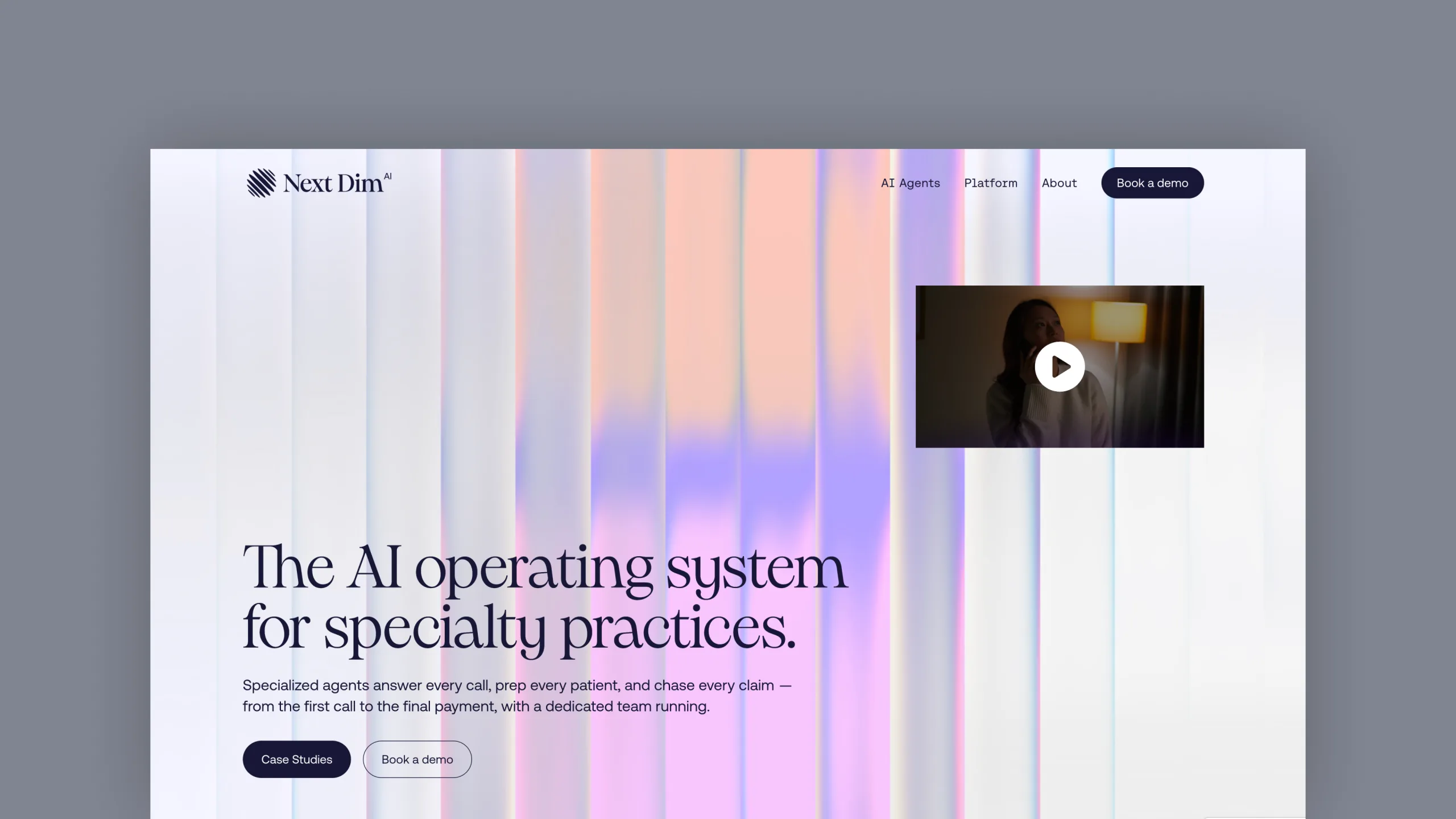
| NextDim AI | Healthcare AI | Rebrand to Webflow design | 2 weeks |
| Elevate | Ecommerce technology | Branding to web design | 2 weeks |
| Wingnut | Digital marketing | Rebrand to pitch deck | 2 weeks |
| Fox Berman | Legal services | Brand identity to Framer site | 3 weeks |
| Medihuanna | Medical education | Rebrand, templates and web design | 6 weeks |
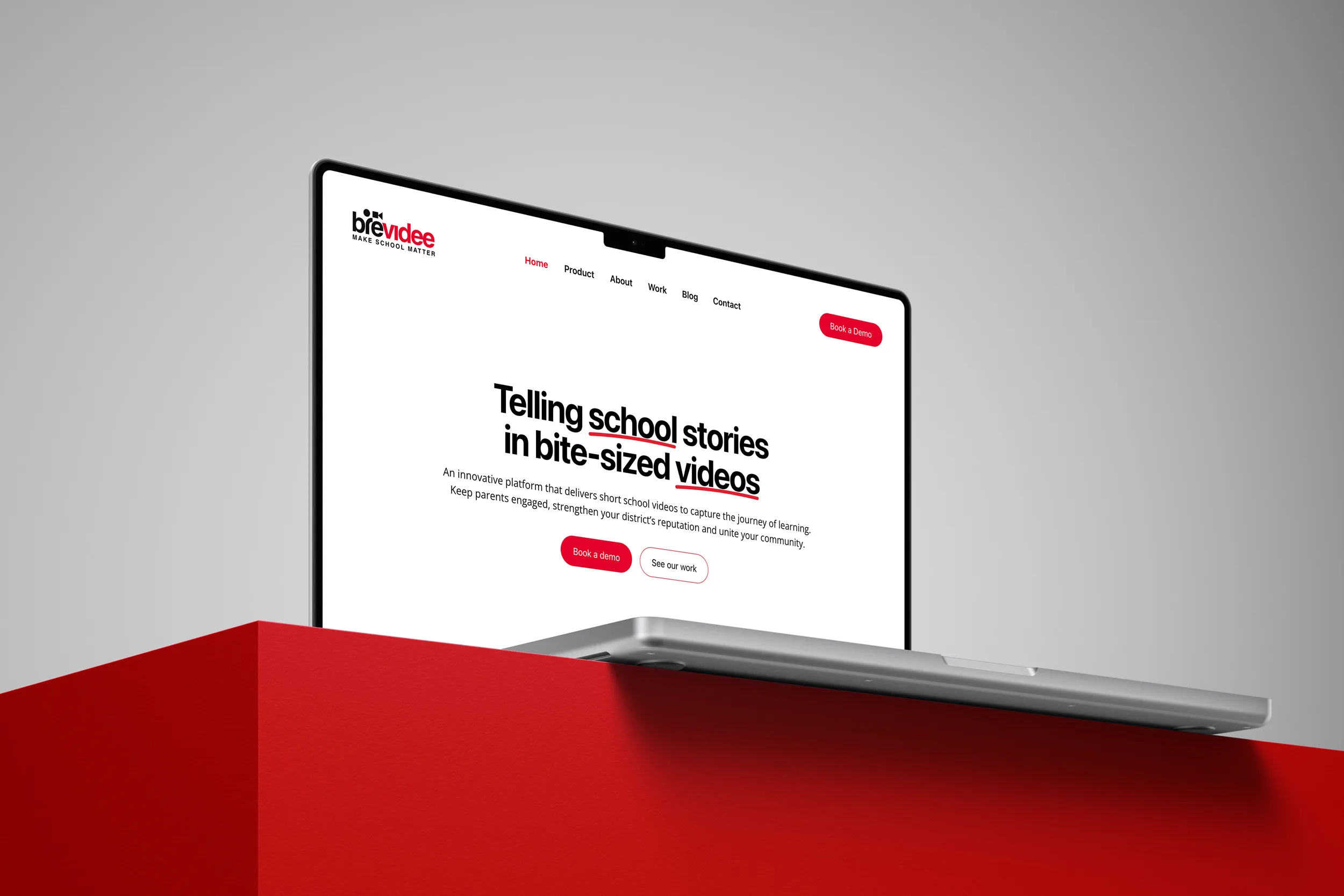
| Brevidee | Education technology | Rebrand, website, ebook and more | 8 weeks |
| Airport Executive | Luxury transportation | Rebrand to booking site | 8 weeks |
| SweetGrass | Cannabis retail | Rebrand, packaging and website | 8 weeks |
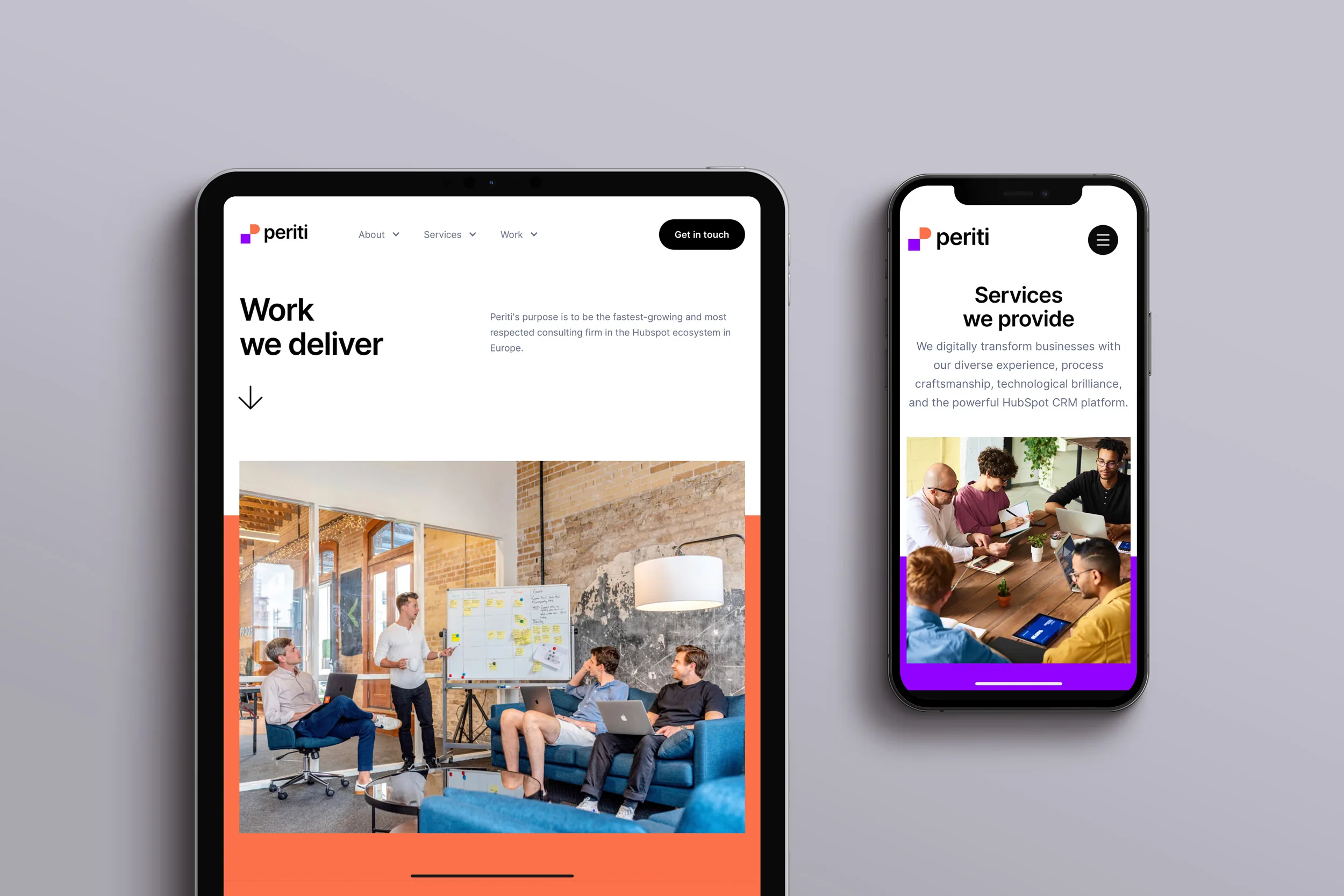
| Periti Digital | Digital consultancy | Rebrand, templates and Webflow site | 8 weeks |
The pattern is consistent.
An identity on its own takes one week.
Adding motion, a pitch deck or a website brings a project to two or three weeks.
Projects with packaging, templates, an ebook or a larger website run six to eight weeks.
None of these took months, because each one had a fixed scope, one decision-maker and a feedback schedule agreed before we started.
What does a one-week brand sprint look like, day by day?
A one-week timeline only works if every day has a job.
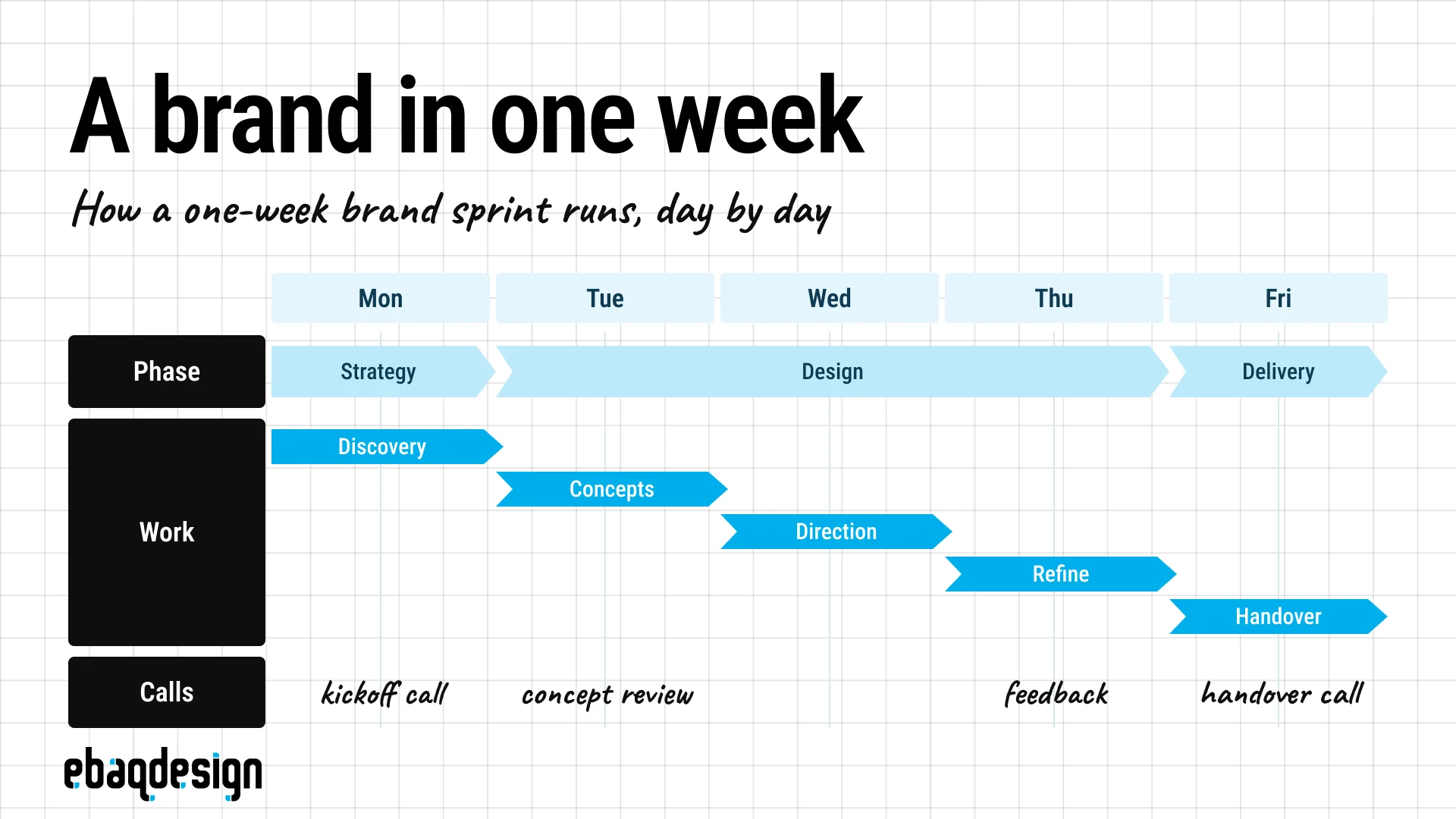
Here's how the week runs.
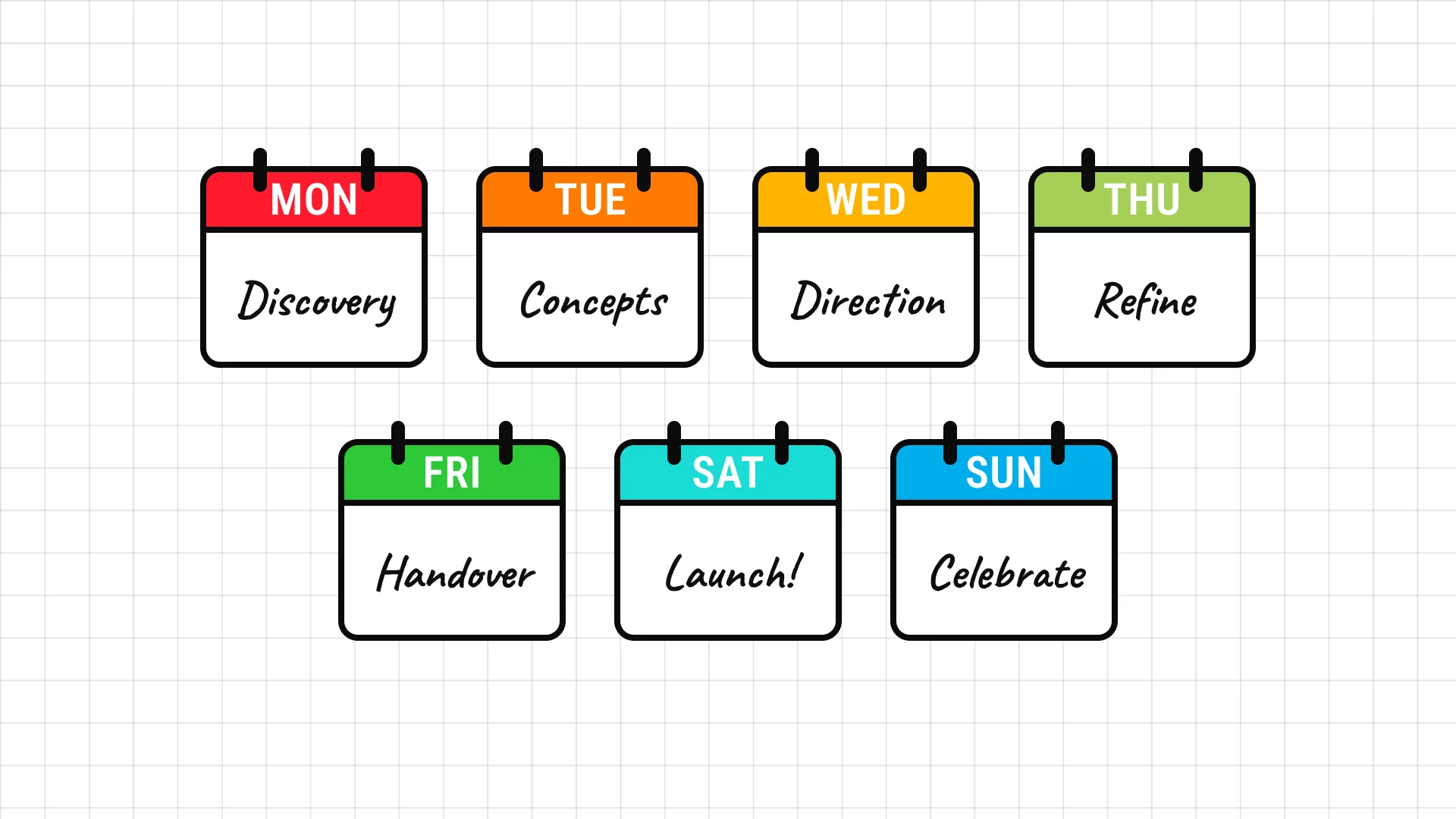
- Monday, discovery: we hold the kickoff call, lock the scope and go through your business, audience and competitors.
- Tuesday, concepts: I present several logo concepts on a concept review call.
- Wednesday, direction: you choose the direction, and I start building the color palette and typography around it.
- Thursday, refinement: we review the full identity together, and I make the final changes from your feedback.
- Friday, handover: you receive the final logo files, logo animation, brand guidelines and launch assets on a handover call.
The first half of the week is strategy and design, and the second half is decisions and delivery.
That's why the timeline holds: we never wait a week between rounds.
What I need from you during the week
A sprint is a collaboration, so your part of the week matters as much as mine.
- Before Monday: your current logo and materials if you have them, a few competitors, and anything you already know about your audience.
- Monday: an hour for the kickoff call with the person who makes the final decision.
- Tuesday: time to review the concepts and share honest first reactions.
- Wednesday: a clear choice of direction, so refinement can start the same day.
- Thursday: consolidated feedback in one message, rather than comments from five people at once.
- Friday: half an hour for the handover call, where I walk you through the files and guidelines.
If you can protect those slots in your calendar, the week runs exactly as planned.
How does a project flow from the first call to final files?
Most of the speed is decided before the week even starts.
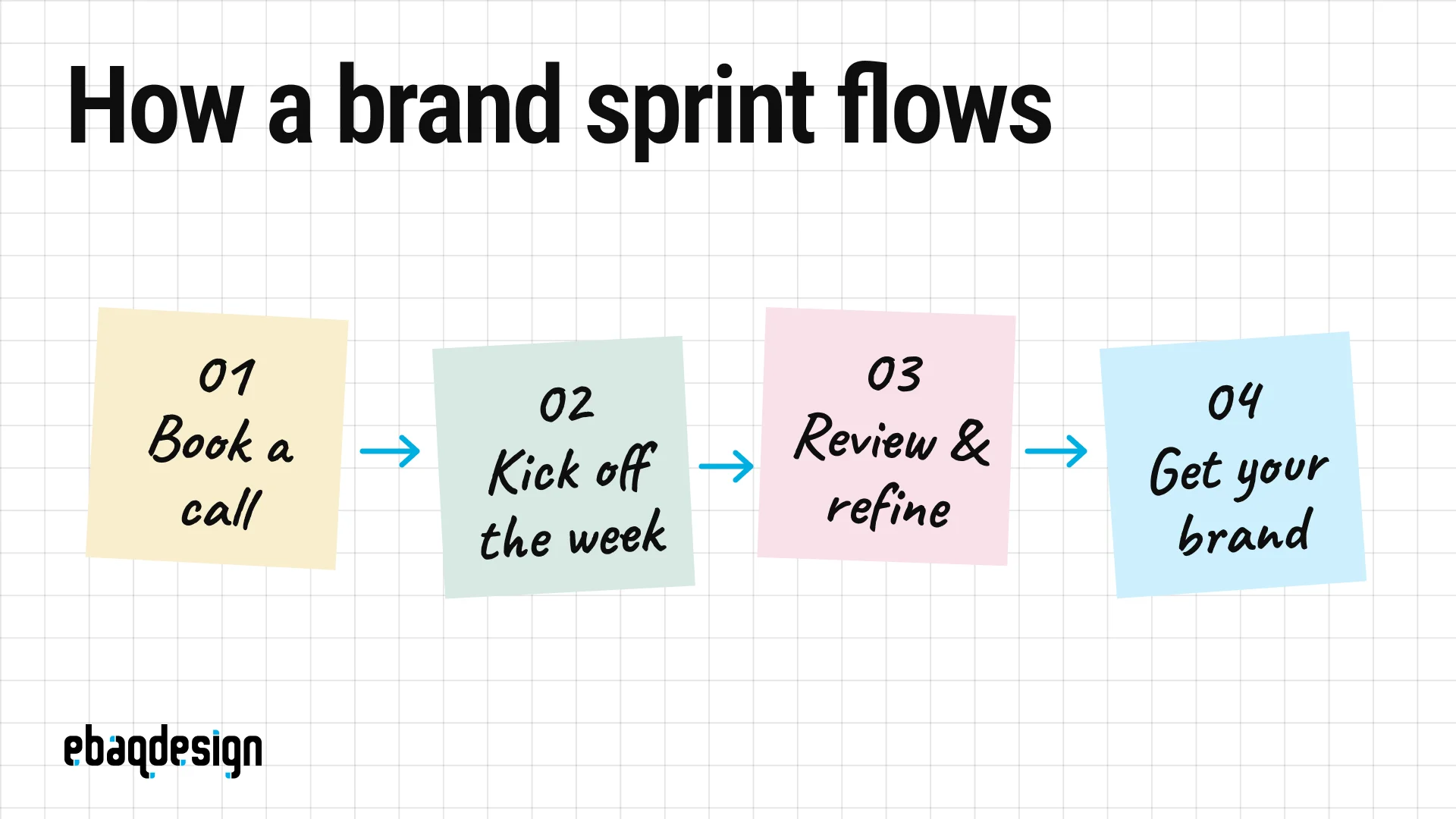
- Book a call. We discuss your business, what you need and your timing, then confirm the deliverables, start date, feedback schedule and total before you book.
- Kick off the week. Early in the week we lock the scope on the kickoff call, then I explore several logo concepts.
- Review and refine. Mid-week you choose a direction, and we refine it together with your colors and typography.
- Get your brand. By the end of the week you have your final files, guidelines and launch assets, ready to use.
If you need more, the next weeks follow on immediately: motion and a pitch deck, then website design, then development.
You can see exactly what's included on the Brand Sprint page, and every step in detail in my branding process.
Why do agencies take three to nine months?
There are three common ways to get a brand, and each comes with a very different timeline.
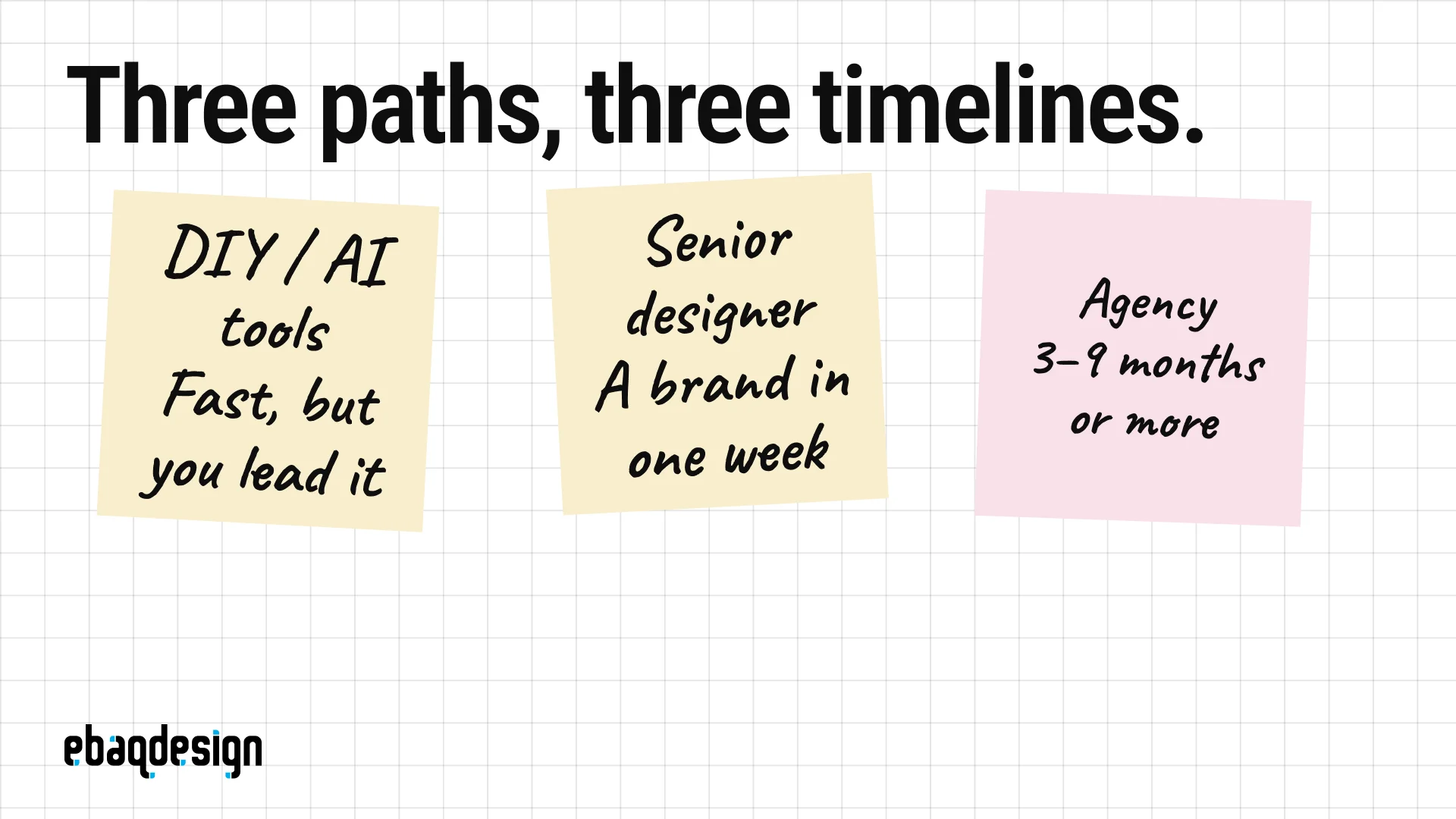
DIY and AI tools are fast, but you lead every decision and do the work yourself.
A senior designer on a fixed scope delivers a complete identity in a week.
An agency takes the longest, and in my experience most of that time isn't spent designing.
- Layers: account managers and project managers relay feedback between you and the designers.
- Long discovery phases: research, workshops and strategy decks before any design starts.
- More stakeholders: bigger organizations need more review rounds and sign-offs.
- Shared schedules: your project competes for the team's time with other clients.
Those steps make sense for a multi-market rollout with a large committee.
For a startup or a growing company that can decide quickly, they mostly add months.
If you're weighing the two, my comparison of a freelancer vs an agency covers cost and fit as well as speed.
How long does a rebrand take compared with a new brand?
A rebrand takes the same one week as a new brand, as long as the scope is clear.
Speed is often the reason clients come to me in the first place.
The Savory Team, a Brooklyn real estate team at Compass, had spent six months on design explorations that never felt right before we started fresh.

A rebrand can even be faster to decide than a new brand, because part of the answer already exists.
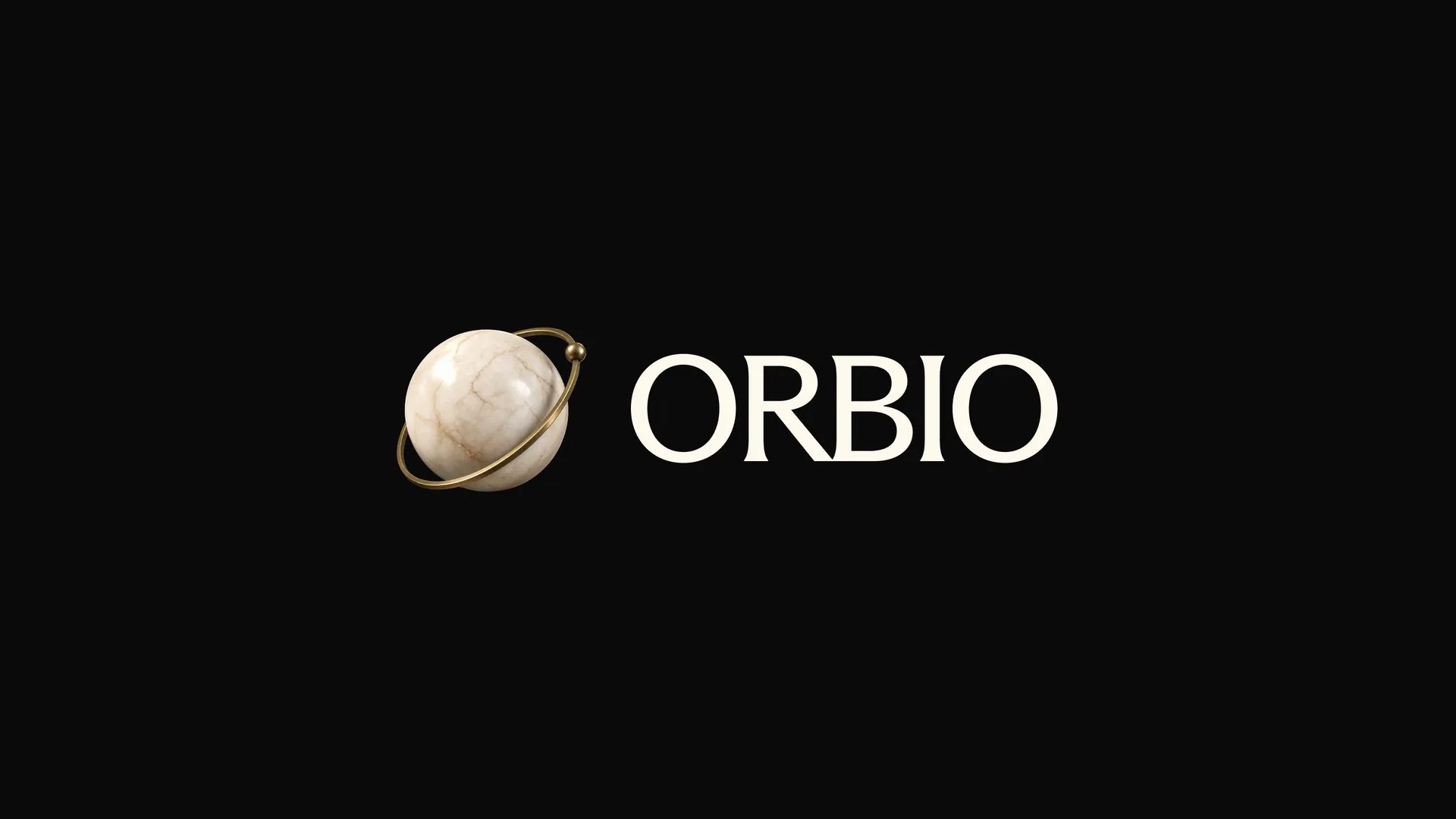
For Orbio, an AI inference startup, we evolved the identity rather than replacing it, keeping its 3D marble orb and building one system around it in a one-week sprint.
The decision that takes time in a rebrand is what to keep.
Settle that before kickoff, with a brand audit if you need one, and the design week runs on schedule.
How long does a brand and website project take?
A brand plus a website usually takes three to five weeks, because the site starts as soon as the identity is approved.
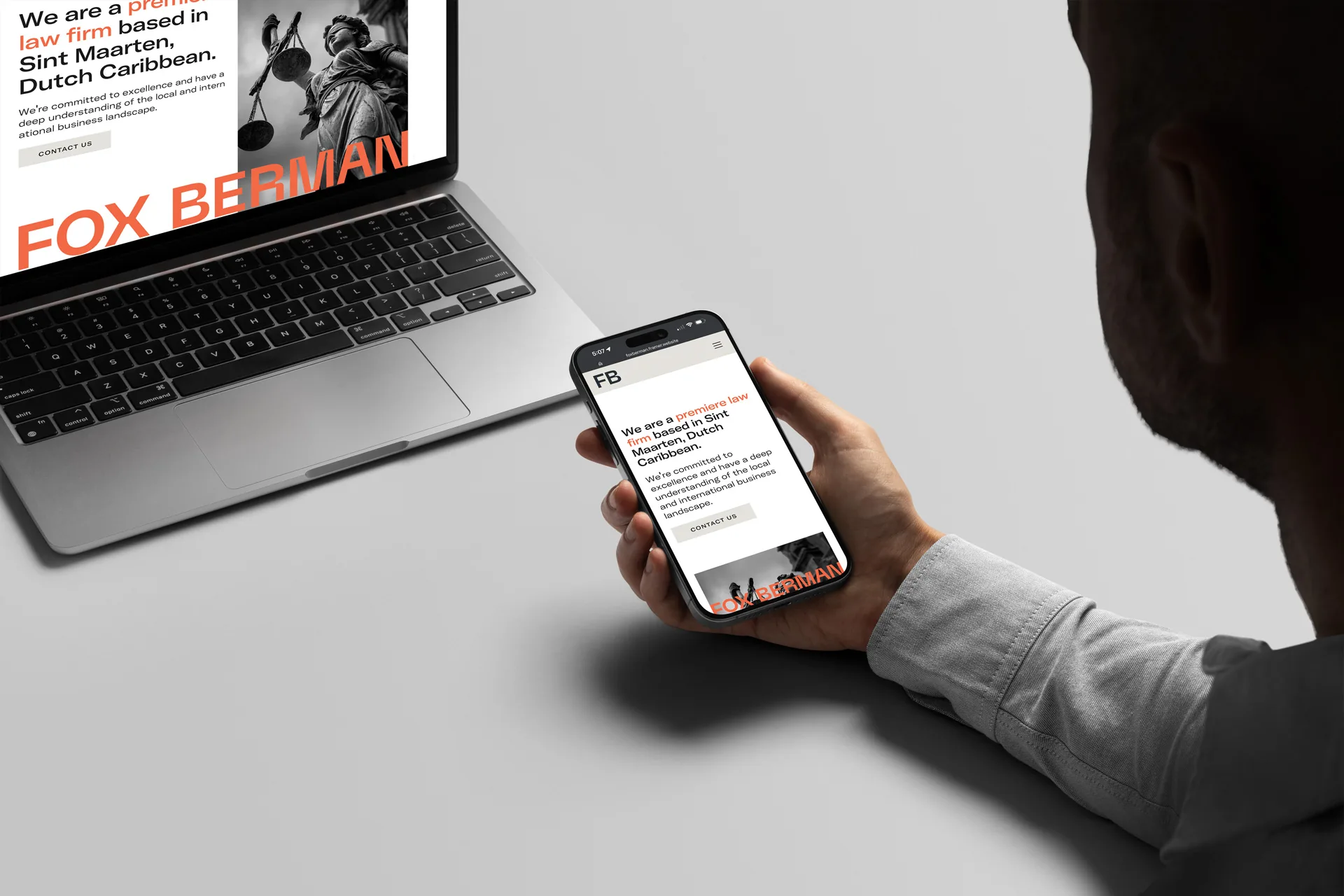
Fox Berman, a boutique law firm in Sint Maarten, is a good example: three weeks from a new identity to a website built in Framer.
NextDim AI took two weeks from rebrand to Webflow design, with a subtle space theme, reeded glass and expressive motion.
The website week only stays on schedule when the content is ready, so start writing your copy during the brand week.
Design in Figma takes about a week, and development takes one or two more depending on the page count; see Framer website design or Webflow website design for how that works.
Why do some branding projects take six to eight weeks?
The longer projects in my list all have one thing in common: more to build after the identity, not more time spent on the logo.
- Brevidee, a video-editing SaaS for schools, needed a rebrand, a website, an ebook and more.
- Periti Digital, a HubSpot consultancy, needed a rebrand, templates and a Webflow site.
- SweetGrass needed packaging as well as a rebrand and website.
- Airport Executive needed a booking site after the rebrand.
Each extra deliverable adds a week at the same rate, which is why the total is predictable even on a bigger project.
How long should branding take for a startup?
For most startups, branding should take one week for the identity and a few more for the website, because the brand usually has to be ready for a specific moment.
That moment is often a launch, a fundraise or a first big sales push.
Working backwards from that date is the simplest way to plan.
- Launch in a month: identity in week one, website design in week two, development in weeks three and four.
- Raise in a few weeks: identity in week one, then a pitch deck in week two, so the deck uses the new brand.
- No fixed date: still start with the identity, because every other asset depends on it.
Several of the projects above followed exactly this pattern: Orbio, NextDim AI and Elevate all went from rebrand to their next asset in two weeks.
If you're a founder planning the whole brand, my brand strategy framework for startups is a good place to start, and the AI startup branding page shows how this works for AI companies.
Is faster branding worse branding?
No, as long as the speed comes from removing waiting time rather than skipping thinking.
A one-week identity isn't one week of rushing.
It's one week of focused work by someone who has done it many times, with every decision made the same day instead of the next month.
I've been designing brands for over 20 years, including time at Chermayeff & Geismar & Haviv in New York, and the process I use is built on that experience.
What does hurt quality is unclear input.
A vague brief, five people giving conflicting feedback, or a strategy that changes mid-week will slow down any process and weaken the result.
That's why the scope, the decision-maker and the feedback schedule are agreed before the week begins.
If you want to judge the result rather than the timeline, look at the work: every project in the table above links to its case study, and you can see more on my work page.
What slows a branding project down?
Even a fast process slows down for a few predictable reasons.
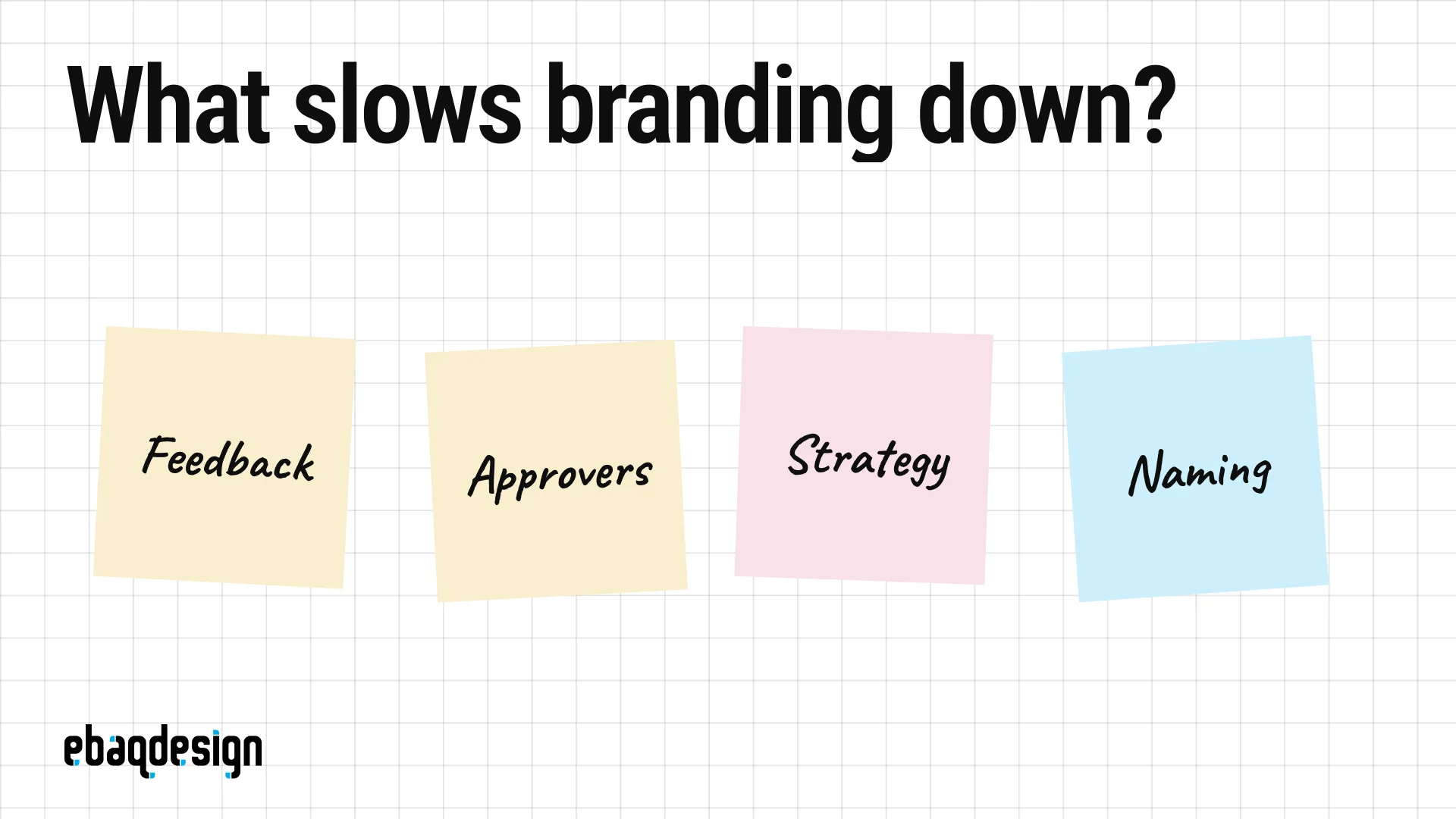
- Feedback. In a one-week sprint, a day of silence is a fifth of the project.
- Approvers. When several people have to sign off every round, add time for consensus.
- Strategy. If you haven't decided who the brand is for, settle that first; my brand strategy framework helps.
- Naming. A new name needs its own time for ideas, domain checks and a trademark search before design starts; see my guide to types of brand names.
Two more things sit outside the design timeline entirely.
Website content can hold up a launch, because a site can't go live without copy and photos.
Trademark registration runs separately from design and usually takes many months; my guide on how to trademark a logo covers the basics.
How can you speed up your branding project?
A few decisions before kickoff save the most time.
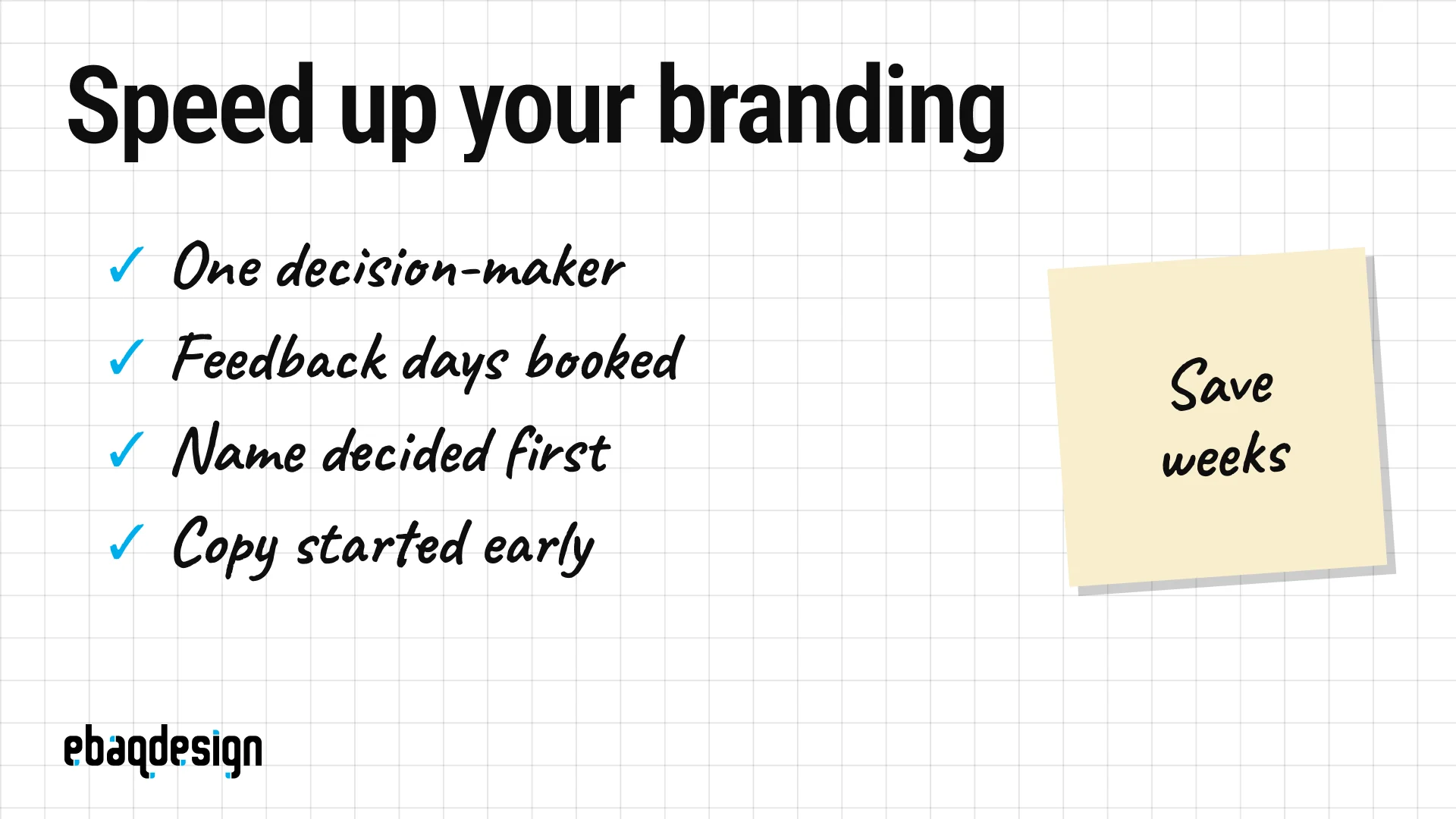
- Name one decision-maker who makes the final call.
- Book your feedback days in your calendar before the week starts.
- Decide the name first, so design doesn't wait on it.
- Start the website copy early, during the brand week.
- Gather what you have: old logos, competitors you admire or dislike, and any strategy notes; a creative brief helps.
These five steps are the difference between a week and a month, whoever you hire.
What happens after your brand is delivered?
Delivery is the start of the rollout, not the end of the project.
The first things to update are the ones people see every day.
- Your website header, favicon and social profile images.
- Your email signature and business cards.
- Pitch decks, proposals and other sales documents.
- Signage, packaging and printed materials, which depend on your vendors' lead times.
The Brand Sprint already includes social profile images, launch posts, a business card design and an email signature, so the first wave of updates is ready on day one.
The brand guidelines from the sprint keep all of this consistent, even when someone else applies them.
If you want to see what good guidelines look like, browse my brand guidelines examples.
What should you ask a designer about the timeline?
A timeline promise is only useful if you know what it covers.
- Which deliverables are included in the stated timeline?
- When does the clock start, and what do you need from me before then?
- How many review rounds are included, and when do they happen?
- Who will I work with day to day, and who does the actual design?
- What happens if feedback is late on either side?
- Is the price fixed for that timeline, or billed by the hour?
Clear answers to these questions matter more than the number of weeks on a proposal.
Frequently asked questions
How long does logo design take?
With me, the logo is designed within the one-week Brand Sprint, together with the colors, typography and guidelines.
See my logo design process for each step.
How long does a rebrand take?
A visual rebrand takes one week with me.
With a new website, plan on three to five weeks in total.
How long does it take to design a website?
Website design in Figma takes about one week, and development in Framer, Webflow or Next.js takes one or two more, depending on the page count.
Can branding really be done in one week?
Yes, when the scope is agreed up front and feedback comes on schedule.
The one-week guarantee covers the agreed identity deliverables, confirmed before booking.
How much does a one-week brand sprint cost?
A flat $3,000.
Additional weeks are $3,000 each, or a month booked upfront is $10,000, so a brand plus website is usually $9,000 to $15,000.
What do I need to prepare before a brand sprint?
Your current logo and materials if you have them, a few competitors, what you know about your audience, and one decision-maker who can join the calls.
A creative brief helps but isn't required.
What if I don't like the first concepts?
We talk through what isn't working and refine the concepts from there.
Revisions within the agreed scope are included, and a new direction outside that scope is agreed before any extra work.
Do you work with clients outside New York?
Yes.
I'm based in Brooklyn and work remotely with clients across the US and internationally, with call times agreed before the project starts.
Need a brand in one week?
Branding takes as long as the process around it.
With a senior designer, a fixed scope and quick decisions, a brand identity takes one week and a brand plus website about three to five.
If you want to know what that looks like for your company, book a call and we'll map out your weeks.
Ready to build a brand people remember?
Tell me what you’re launching, changing, or trying to make look better.