
A website redesign with me starts at $3,000 for one week.
With your branding in place, that can buy several pages designed in Figma for your developers, or one landing page that I design, build, and get ready to launch.
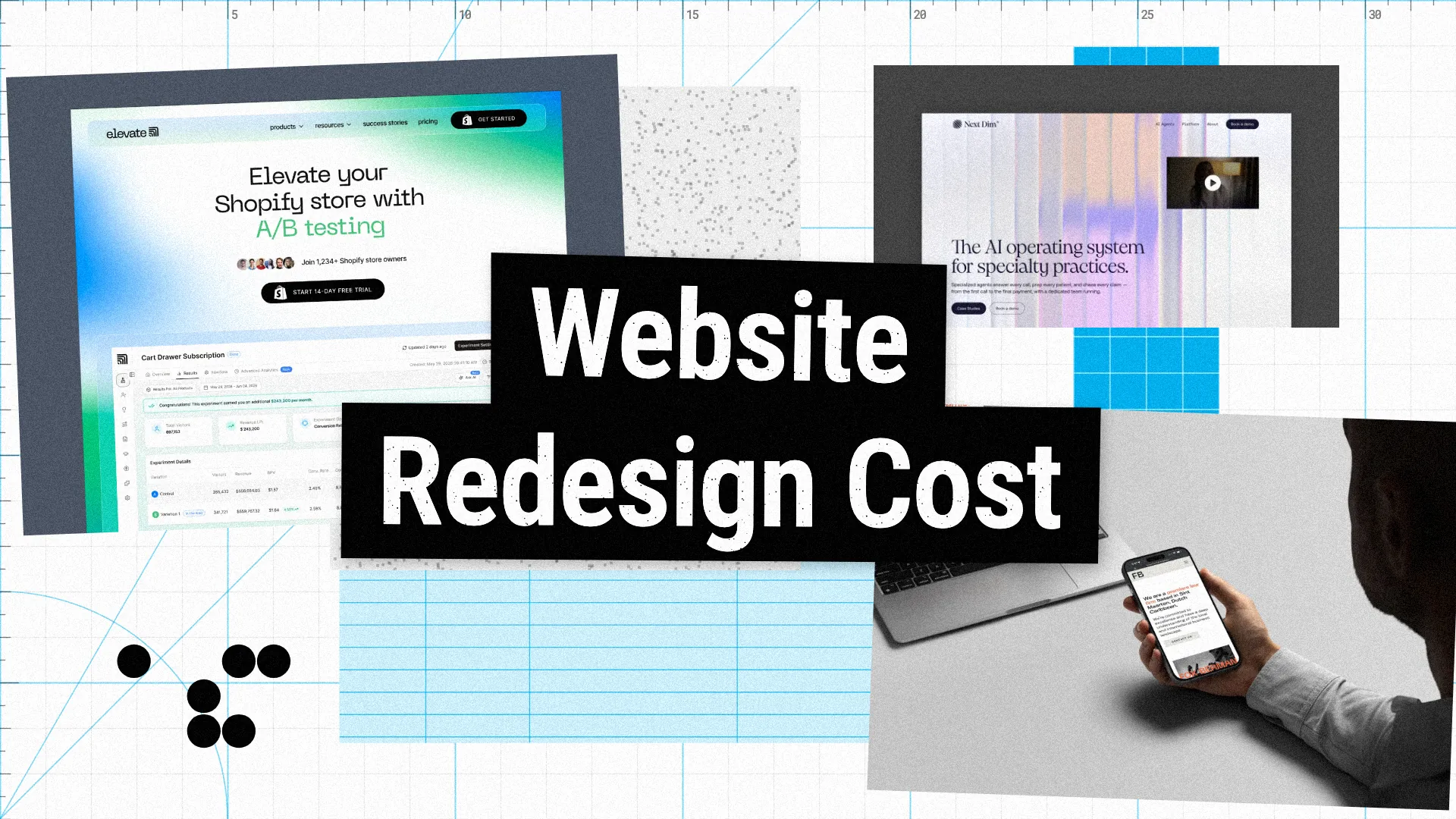
Elevate used its website week for five Figma designs.
Next Dimension used its website week for a working Webflow landing page.
If you’re planning a redesign, which of those would be more useful to your team on Friday?
Below I’ll show you both projects, the numbers I’d use to budget a larger site, and the questions I’d ask before booking even one week.
How much should you budget for a website redesign?
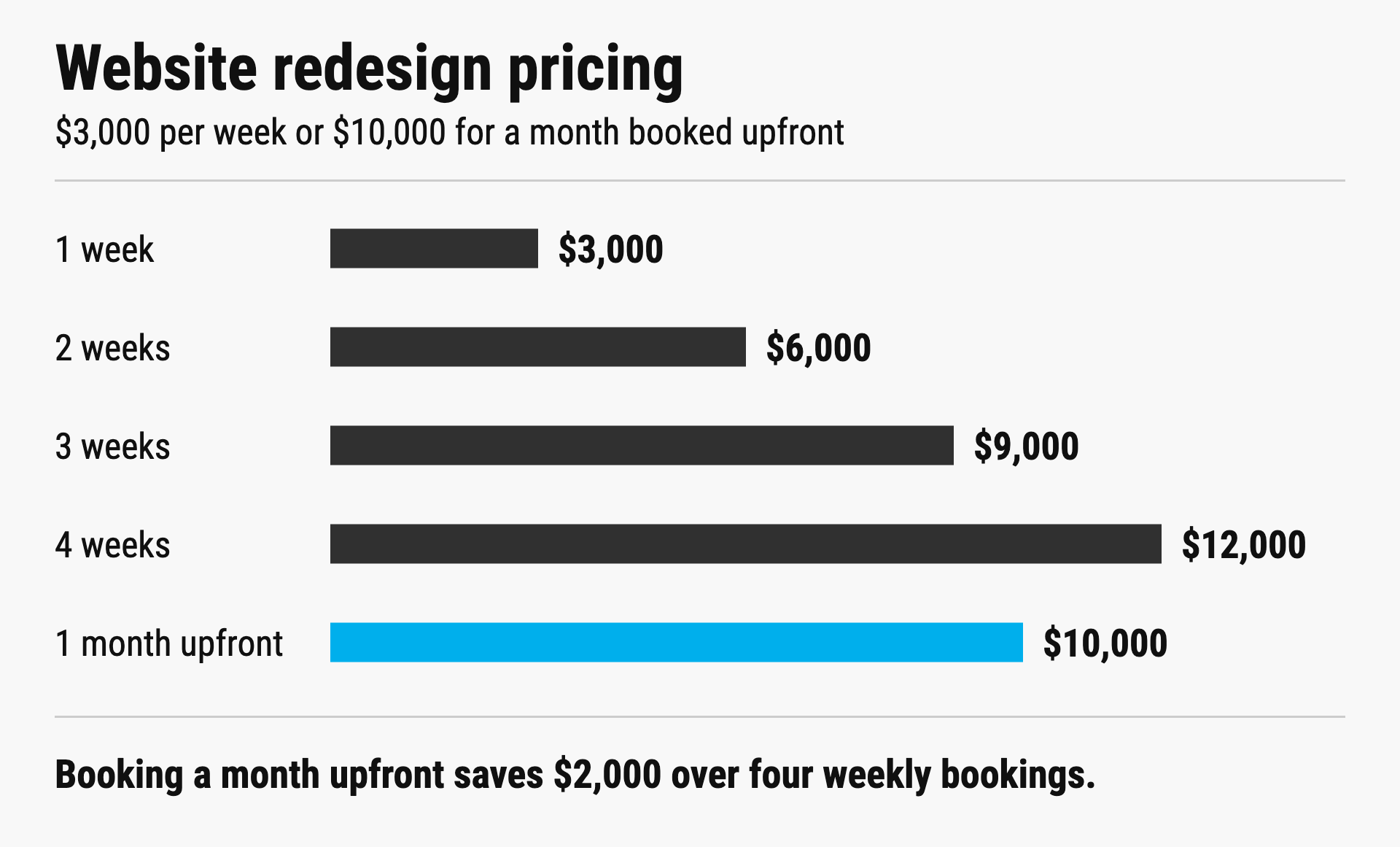
I charge $3,000 per week, or $10,000 for a month booked upfront, with the deliverables agreed before we start.
| Budget | Example scope | What you get |
|---|---|---|
| $3,000 One week | Designs for a developer, or one landing page designed and built. | Editable Figma files or a working page. |
| $6,000 Two weeks | Brand identity plus a landing page, or two weeks dedicated to web work. | Brand files and a live page, a larger Figma handoff, or a focused design and build. |
| $9,000 Three weeks | Design and build a marketing site using your existing branding. | Agreed page layouts, responsive development, and launch checks. |
| $10,000 Month upfront | Branding, multi-page design, development, and launch. | An identity and working website with the templates and integrations we scope together. |
Four weeks booked separately would cost $12,000.
If the project needs all four, booking the month upfront saves $2,000.
For a business with one service, a clear message, and a single contact form, I’d start with the landing-page conversation.
A team moving a library of case studies, connecting a CRM, and refreshing its identity has a different job to budget.
For market context, most web design projects reviewed on Clutch cost less than $10,000, while the average in its dataset is around $38,000.
A few large engagements can pull an average well above the price most clients pay.
Clutch covers web design projects of varying sizes, so I’d use its figures to understand the spread and your own scope to choose a budget. Clutch web design pricing guide.
What $3,000 bought Elevate in Figma
Elevate makes a Shopify A/B testing app, and its engineers were ready to build the marketing site themselves.
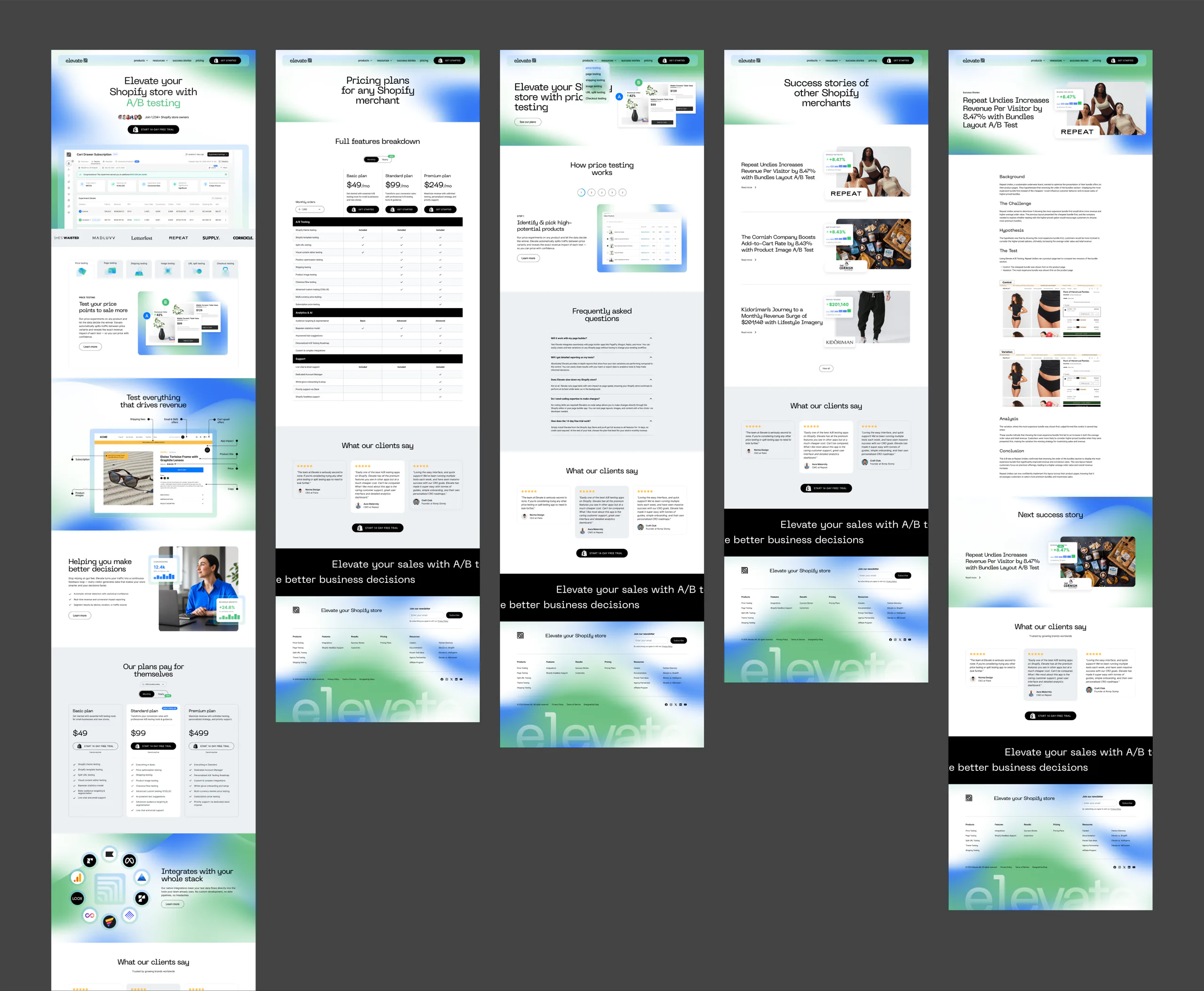
Elevate first hired me to design its brand identity.
Once we had the logo, type, and colors, I could put the website week into the decisions its developers needed from me.
The homepage had to introduce the product to a merchant who might never have run an A/B test.
The features page had room to explain what the app actually does.
The pricing page needed its own layout so a merchant could compare plans.
The last two designs were easy to mistake for one item on a sitemap.
A case studies index helps someone pick a story.
A case study detail page gives them a place to read it.
The team needed both designs, but it could reuse the second layout every time it published another customer story.
That’s the question I’d ask if you told me you had twenty pages: how many different kinds of pages are there?
Five distinct layouts can represent more design work than twenty entries that share a template.
I used a Relume Figma kit as the starting point for Elevate’s layouts.
Using a component library gave the engineers familiar structures to work with while I focused on the hierarchy, brand application, and product story.
The $3,000 website fee bought the design handoff.
Their team owned the build.
If your engineers have capacity, I can spend a second week designing more pages or working through unusual states with them.
If they’re already committed to your product roadmap, a design handoff can sit in a queue for weeks.
That’s worth establishing before you buy it. See the Elevate case study.
What one week buys when you need a live landing page
Next Dimension needed a website that explained its healthcare AI business to medical practices and gave visitors a clear way to take the next step.
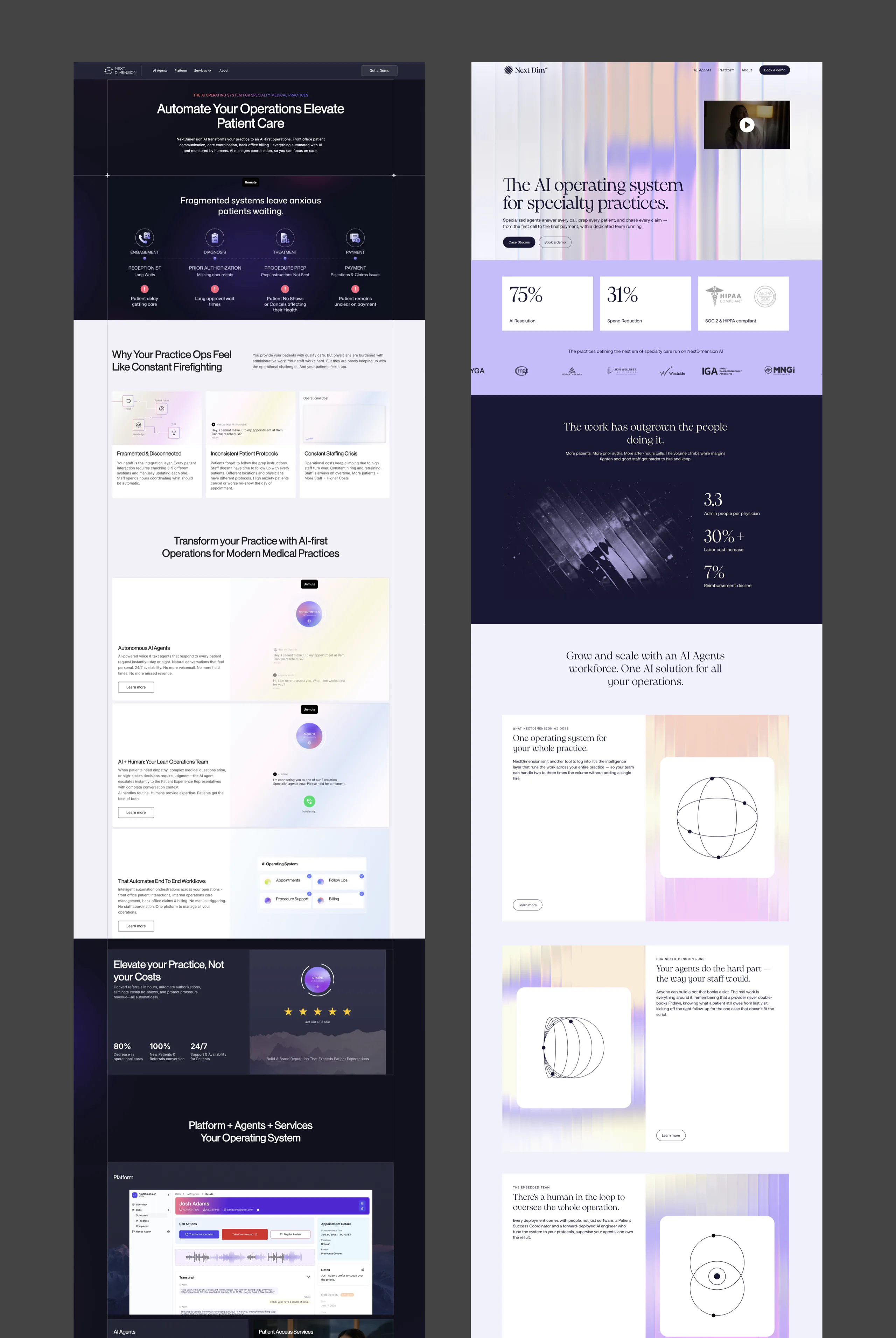
Week one was the brand identity.
In week two, I designed and developed the landing page in Webflow.
The same person who picked the typography and visual direction was making the decisions about how they behaved on the page.
A one-page build makes sense when the visitor has one main decision to make.
You can introduce the offer, show how it works, answer the questions that might stop someone, and give them a clear next step without sending them through five pages.
There’s real development work in that one week.
A headline has to wrap well on a phone.
A navigation link has to land in the right place.
The form has to deliver a message to someone who will actually receive it.
If your brand is ready and your content is available, we can start with the website week straight away.
I can scope a focused landing page in Webflow, Framer, Next.js, or custom React.
The right choice depends partly on who is going to edit it six months from now. See the Next Dimension case study.
How the same idea worked for a law firm
For Fox Berman, the goal was to introduce a newly merged law firm in Sint Maarten and give prospective clients a way to contact the partners.
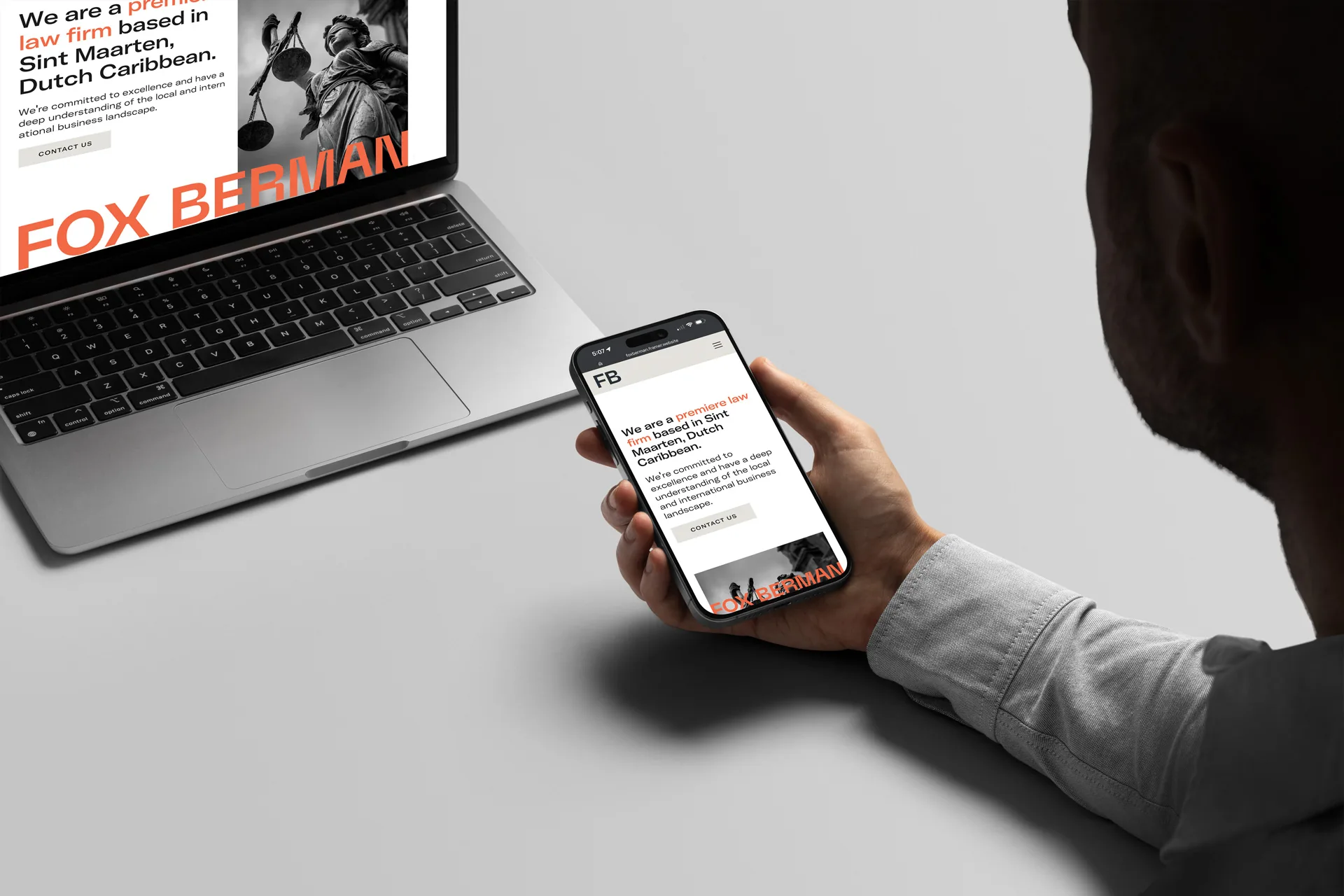
I designed the identity and guidelines, then designed and built a one-page Framer site.
The website portion took a week.
The wider engagement also included stationery and other applications, and the case study records three weeks from identity to finished site.
A founder comparing these examples might prefer the Next Dimension or Fox Berman route because they want one person responsible for launch.
Elevate had a different advantage: an engineering team that could take the designs straight into its own workflow.
Knowing who will build the site makes it much easier to spend that first $3,000 well. See Fox Berman’s website and identity.
What would I do with two or three weeks?
At $6,000 for two weeks, the most useful question is whether your existing branding is ready to use.
If the identity needs work, we can spend the first week on branding and the second on a focused landing page.
If the identity is already right, both weeks can go toward the website.
For a small service business, that might mean designing the homepage, a service layout, and a contact page first, then building those agreed pages in the second week.
The contact page is a good place to test that estimate.
A short form that sends to one inbox is straightforward to scope.
A form that asks different questions by service, assigns an owner in your CRM, sends a confirmation, and books a meeting has several more things to design and test.
At $9,000 for three weeks, one possible plan is a design week followed by two development weeks.
I’d consider that for a business with an established identity, several distinct page layouts, and a team that wants to publish content after launch.
Suppose you sell three services and want a case study for each.
We might design one service template and one case study template, then build and populate those alongside the homepage and contact page.
You get a way to add a fourth service or story later without commissioning another redesign.
Before we agree on that budget, I’d want to see a real service description and a real case study.
A template that looks good with two lines of sample text can fall apart when your strongest project needs a diagram, a long testimonial, and a results table.
How a $10,000 month could work
A month booked upfront makes sense when you want me to take responsibility for a new identity and a multi-page website from design through launch.
Week one: establish the brand and the website brief
If you need branding, I use the first week for the identity, including the logo, typography, color palette, and guidelines.
Those decisions give us a foundation for the website and give your team files it can use elsewhere.
At the same time, I want the page list, current website access, and a named person who can approve copy.
Finding out in week three that nobody has access to the old CMS is an expensive way to spend development time.
If you’re happy with the brand, bring the existing files and we can jump straight into Figma.
The time that would have gone into an identity can go toward more pages, richer art direction, or a more involved migration.
Week two: design the pages around real content
I’d design the homepage first to settle the direction, then the inner page with the hardest content problem.
That might be a dense pricing comparison or a service page that speaks to two different buyers.
Once we’ve solved those layouts, we can carry the decisions into the simpler pages.
This is the time to decide what you want to edit yourself: for example, the ability to add a team member, publish an article, or feature a new project on the homepage.
Week three: build the site and connect the content
I turn the approved layouts into responsive pages and set up the CMS collections we agreed on.
For a blog, that can include the index, article template, author information, cover images, and a few representative entries.
One test entry should be the awkward one.
Try a long headline, a portrait image, or a post without a cover and see what the layout does.
It’s easier to fix the template once than to tidy up every new post by hand.
Week four: finish the pieces that make the site usable
Depending on the scope, this week can include custom scroll animations, CRM integration, content migration, and on-page SEO.
I’d rather test an actual lead from the contact form through to the right inbox than check a box because the submit button changes color.
Before switching over, we review the responsive layouts, page titles, headings, internal links, and redirects from important old pages.
For a CMS handoff, someone on your team should be able to create a draft, preview it, and publish it without calling a developer.
When does a website project need longer than a month?
My Periti Digital engagement ran eight weeks and included a rebrand, templates, and a Webflow site for a pan-European HubSpot consultancy.
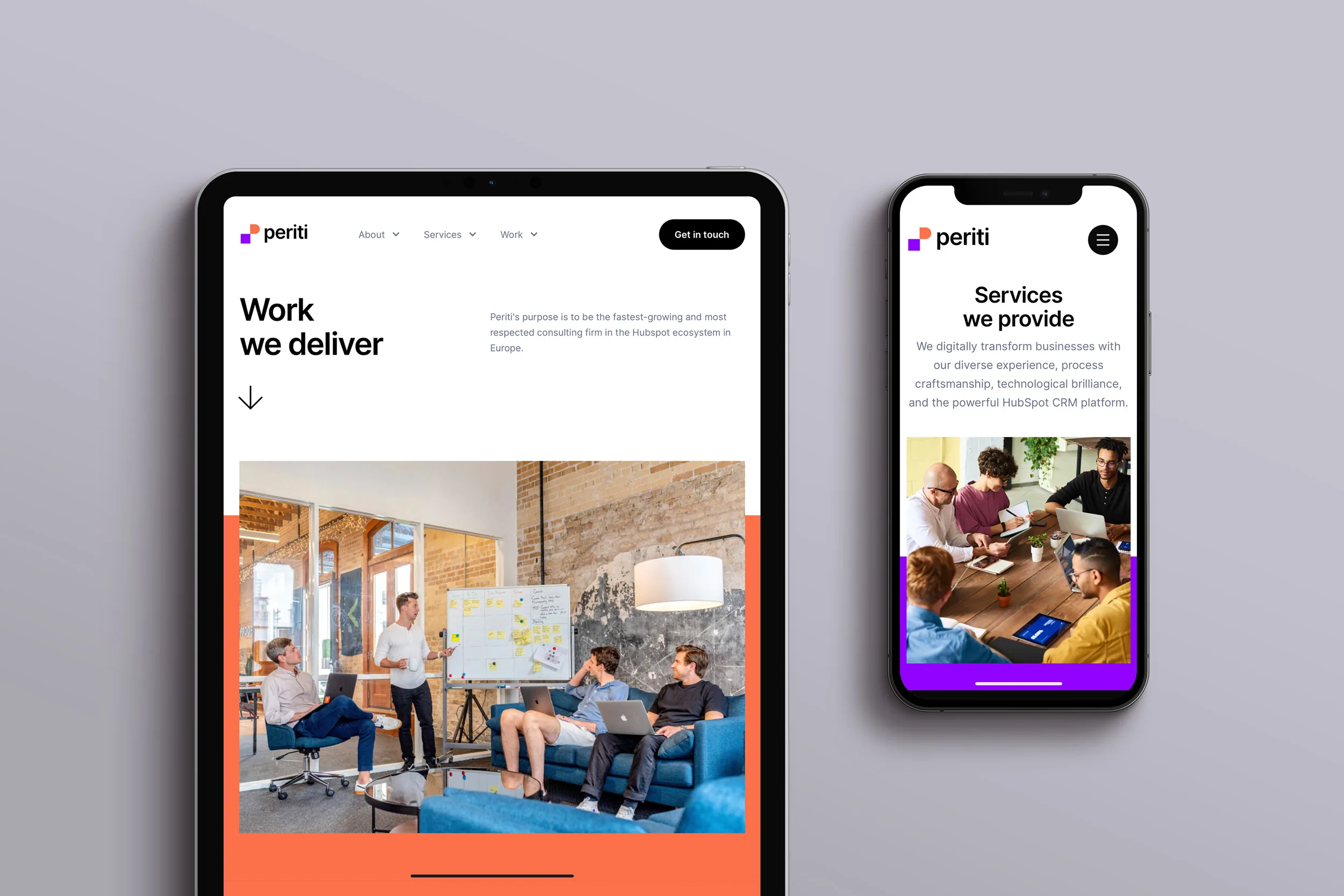
The work extended from the company’s verbal and visual identity to its website and the materials the consulting team used with clients.
Quoting the whole engagement as the price of a website would give you the wrong idea about how much work the build accounted for. See the Periti Digital case study.
At the other end of the scale, my work for Nathalie Sadler, a speaking director, took about two weeks.
My project for Brand Makers ran about six.
These are project timelines.
I’d ask what has to be delivered on your launch date before borrowing a timeline from someone else’s business.
Which parts of an existing site can change the price?
When I estimate a redesign, I ask to see the current site before I count the new pages.
Some of the most expensive work can be invisible in a design mockup.
Copy and content migration
If the copy is ready, I can design around the words your customers will actually read.
If three partners still disagree on how to describe the business, the project needs time for writing and approvals.
Decide who owns that work before setting a launch date.
For a migration, pick a few representative pages and inspect what has to move: the body, images, captions, author, publish date, downloads, and any forms or embeds.
Five new templates and a hundred old articles are two different quantities on the estimate.
Animation and custom development
A simple transition across a set of pages is one scope.
An original scroll sequence with custom artwork, multiple breakpoints, and a reduced-motion treatment is another.
Send one or two examples of the effect you have in mind, and I can explain what would be involved.
If you have a fixed launch date, we can launch with the approved layouts and add a particular animation later.
I’d protect the budget for a working contact flow and readable mobile pages before commissioning motion for every section.
URLs, search traffic, and integrations
Start with the pages that already bring visitors or inquiries.
Keeping a useful URL can save migration work.
When a URL needs to change, record the old address and its closest new destination, then test the redirect after launch.
Google’s site migration guidance explains what to do when addresses change.
Integrations need an owner, too.
Someone has to provide access to the CRM, identify which fields are required, and confirm where a test inquiry lands.
A form that sends leads to an unused inbox can look perfect in a design review.
Hosting and ongoing ownership
Separate the one-time project fee from the bills that will continue after launch.
Depending on the build, those can include your domain, hosting or platform subscription, paid integrations, and ongoing content or development support.
If your marketing team wants to update pages without a developer, include an editing handoff in the scope.
If your engineers prefer to own a React codebase, agree on repository access, deployment ownership, and how they’ll receive the components.
These are practical differences between two otherwise similar-looking proposals.
How to compare two website redesign quotes
Ask both providers to price the same finish line.
A $3,000 design handoff and a $6,000 live website can both be reasonable, but the first leaves somebody with development work to do.
- List the unique layouts. Count the homepage, service template, case study template, contact flow, and other distinct designs separately from the number of entries using them.
- Name the owner of each task. Who writes the copy, supplies imagery, enters content, builds the site, tests it, and controls the domain?
- Define what “done” looks like. Ask to see the site on a phone, receive a test inquiry, and publish a sample CMS entry before signing off.
- Put ongoing costs on their own line. Separate design and development fees from platform plans, paid tools, and support after launch.
An agency can be a good fit when you need writers, designers, and engineers working on several workstreams at once.
With me, you talk directly to the person designing the pages and, when we agree on a build, implementing them.
My weekly model works best when we can make decisions together and move from one approved milestone to the next.
For a fuller checklist, see what to include in a branding and website redesign scope.
If you’re deciding whether the identity should come first, my brand identity pricing guide explains that part in more detail.
Common questions
Can I keep my branding and just redesign the website?
Yes. If you’re happy with your identity, send me your logo files, fonts, colors, and any guidelines. We can spend the first week in Figma or go straight into a focused landing-page design and build.
How much does a five-page website redesign cost?
Elevate paid $3,000 for five page designs in Figma, with its own developers building them. To quote five live pages, I’d first check how many unique layouts they require and whether you need a CMS, migration, or integrations.
Do revisions cost extra?
Revisions within our agreed scope are included. An extra page type, a new language, or a new integration changes what we need to deliver. We’ll agree on the time and price before adding it.
Can my team update the site after launch?
Yes, when we scope the editing experience that way. Tell me what you want to publish yourself, such as case studies, articles, or services, and I can build the relevant templates and walk your team through a real update.
When is the $10,000 monthly option worth it?
If the agreed work will take four weeks, booking the month upfront saves $2,000 over four separate $3,000 weeks. For a smaller job that fits into one or two weeks, the weekly option costs less.
How much would your website redesign cost?
Send me your current website, the date you want to launch, and the main thing visitors should be able to do on the new site.
On the call, we’ll look at which pages you can keep, which need designing, and who’s building them.
I’ll tell you whether I’d book a single week, add a second or third, or use the monthly rate.
You can browse my client work and see my pricing before we talk. Book a call.
Ready to build a brand people remember?
Tell me what you’re launching, changing, or trying to make look better.