
Consultancy branding is the work of making expertise visible before anyone has bought it.
That is harder than branding a product, because a consultancy has nothing a buyer can pick up, test or return.
What the buyer can see is your logo, your website, your proposal and the way you describe what you do, so those four carry the whole risk assessment.
I’m Arek Dvornechuck, a brand designer in New York, and I built the identity, verbal positioning and website for Periti Digital, a HubSpot consultancy with teams in Dublin, Bray, Lisbon and Munich.
Key takeaways
- Buyers are de-risking, not shopping, so every brand decision should reduce perceived risk.
- Most consultancies are not undifferentiated; they are undescribed, which is a language problem before it is a design one.
- Decide early whether the brand is the founder or the firm, because it changes the name, the logo and the exit.
- The proposal and the pitch deck are the brand, since they are the documents a client reads alone, twice.
Jump to the part you need.
- Nobody takes you seriously yet: the credibility problem.
- You sound like everyone else: differentiation, then verbal identity.
- You are the brand and want out: founder or firm.
- You keep losing at the proposal stage: proposals and decks.
- You want to see work: Periti Digital, then 8 examples.
The credibility problem: you sell something nobody can see
A consultancy buyer is not choosing the best firm, they are choosing the firm least likely to embarrass them internally.
That reframing changes everything the brand has to do.
Credibility in professional services is mostly built out of specificity, consistency and evidence.
Specificity means naming the problem you solve and the kind of company you solve it for, instead of claiming a category.
Consistency means that your LinkedIn, your proposal, your invoice and your email signature look like one organization, because an inconsistent brand reads as an improvised one.
Evidence means named clients, numbers you are allowed to publish, certifications and partner badges, placed where a buyer is deciding rather than buried on an about page.
A small consultancy wins credibility through precision, not volume.
Three carefully written case studies beat twenty logos you cannot talk about.
How to differentiate undifferentiated expertise
Most consultancies are not undifferentiated, they are undescribed.
Two firms can do genuinely different work and still write the same sentence about transformation, partnership and results.
So before you look at logos, find the difference that is already true.
There are only a handful of places it usually lives.
- Who you serve: a sector, a company size or a stage, stated narrowly enough to exclude people.
- The problem you take: the specific failure clients call you about, in their words rather than yours.
- How you work: a named method, a fixed timeline, a team model, or a refusal that costs you money.
- What you can prove: a platform certification, a published result, a body of work nobody else has.
- Who you are: the operator background or the point of view that made clients hire you in the first place.
Then build the identity around that one thing rather than around an abstract idea of professionalism.
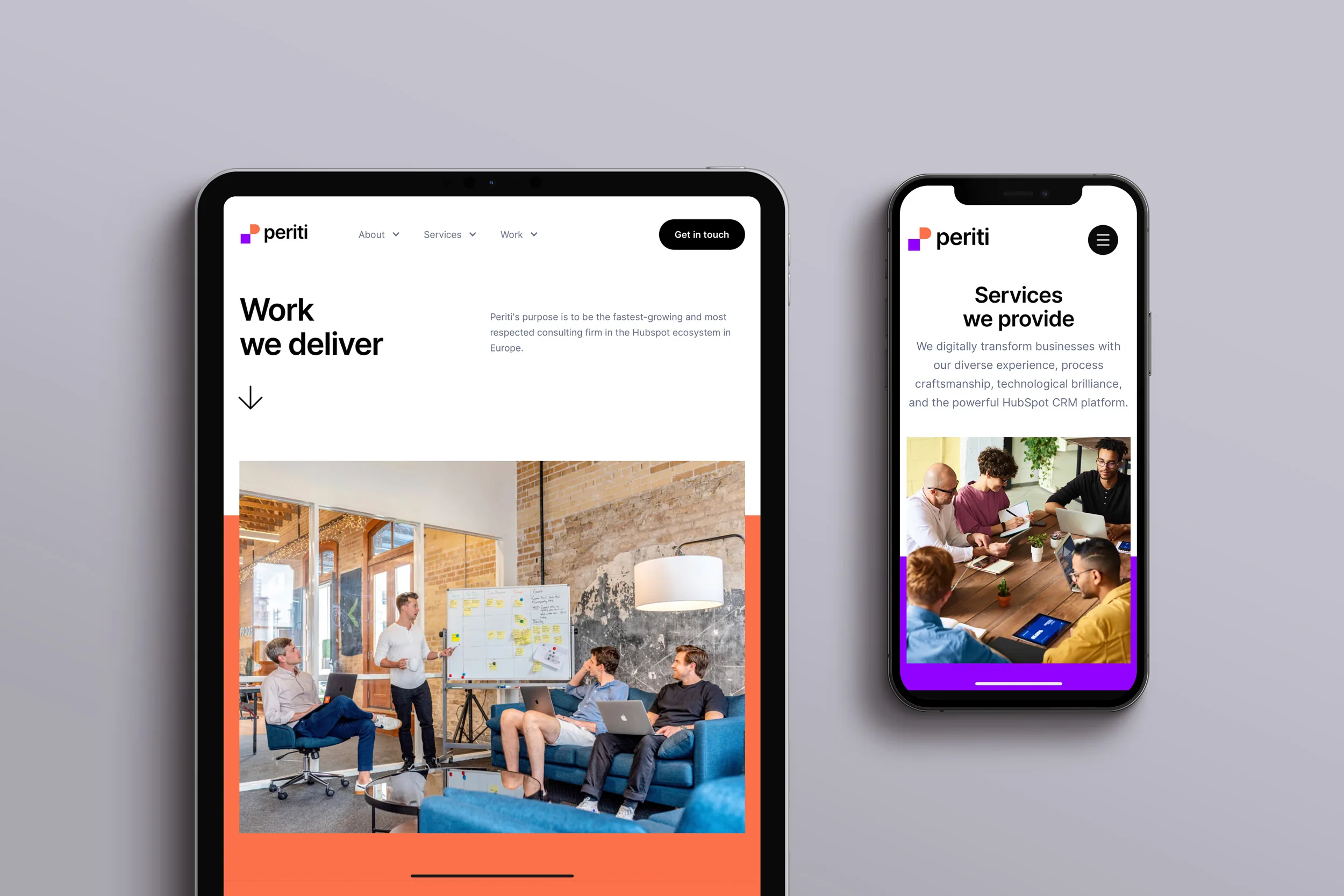
Periti states its purpose on its own site as being the fastest-growing and most respected consulting firm in the HubSpot ecosystem in Europe, which names an ecosystem, a geography and a rank in one line.
The test is simple: if a competitor could put their name on your website and nothing would be false, you have no positioning yet.
This is brand positioning work, and it has to be settled before any design decision is worth making.
Founder-led brand or firm brand
Decide this early, because it changes the name, the logo, the photography and what the business is worth when you sell it.
A founder-led brand grows faster, because trust transfers from a person more readily than from an entity.
It also caps you at the founder’s calendar, makes hiring harder, and is difficult to sell, since the asset walks out at the end of the day.
A firm brand is slower to build, scales past one person, and survives the founder leaving.
Most consultancies under ten people should run both, deliberately.
The practical version is a firm brand that owns the website, the proposals and the contracts, and a founder presence that owns LinkedIn, writing and speaking.
Two rules keep that from collapsing.
- The founder never becomes the only named person: show the team, even a small one.
- Every founder-generated lead lands on a page that looks like a firm, not like a personal site.
If you intend to sell, avoid putting your surname on the door, or plan the rename now rather than during due diligence.
Verbal identity: a consultancy brand is mostly what it says
In professional services the words do more work than the logo, so write them first.
A usable verbal identity for a consultancy is short.
- One positioning sentence: what you do, for whom, and the result, with no adjectives.
- A tagline that commits: Periti’s is experience matters, which is a claim, not a description.
- Three proof points: the reasons that sentence is believable, each backed by something external.
- A vocabulary list: the words you use and, more usefully, the words you have banned.
- Service names: what your offers are called, consistently, in the proposal and on the site.
That last one is the most neglected and the most valuable.
When your services have stable names and stable scopes, buyers can compare you to themselves instead of to your competitors, and your proposals stop being written from scratch.
Keep the register plain: in a category where everyone sounds impressive, clarity reads as confidence.
Proposals and pitch decks are where the brand actually closes
The proposal is the only brand asset a client reads alone, carefully, and usually twice.
It is also, in most firms, the worst-looking thing they produce.
A branded proposal system is cheap and it changes close rates for an obvious reason: a document that looks considered implies work that will be considered.
Build it as a template, not as a one-off.
- A cover that names the client, dated, with your mark small rather than large.
- Their problem restated first, before any mention of your firm.
- Scope, timeline and price in a table, with the price visible rather than negotiated into a footnote.
- One relevant case study, chosen for similarity, not for prestige.
- A single next step, with a date on it.
Keep the pitch deck separate from the proposal, because one is presented and the other is read.
If you want the mechanics, I have a longer guide on how to write a design proposal and a set of proposal templates that apply to any professional service.
What a consultancy website actually has to do
A consultancy website has one job: get a qualified stranger to book a call without talking to you first.
Most consultancy sites fail in the first screen, where a vague headline forces the visitor to go hunting.
Say the specific thing in the headline, then give the five things a buyer is actually checking.
- What you do, in a sentence they would use themselves.
- Who you do it for, named concretely.
- Proof: clients, results, certifications, partner status.
- Who the people are, with faces.
- What happens if they get in touch, and how long it takes.
Then make the services pages match the service names in your proposal, so the buyer never has to translate.
Two or three strong pages beat a sprawling site nobody reads, especially for a firm under twenty people.
How I branded Periti Digital, a pan-European consultancy
Periti Digital is a HubSpot consultancy with teams across Dublin, Bray, Lisbon and Munich, which made consistency the central problem.
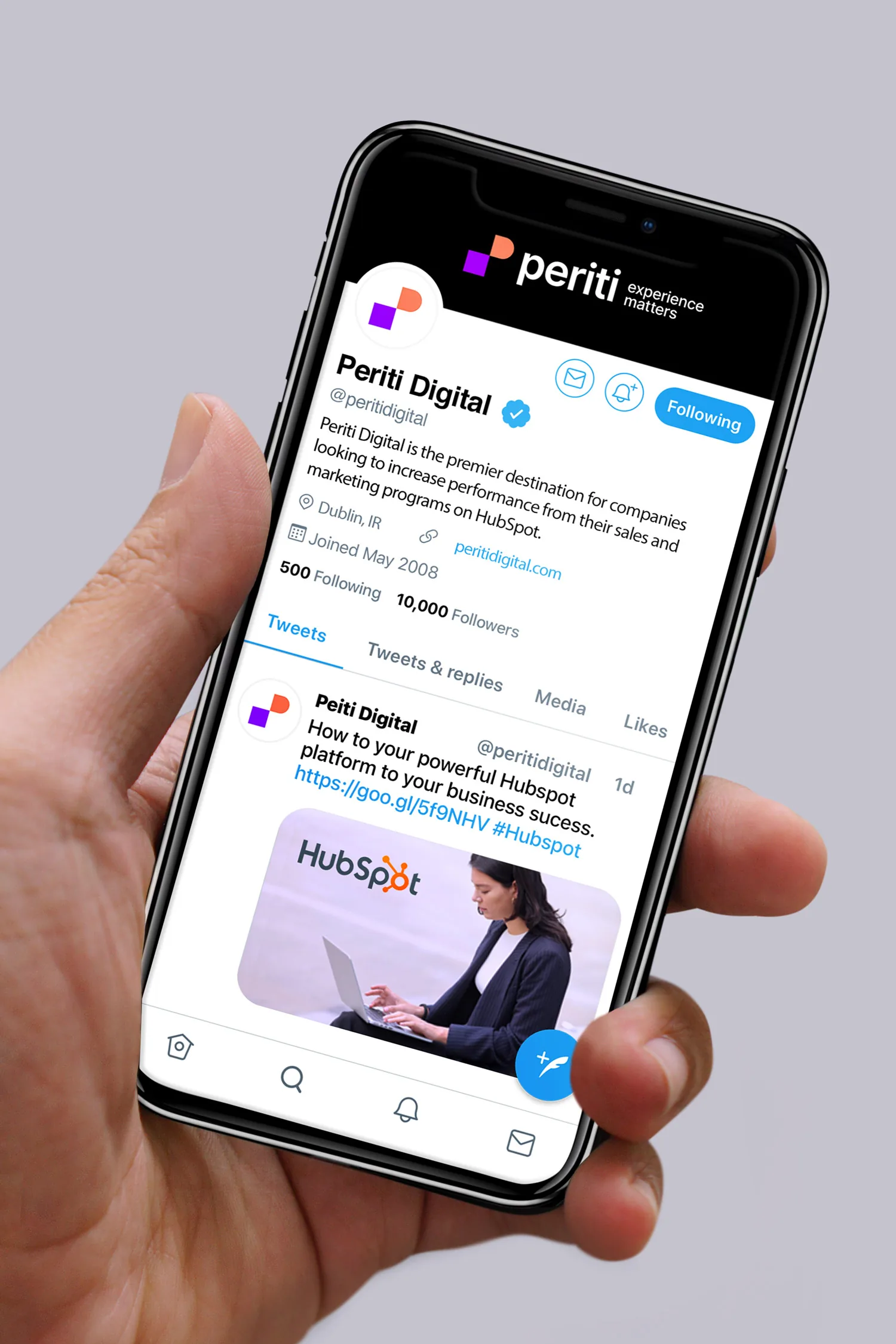
Four offices in four markets will drift into four brands unless someone builds a system that is easier to follow than to ignore.
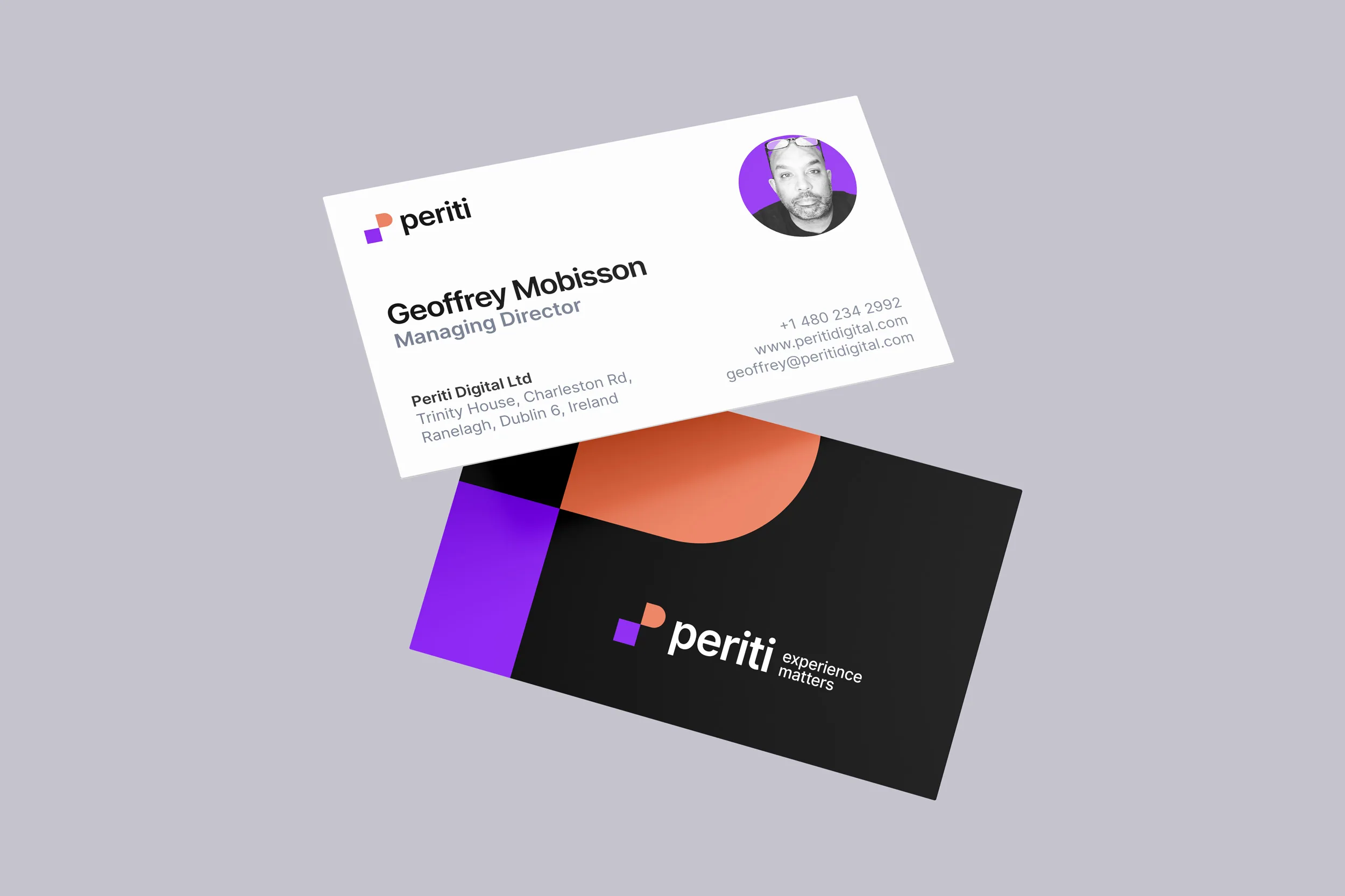
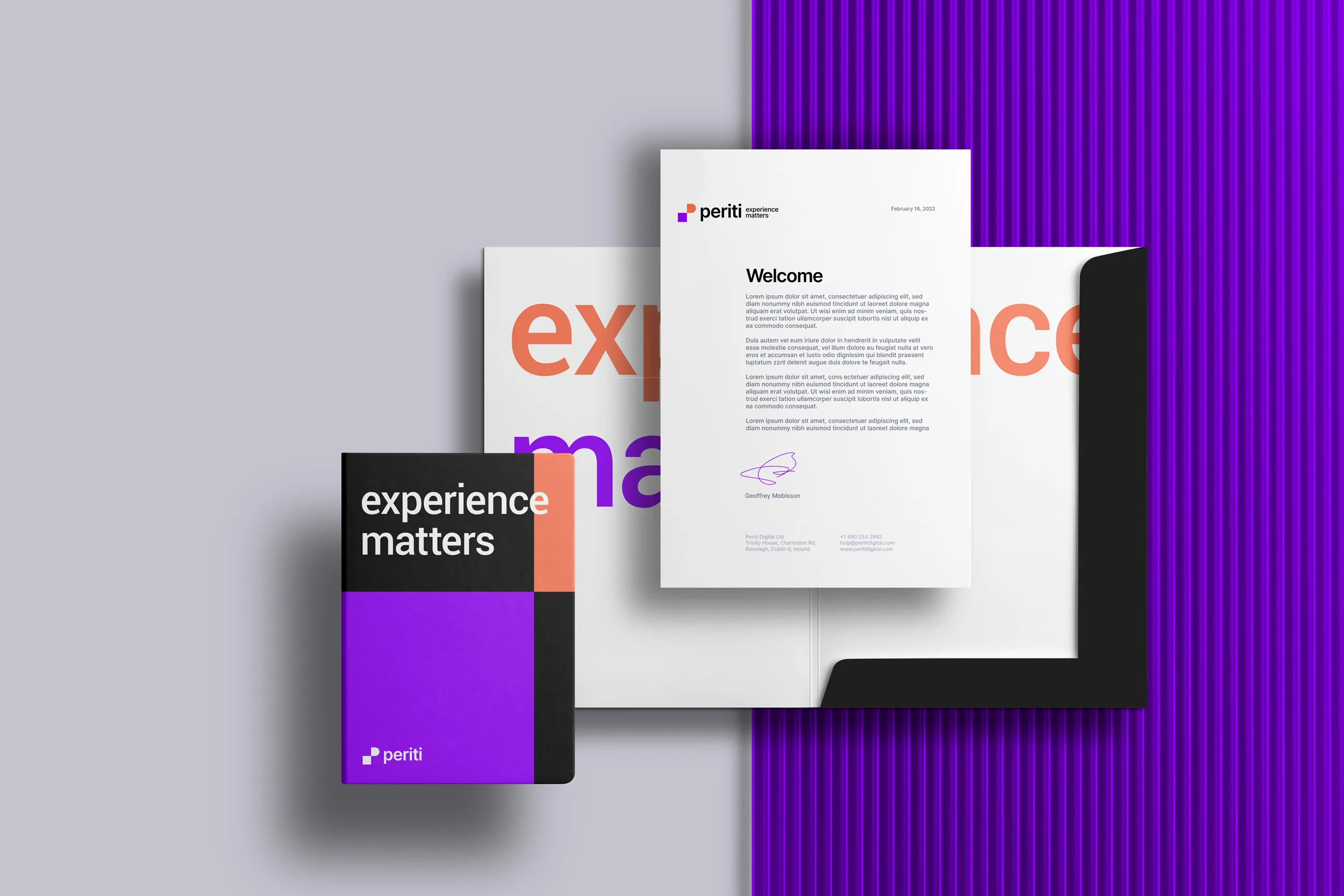
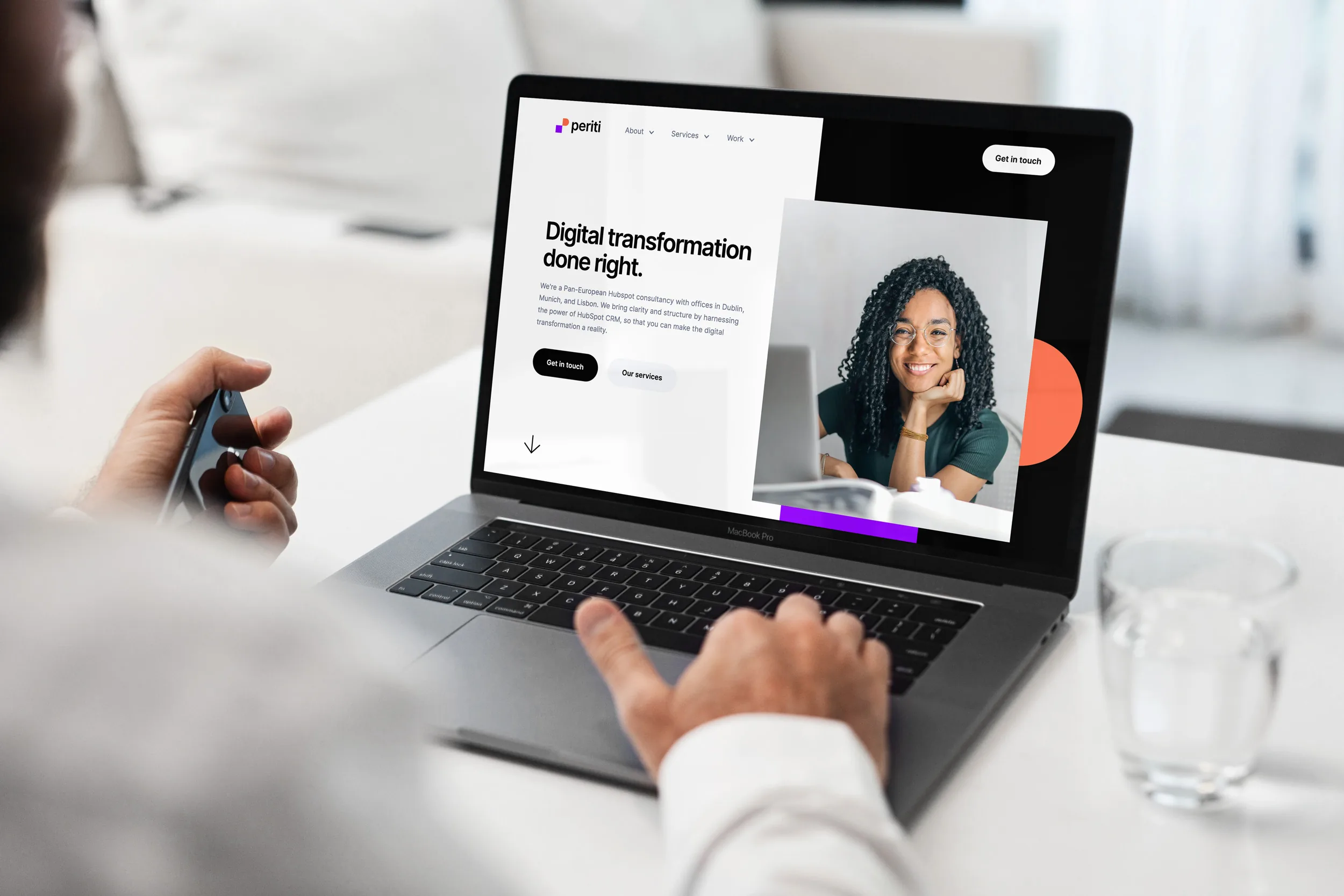
The identity is built on a bold architectural mark: a lowercase p assembled from a violet square and a coral half-circle, so it holds at any size and reads as structure rather than decoration.
Violet and coral against black give the firm a palette that is unmistakably not the default consulting navy.
The verbal work came with it: positioning, the line experience matters, and consistent service language the whole team could use.
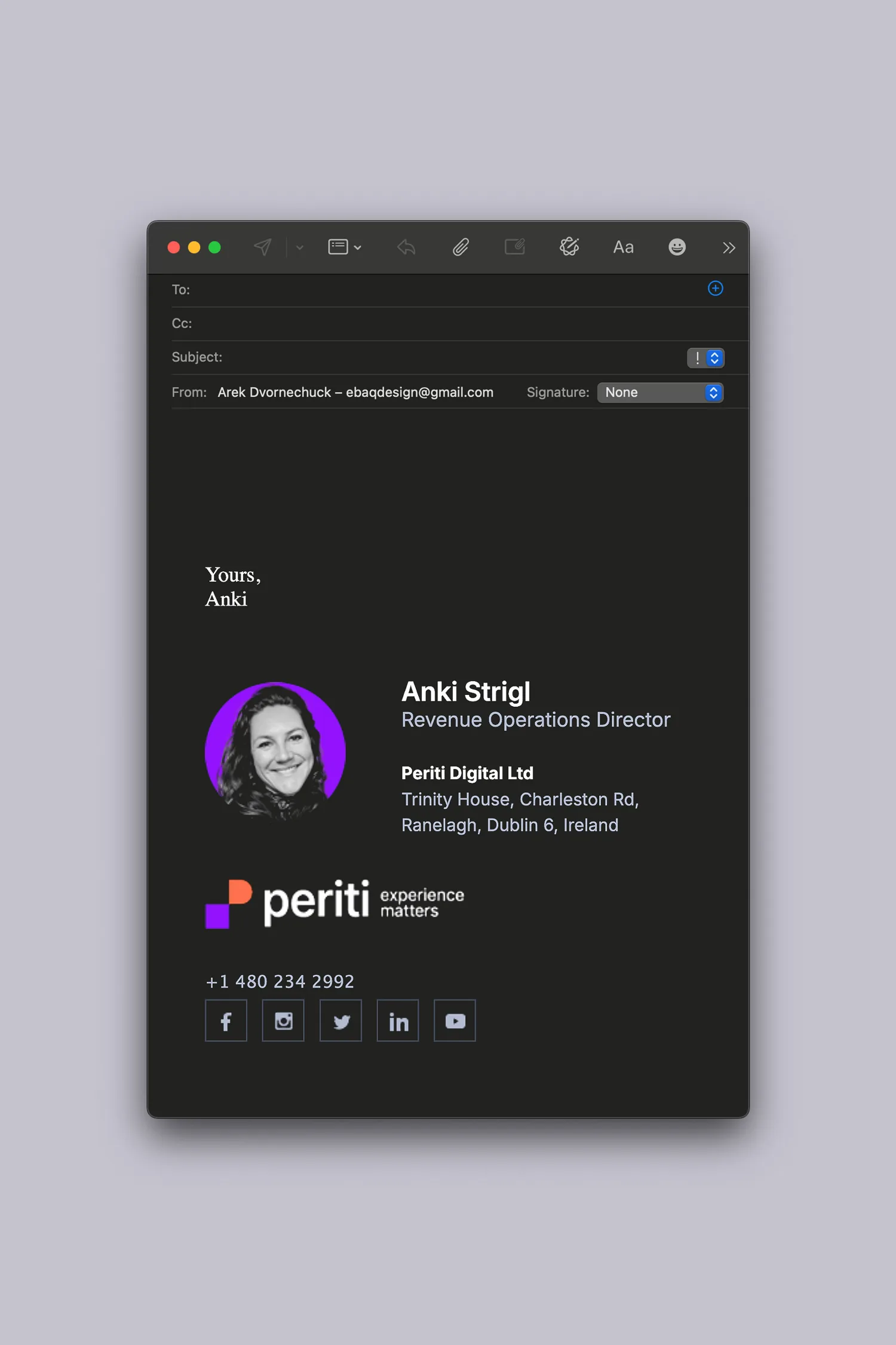
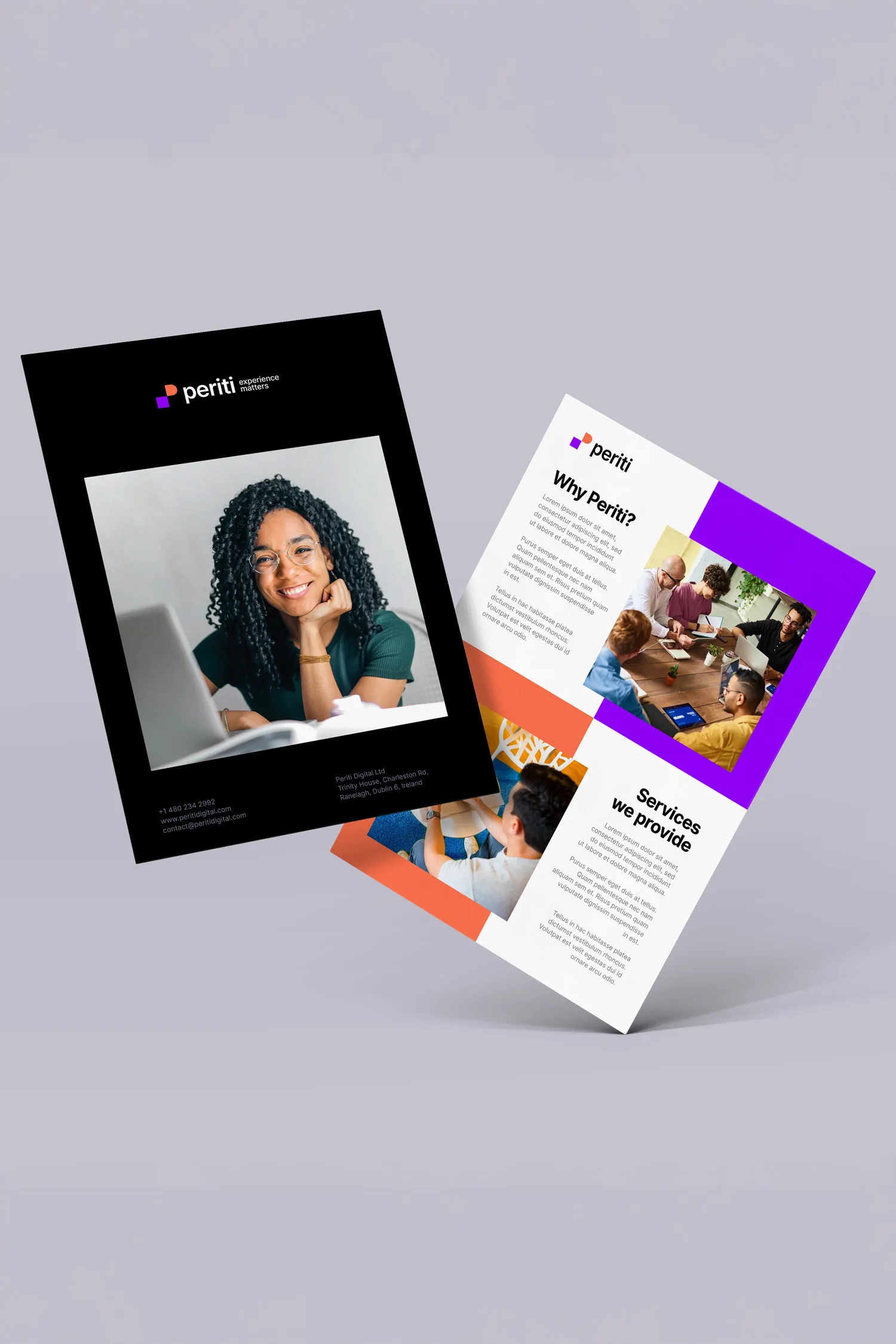
Then the system was extended to the website, stationery, social templates, a promotional flyer, merchandise and the email signature, which is the asset a consultancy sends most often and designs least.
The deliverables, the brand guidelines and the live site are in the Periti Digital case study.
I have done the same work for Wingnut Social, a digital marketing agency serving interior designers, including its logo, pitch deck and social system.
8 consultancy branding examples worth studying
These eight are mostly smaller firms rather than the big four, which makes them far more useful as references.
1. Zahlmann
Zahlmann combines a sleek typographic system with a clean, modular website, and the branding emphasizes clarity and organization.
Those are precisely the traits consulting clients are screening for, so the identity is arguing the positioning.
A neutral palette reinforces trust while subtle graphic accents keep it recognizable.
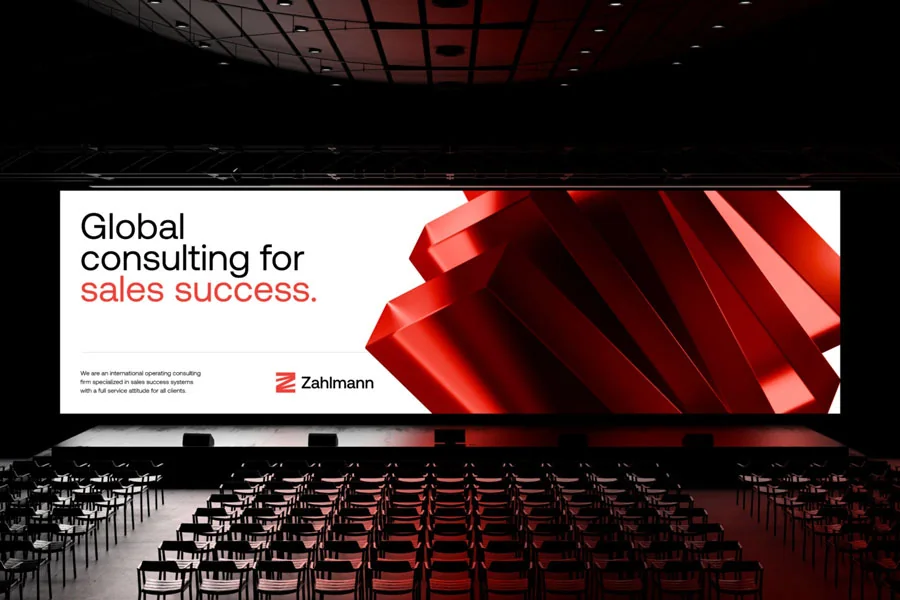
It is a textbook case of balancing digital usability with a strong brand identity, and you can see the full project on Behance.
2. Expensify
Expensify is expense-management software rather than a consultancy, but its rebrand is a useful reference for any finance-adjacent firm.
The logo and visual language, created with The Collected Works, balance simplicity with flexibility.
A playful icon system and bright colors stand out in a traditionally conservative space.
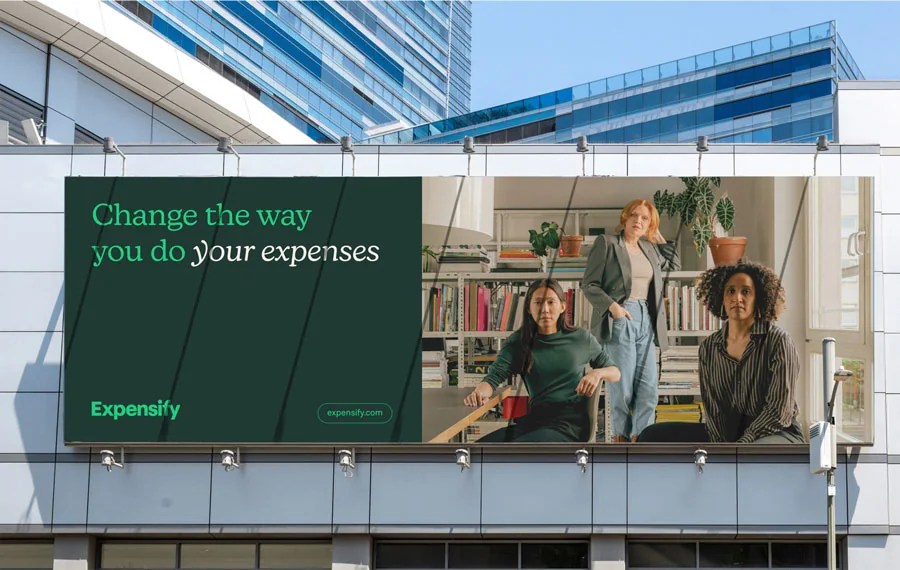
It signals innovation without losing credibility, which is the exact tightrope a modern advisory firm walks; the full write-up is on Brand New.
3. Konsilo
Konsilo leans into minimalist consultancy branding with clean typography and a calm, neutral palette.
The simplicity does the trust work that a consulting practice needs, without a single flashy element.
It is a good reminder that restraint is a position, not an absence of ideas.
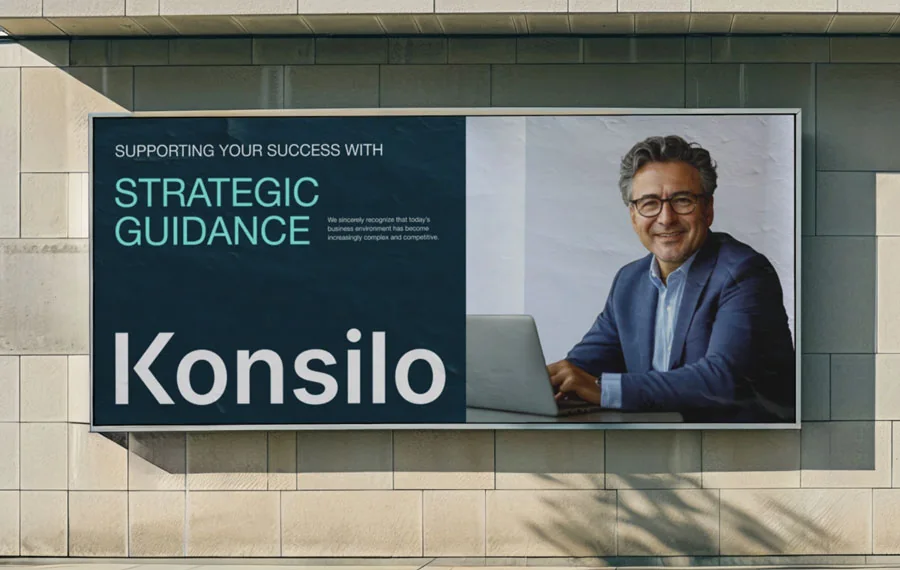
See the identity on Behance.
4. Alvo
Alvo takes a contemporary and dynamic approach, with bold typography and geometric elements that convey precision and structure.
That is a direct nod to the analytical side of consulting, and it photographs well in a deck.
The system stays confident and adaptable across print, web and motion.
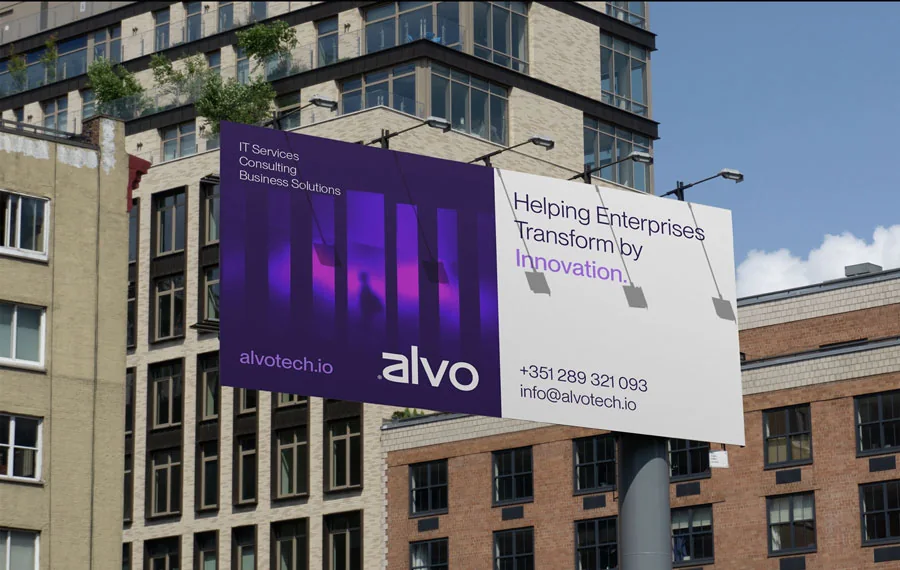
It positions Alvo as a forward-thinking firm for modern businesses; the project is on Behance.
5. Leone
Leone Consulting Group uses a sophisticated serif wordmark with refined layouts to project authority and prestige.
It taps the gravitas expected from established firms while still reading as contemporary.
This is the approach to copy if your buyer is a board rather than a growth team.
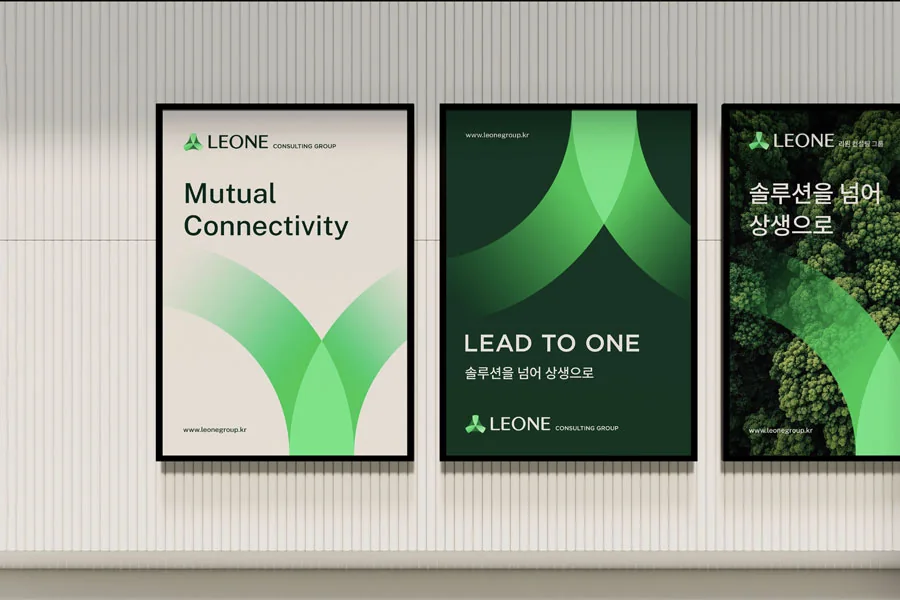
It shows how luxury branding principles transfer to professional services; see it on Behance.
6. Fractal
Fractal integrates motion graphics and digital-first design to position the firm as innovative and adaptable.
The fractal-inspired visuals stand in for problem-solving and scalability, which are the two things consulting clients buy.
Abstract design can carry real meaning when the metaphor matches the service.
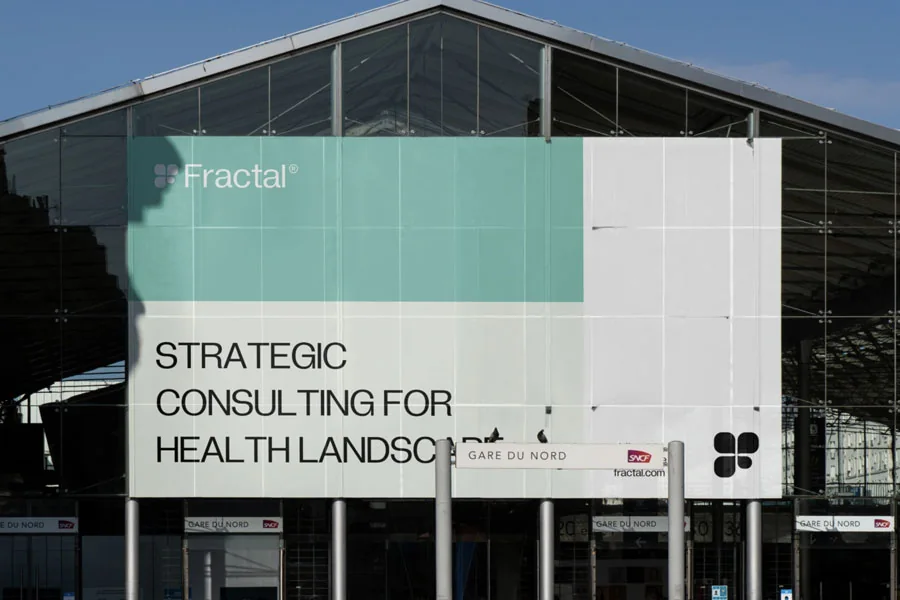
The branding, web and motion work is on Behance.
7. Elevare
Elevare Consulting embraces an uplifting, modern aesthetic built on bold gradients and dynamic layouts.
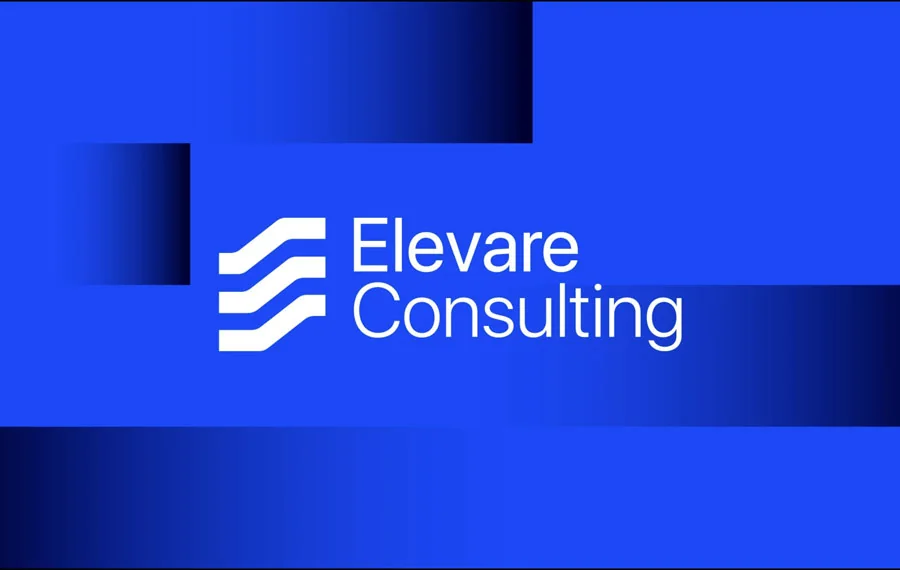
The branding captures growth and transformation, which are the themes central to the work.
It reads as relevant to startups and fast-scaling companies rather than to incumbents.
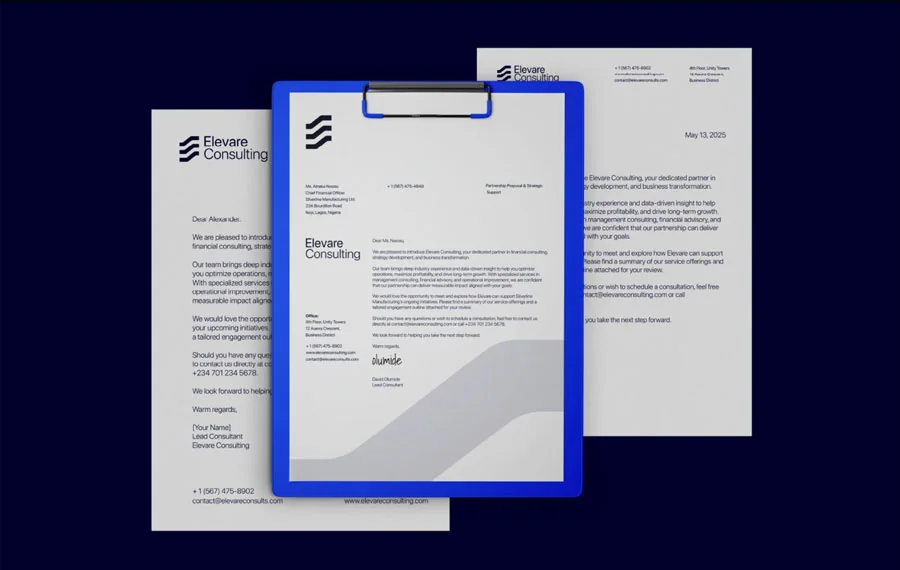
That audience fit is the whole point, and the project is on Behance.
8. Osome
Osome’s in-house rebrand is a masterclass in digital-first branding for professional services.
The system is simple and highly functional, designed to scale across apps, websites and client communications.
Keeping the design minimal and adaptable means it looks sharp in every client interaction.
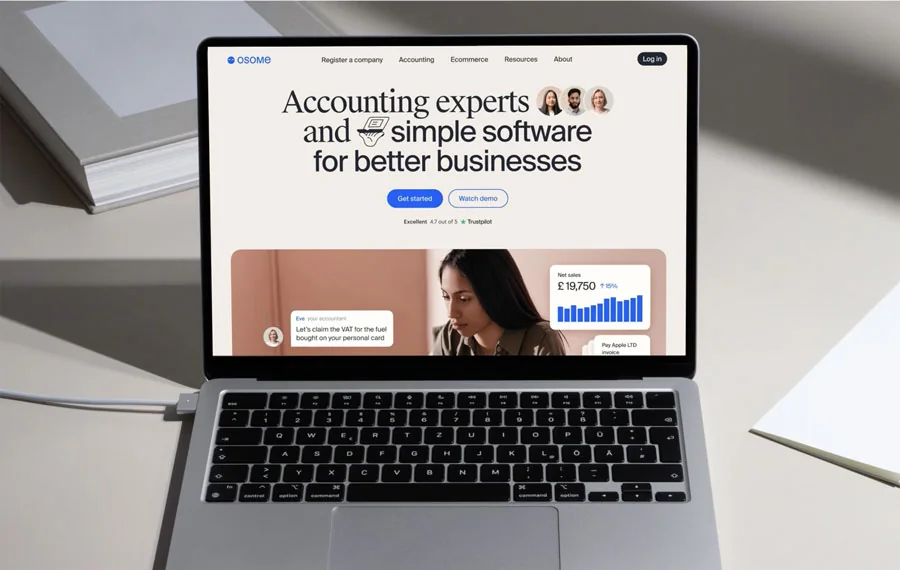
That consistency is what reinforces efficiency and reliability; the rebrand is covered on Brand New.
How a consultancy rebrand runs
A consultancy rebrand is a positioning project with a design project attached, so run them in that order.
- Positioning: who you serve, the problem you take, and the one thing that is already true and different.
- Verbal identity: the positioning sentence, the tagline, proof points, vocabulary and service names.
- Identity: logo, logo animation, typography, color and layout rules, built to survive a dense document.
- Documents: proposal template, pitch deck, letterhead, email signature, the things clients actually receive.
- Website: the pages that match your service names, with proof where decisions are made.
- Guidelines: short brand guidelines a distributed team will genuinely follow.
On cost, I charge a flat $3,000 per week, and a complete brand identity is delivered in one week, guaranteed, for $3,000 total.
The website, proposal templates and pitch deck are further weeks at the same rate, agreed before work starts, so the total is fixed; the breakdown is on my pricing page.
For more context, see my guides to logo design cost and to the branding package a firm should expect to own.
Consultancy branding: FAQ
These are the questions consultancy founders ask me most, answered so each one stands on its own.
What is consultancy branding?
Consultancy branding is the strategy and design work that makes a consulting firm’s expertise visible and credible before a buyer has worked with it.
It covers positioning, verbal identity, naming, logo, typography, color, documents and the website.
It differs from product branding because there is no product to see, so the brand carries the buyer’s entire risk assessment.
How do you differentiate a consultancy that does what everyone else does?
Start by assuming you are undescribed rather than undifferentiated.
The difference usually already exists in who you serve, the specific problem clients call you about, how you work, or what you can prove.
Name one of those narrowly enough to exclude people, because a positioning that excludes nobody persuades nobody.
Should a consultancy brand be built around the founder or the firm?
Run both, with different jobs.
The founder owns LinkedIn, writing and speaking, because trust transfers from a person faster than from an entity.
The firm owns the website, proposals and contracts, so the business scales past one calendar and still has value if the founder leaves.
What makes a good consulting firm logo?
A good consultancy logo is legible small, works in one color, and survives being placed on a dense document.
It should carry the firm’s positioning rather than a generic idea of professionalism: Periti’s lowercase mark is built from two geometric shapes, which reads as structure.
Avoid the globe, the swoosh and the abstract arrow, which every competitor already owns.
What should a consultancy website include?
Five things, in the first two screens where possible.
What you do in your buyer’s own words, who you do it for, proof such as clients and certifications, the people with faces, and what happens next with a timeframe.
Match the service names on the site to the ones in your proposal, so the buyer never has to translate.
Do proposals and pitch decks need to match the brand?
Yes, and this is the cheapest improvement most firms can make.
The proposal is the only asset a client reads alone and carefully, usually twice, so it carries more persuasive weight than the website.
Build it as a template with the client’s problem first and the price visible rather than buried.
How much does consultancy branding cost?
I charge a flat $3,000 per week, and a complete consultancy brand identity is delivered in one week, guaranteed, for $3,000 total.
That covers logo, logo animation, typography, color, brand guidelines and stationery.
Website, proposal templates and a pitch deck are added as further weeks at the same rate, so the total price is fixed before work starts.
How long does a consultancy rebrand take?
One week for the brand identity, guaranteed.
The website follows in one to two more weeks depending on page count, and proposal templates or a pitch deck take another week.
Budget separate calendar time for the positioning decisions, which are the part that depends on you rather than on me.
Need a consultancy brand that does the convincing for you?
If buyers keep asking what exactly you do, the problem is not your logo.
It is that your positioning has never been written down, and everything downstream inherits the vagueness.
Fixing that, then building the identity, documents and site on top of it, is the work I do, and the scope and timeline are on my consultancy branding page.
If you already know what you need, book a call and bring your last proposal, because it usually shows the problem faster than anything else.
Need a sharper consultancy brand?
I design logos, positioning, pitch decks, and websites for consultancies and B2B firms. Your brand identity in one week, guaranteed, for $3,000.