
Logo Design
14 Best NBA Logos of All Time in 2026
Published on Jan 27, 2026
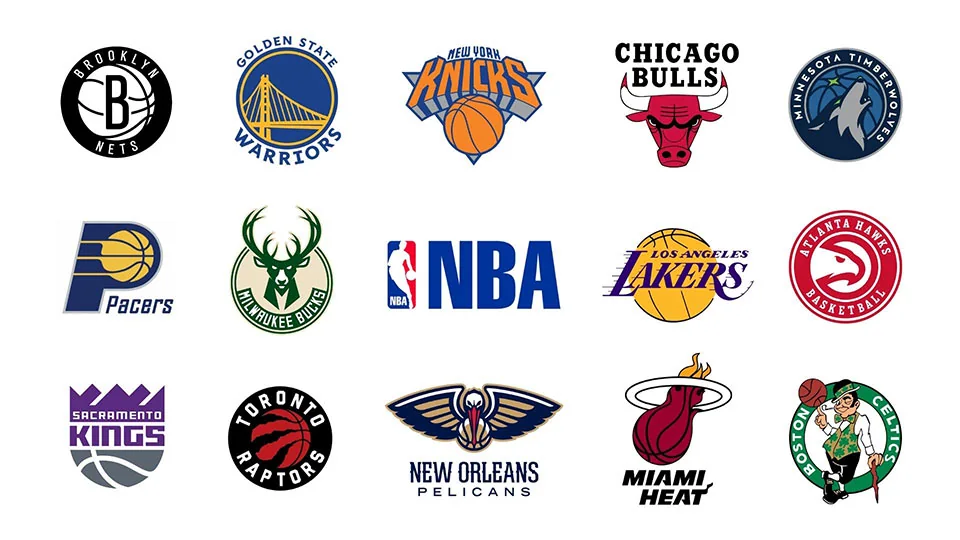
I recently attended a Brooklyn Nets vs. Miami Heat game, and it sparked a fresh appreciation for NBA team branding.
As a professional logo designer, I’m always on the lookout for how visual identities capture a team’s spirit and history.
This journey through the arena—surrounded by Nets’ black-and-white gear and Heat’s fiery colors—led me to reflect on NBA team logos.
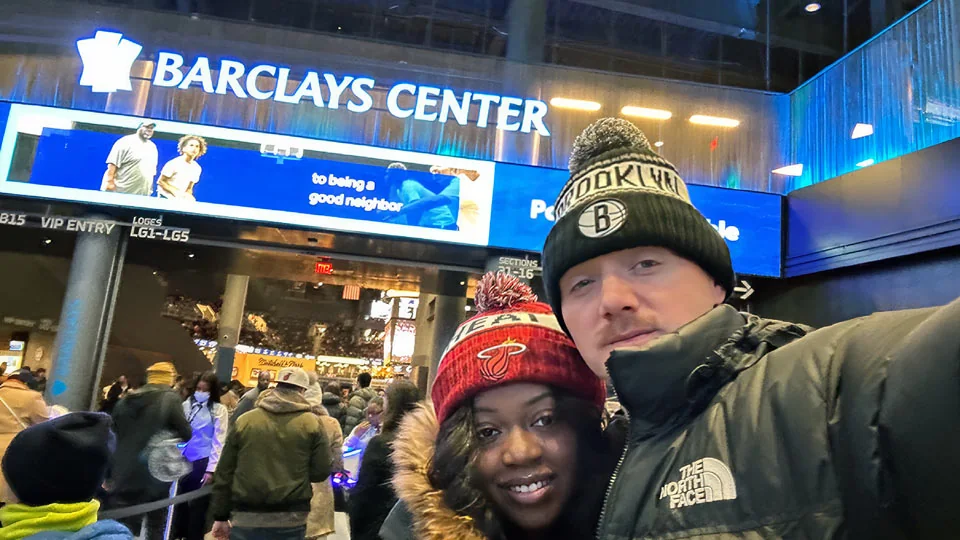
In this article, I’ll be breaking down what I consider the 14 best NBA logos of all time.
Out of the 35 teams in the league, these fourteen stand out for their aesthetics (color, typography, overall composition), emotional resonance, historical context, and fan recognition.
14 Best NBA Team Logos of All Time
- Brooklyn Nets
- Miami Heat
- New York Knicks
- Chicago Bulls
- Atlanta Hawks
- Sacramento Kings
- Indiana Pacers
- Milwaukee Bucks
- Los Angeles Lakers
- Minnesota Timberwolves
- New Orleans Pelicans
- Boston Celtics
- Toronto Raptors
- Golden State Warriors
Whether you’re a design enthusiast or a hardcore basketball fan, join me as we celebrate the logos that perfectly blend style, culture, and sports tradition.
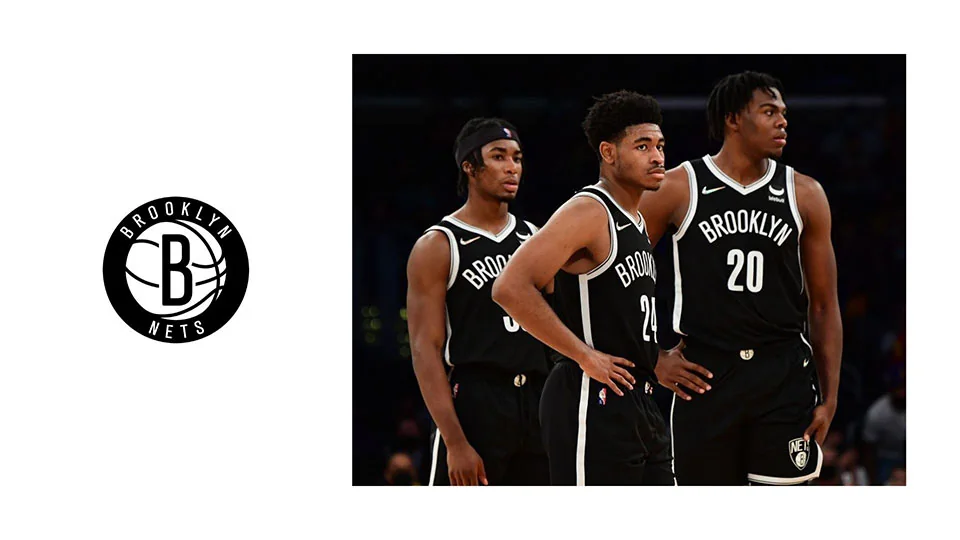
1. Brooklyn Nets
Short History
- Originated as the New Jersey Americans in the ABA, established in 1967.
- Became the New York Nets in 1968 when they moved to Long Island.
- Relocated back to New Jersey in 1977 (as the New Jersey Nets), then finally moved to Brooklyn in 2012.
Design Breakdown
- The logo was famously co-designed with Jay-Z (2012).
- Main emblem: A basketball with the letter “B” for Brooklyn.
- There are four logo variations:
- Primary (just the “B” on the basketball)
- Global (includes “Brooklyn Nets” text)
- Arched (for jerseys)
- Stylized secondary version
- The black-and-white palette is a nod to classic NYC subway signage.
My Opinion
- The bold simplicity makes it stand out among colorful logos.
- Some fans preferred the older shield logo (2012–2024) for its more traditional sports aesthetic (including myself).
- Nevertheless, it looks great on merch and has a sleek, urban feel. that is also somewhat sophisticated which makes you want to wear this merch on any occasion (not jus tot the game).
2. Miami Heat
Short History
- An expansion team in 1988, representing Miami’s vibrant culture.
- Name chosen via a fan contest (HEAT), reflecting the city’s tropical and fiery atmosphere.
- Rose to prominence in the ’90s and became a global brand during the LeBron James “Big Three” era.
Design Breakdown
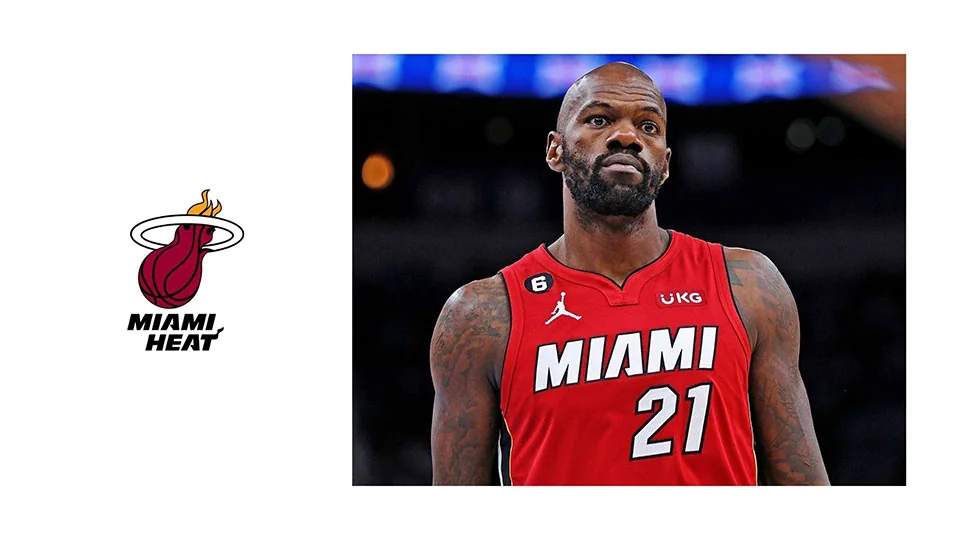
- Main logo: a flaming basketball entering a hoop.
- Colors: red, orange, black, and white, evoking heat and intensity.
- Wordmark often appears in bold uppercase with a slight italic slant which makes it quite unique and distinct.
My Opinion
- It’s iconic and timeless; instantly conveys energy.
- The flaming basketball is simple yet dynamic.
- Remains visually strong on jerseys and merchandise without frequent overhauls.
3. New York Knicks
Short History
- One of the NBA’s original teams, established in 1946.
- Named the “Knickerbockers,” referencing the early Dutch settlers in New York.
- Storied franchise with a loyal fan base at Madison Square Garden.
Design Breakdown
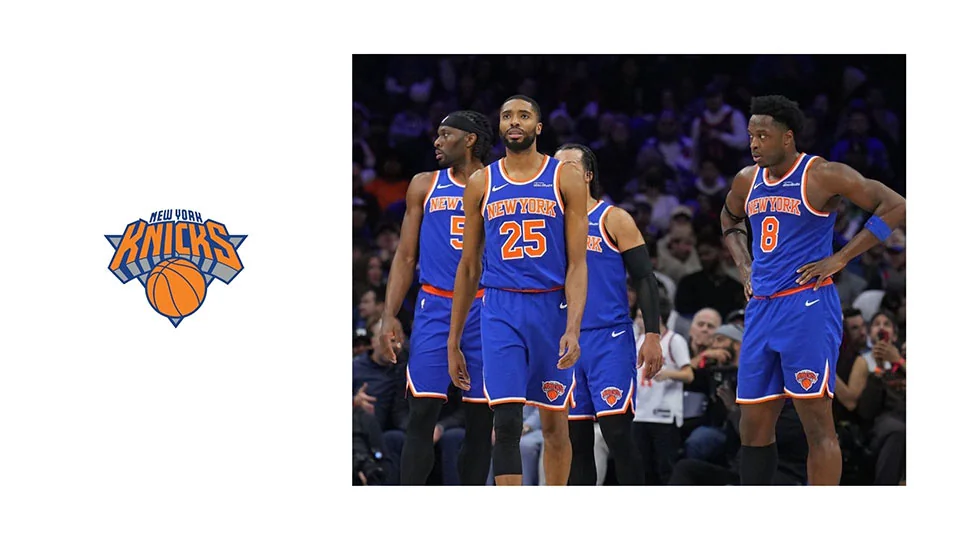
- The long-standing logo is a basketball with the “Knicks” wordmark in bold 3D lettering above it.
- Primary colors: orange and royal blue (iconic to NYC sports teams).
- Occasional minor tweaks over the decades, but the main concept remains the same.
My Opinion
- Classic and instantly recognizable—one of the NBA’s most enduring logos (and best in terms of design IMO).
- The bold typography captures NYC’s energy.
- While it’s not the most minimalist design, it has a nostalgic charm that suits the team’s heritage.
4. Chicago Bulls
Short History
- Founded in 1966, the third NBA franchise in Chicago after the Stags and the Packers/Zephyrs.
- Rose to legendary status in the ’90s with Michael Jordan’s era.
- The Bulls name reflects Chicago’s meatpacking industry and robust Midwestern culture.
Design Breakdown
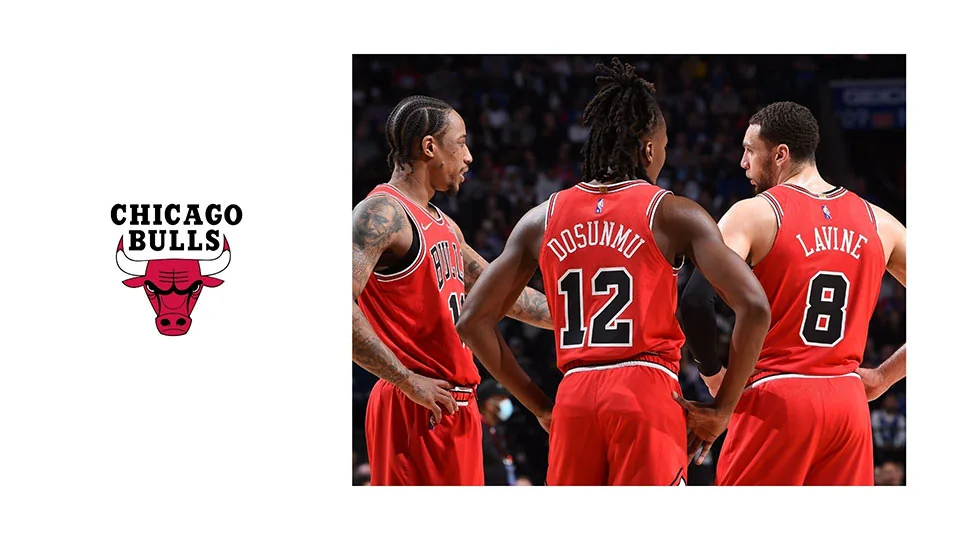
- The iconic angry bull’s head in red, black, and white (one of the most recognizable logos in sports in general).
- Notably, the logo has not changed significantly since 1966—one of the most enduring logos in sports.
- Often displayed with the wordmark “CHICAGO BULLS” above the bull’s horns which is set in quite unique serif typeface.
My Opinion
- Arguably the most famous NBA logo globally, thanks to the team’s success and MJ’s legacy.
- Striking, timeless, and instantly recognizable across all sports.
- A true testament to how a perfect design can endure for decades without major updates.
5. Atlanta Hawks
Short History
- Founded in 1946 as the Tri-Cities Blackhawks (in Moline and Rock Island, Illinois, plus Davenport, Iowa).
- Moved to Milwaukee in 1951 and then to St. Louis in 1955 (won the NBA championship in 1958).
- Relocated to Atlanta in 1968, becoming the Atlanta Hawks.
Design Breakdown
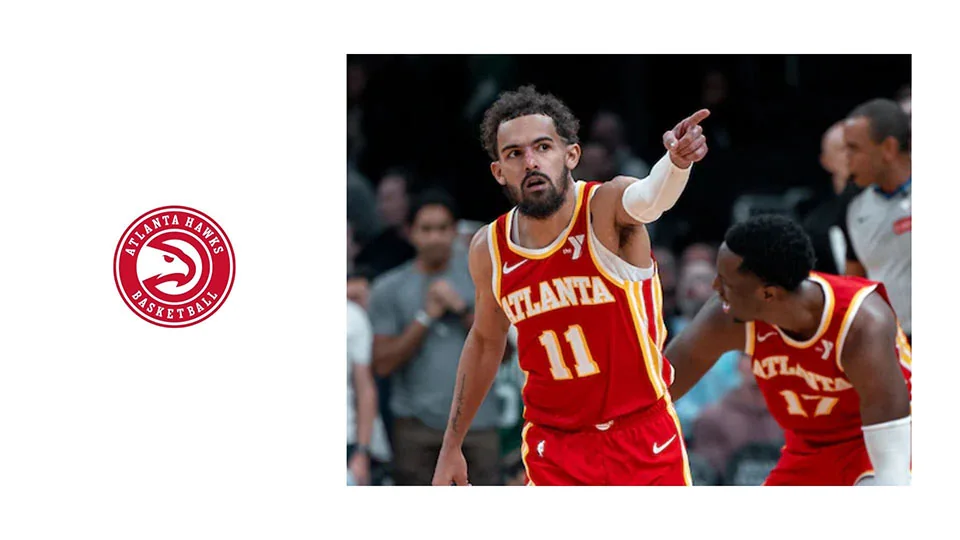
- The current “Pac-Man” style hawk head within a circular shape is a contemporary evolution of past hawk logos (very simplistic just as Brooklyn Nets' logo).
- Primary colors are red and white, with neon green accents appearing in some alternates.
- Alternate roundel design includes “Atlanta Hawks Basketball Club” text surrounding the hawk head.
My Opinion
- The minimalist hawk's head silhouette is modern and instantly recognizable.
- The bold red combined with neon green accents adds a fresh twist.
- Overall, it’s a strong brand mark that resonates well with younger fans.
6. Sacramento Kings
Short History
- Originated as the Rochester Royals (1945) in the NBL/BAA.
- Moved to Cincinnati (becoming the Cincinnati Royals), then to Kansas City–Omaha (as the Kansas City Kings), and finally settled in Sacramento in 1985.
- The “Kings” moniker has stuck through each relocation.
Design Breakdown
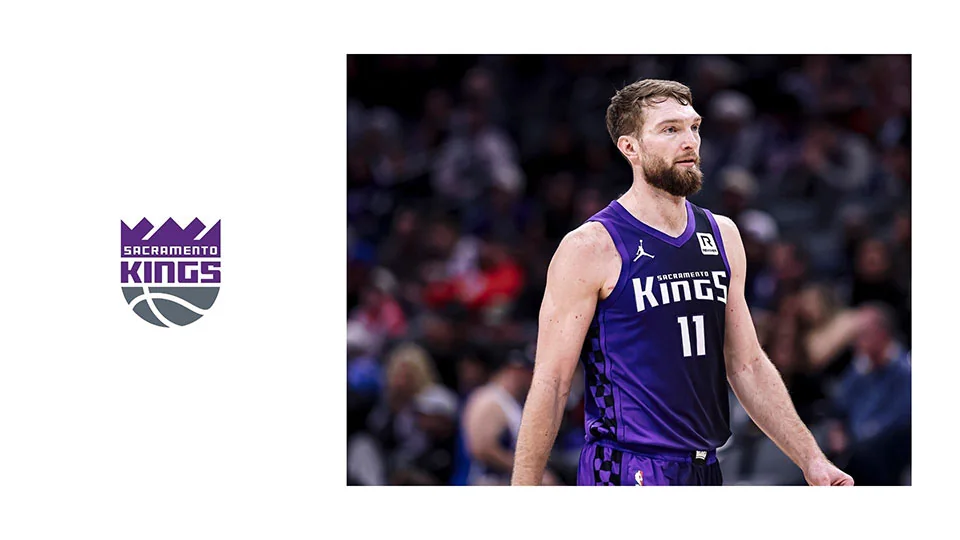
- Current primary logo: A modernized crown/mountains above a basketball, with “Sacramento” and “Kings” wordmarks.
- The color scheme is primarily royal purple and silver, with black and white accents.
- Secondary logos often feature a stylized lion or the classic “S” in a crown shape.
My Opinion
- The purple-and-silver combo is iconic and regal, fitting the “Kings” theme, very minimalist approach (similarly to Nets' and Hawks' logos)
- The simplified shapes and typography look clean and timeless, following good design principles.
- Overall, a solid balance between modern minimalism but also incorporating traditional elements (crown, mountains, basketball).
7. Indiana Pacers
Short History
- Joined the ABA in 1967 and was one of the strongest ABA teams before merging into the NBA in 1976.
- Named for Indiana’s rich auto racing heritage (pacing car in the Indy 500).
- Have maintained a strong basketball tradition and loyal Midwest fan base.
Design Breakdown
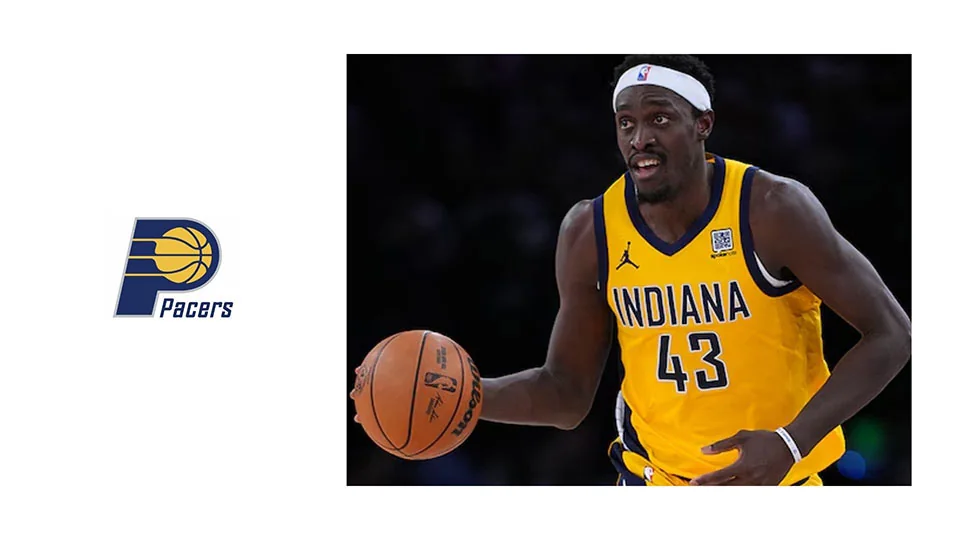
- Iconic “P” with a stylized basketball inside, set in navy & gold.
- Updated slightly over time, but the fundamental shape and color scheme have remained fairly consistent.
- Secondary logos sometimes include the wordmark “Pacers” or a basketball with a trailing motion effect.
My Opinion
- The “P” concept is both simple and unique, instantly identifying the Pacers (I also like the lines that add to dynamism)
- The navy-and-gold color combo is clean, professional, and ties well to Indiana’s sports culture.
- A perfect example of subtle evolution without losing brand identity.
8. Milwaukee Bucks
Short History
- Founded as an NBA expansion team in 1968.
- Quick success in the early 1970s, led by Kareem Abdul-Jabbar and Oscar Robertson, winning the 1971 NBA title.
- The “Bucks” name reflects Wisconsin’s wildlife and the state’s outdoorsy reputation.
Design Breakdown
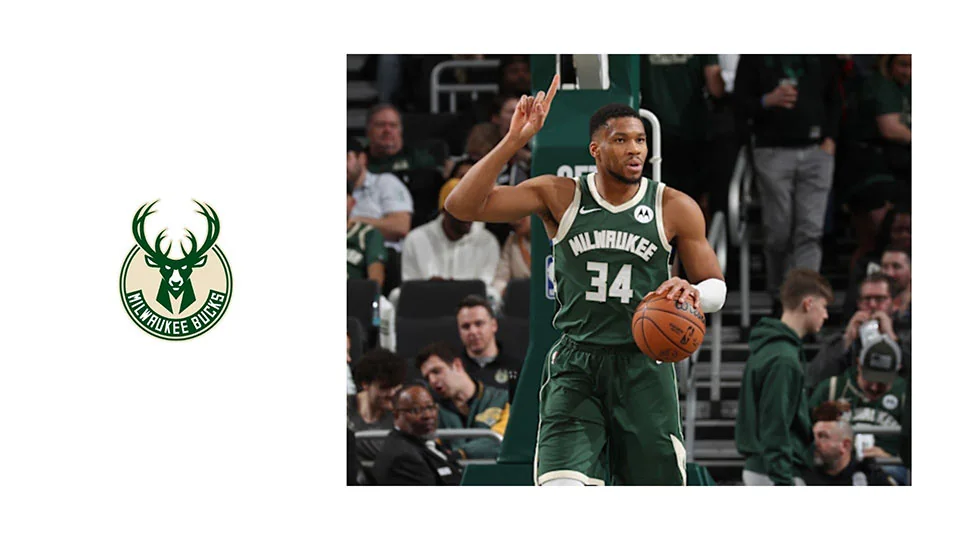
- Current primary logo: A more realistic, forward-facing buck with antlers forming a subtle basketball outline at the top.
- Colors: deep forest green, cream, and occasionally dark blue accents (pretty unique for a basketball team).
- Secondary logos include a stylized “M” and “Buck head” icons.
My Opinion
- The modern buck head is powerful and sophisticated, merging tradition with a sleek update.
- The cream color nods to “Cream City” bricks of Milwaukee, showing local pride.
- It’s a great example of how to refresh a logo while keeping core elements intact.
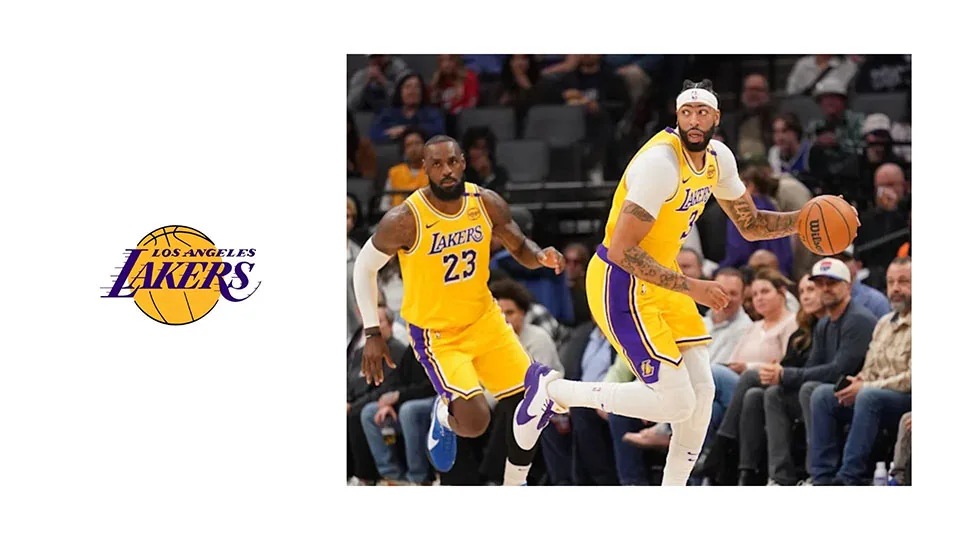
9. Los Angeles Lakers
Short History
- Began as the Minneapolis Lakers in 1947 (Minnesota is the “Land of 10,000 Lakes”).
- Moved to Los Angeles in 1960, keeping the “Lakers” name.
- One of the most successful NBA franchises, with a global fan base.
Design Breakdown
- The classic gold and purple color scheme is a staple.
- The logo features the team name in cursive, angled font across a basketball.
- Very few significant changes over the decades—consistency is key to their iconic status.
My Opinion
- Simple, timeless, and synonymous with NBA greatness.
- The purple and gold are instantly linked to Hollywood glamour and the Lakers’ winning tradition.
- Proof that you don’t need constant redesigns if your brand is already legendary.
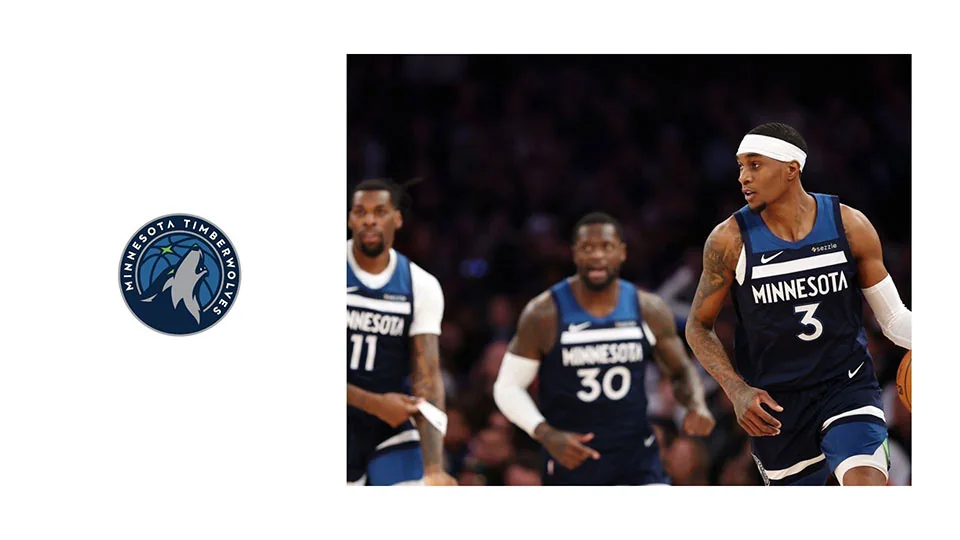
10. Minnesota Timberwolves
Short History
- Established in 1989 as an expansion franchise in Minneapolis.
- Name references the abundance of timberwolves in Minnesota’s northern forests.
- Gained popularity in the late ’90s and early 2000s with Kevin Garnett as the face of the franchise.
Design Breakdown
- Current logo: A snarling wolf head howling at a basketball moon, framed in a circular crest.
- Colors: midnight blue, lake blue, aurora green, and silver.
- Secondary “M” wolf silhouette and wordmark logos exist, leaning into a modern feel.
My Opinion
- The redesign modernized the wolf motif while keeping a sense of Minnesota’s natural surroundings.
- The vibrant greens and blues are a departure from many NBA teams’ palettes, making it unique.
- Strikes a good balance between an aggressive sports logo and sleek contemporary design.
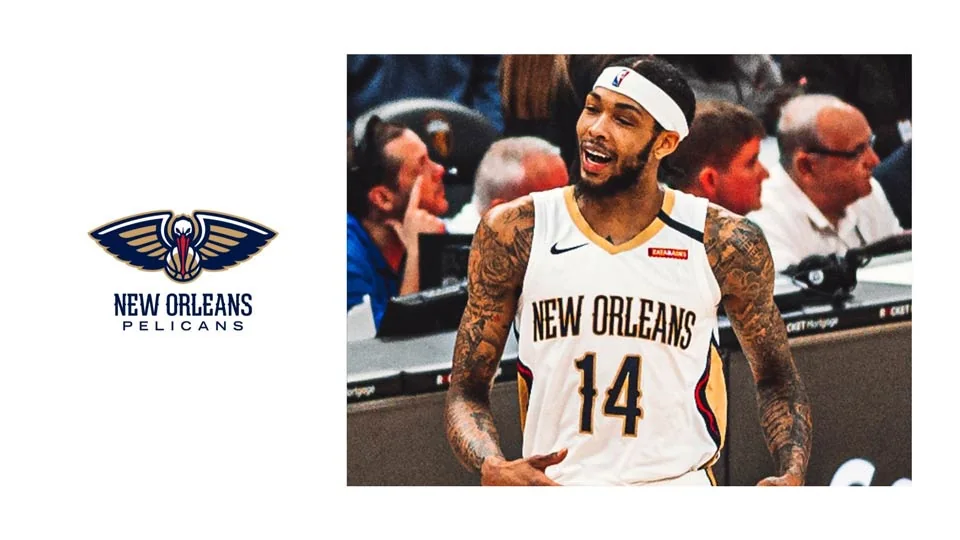
11. New Orleans Pelicans
Short History
- Formerly the New Orleans Hornets, the franchise rebranded to the Pelicans in 2013.
- Named after Louisiana’s state bird, the brown pelican—signifying the strong local culture.
- This change marked a fresh start, fully embracing New Orleans’ identity and heritage.
Design Breakdown
- Primary logo: A stylized pelican with outstretched wings, holding a basketball in paws.
- The color scheme is navy, gold, and a bit of red, symbolizing both elegance and energy.
- The wordmark “New Orleans Pelicans” is set in a western font, with “Pelicans” set in modern all-caps underneath.
My Opinion
- It’s a well-executed nod to local pride, from the fleur-de-lis to the pelican.
- While more detailed than some minimalist NBA logos, it’s balanced and distinctive.
- A strong rebrand that differentiates the franchise from its Hornets past and cements its New Orleans identity.
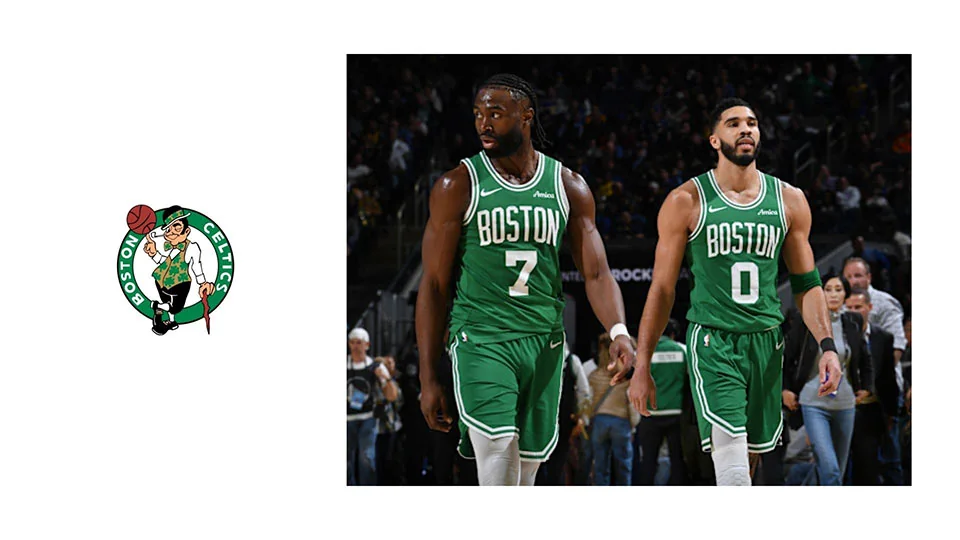
12. Boston Celtics
Short History
- Founded in 1946 as one of the NBA’s original teams.
- Name pays homage to Boston’s rich Irish-American heritage.
- Most championship titles in NBA history (tied or just ahead of the Lakers, depending on the era).
Design Breakdown
- The classic leprechaun spinning a basketball, complete with a primarily green color palette.
- The team often uses a simpler shamrock logo for certain merch.
- Typography and detailing exude a vintage, celebratory Irish flair.
My Opinion
- The leprechaun logo is one of the most detailed and character-driven in the NBA.
- Some might find it a bit busy, but it has undeniable charm and tradition.
- The green color scheme is iconic and universally associated with the Celtics brand.
13. Toronto Raptors
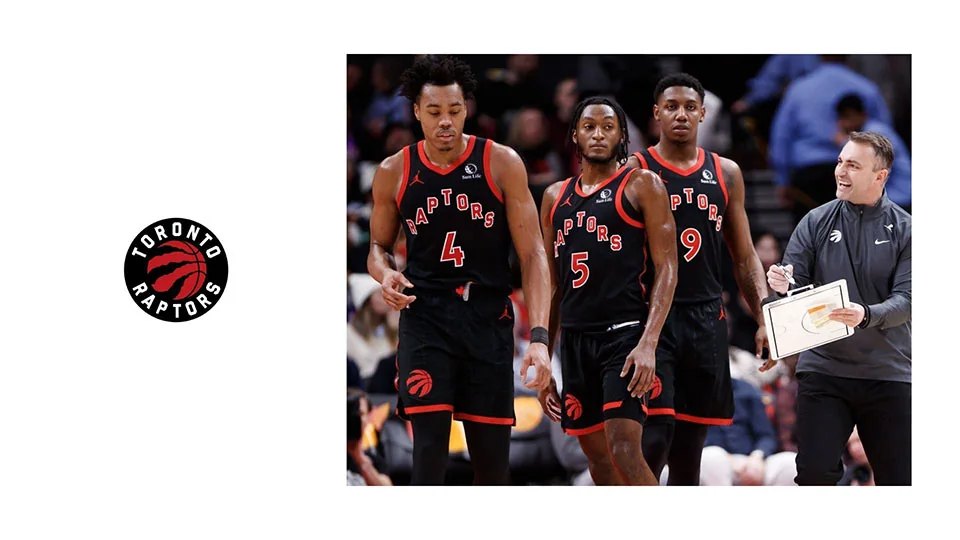
Short History
- Established in 1995 as part of the NBA’s expansion into Canada (alongside the Vancouver Grizzlies).
- The name “Raptors” was inspired by the dinosaur craze of the early ’90s (largely due to “Jurassic Park”).
- Gained global attention in the late ’90s and early 2000s with stars like Vince Carter and Tracy McGrady.
Design Breakdown
- The original logo featured a cartoon velociraptor dribbling a basketball, with a red and purple palette.
- Rebranded around 2015 with a more modern, minimal approach—A basketball with claw marks through it.
- Color scheme: Primarily black and red, often accented by white and sometimes gold (inspired by a partnership with Drake’s OVO brand).
- Secondary or alternate logos include wordmarks like “We The North,” capturing the team’s Canadian pride.
My Opinion
- The rebrand leans into a sleek, edgy vibe that resonates with both basketball and streetwear culture.
- While the cartoon dino had a fun, nostalgic charm, the new look is more versatile and grown-up.
- It’s a great example of modernizing a brand while still honoring the team’s roots (with claw marks referencing the original raptor theme).
14. Golden State Warriors
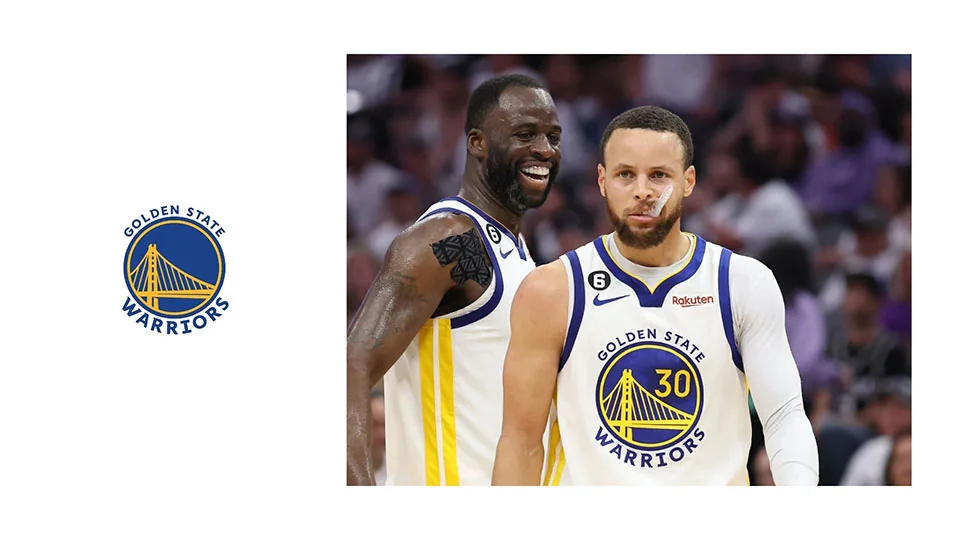
Short History
- Originally formed as the Philadelphia Warriors in 1946 (one of the NBA’s founding franchises).
- Moved to San Francisco in 1962, becoming the San Francisco Warriors.
- Adopted the “Golden State Warriors” name in 1971 to represent the entire state of California.
- Achieved significant success in the 1970s, and more recently with the Stephen Curry-led dynasty.
Design Breakdown
- The primary logo features a stylized depiction of the Golden Gate Bridge inside a circular frame.
- The color scheme is primarily royal blue and golden yellow, a nod to the Bay Area’s iconic bridge and the franchise’s heritage.
- Alternate logos include variations referencing “The City” (a throwback to the team’s San Francisco roots) and “The Town” (an homage to Oakland).
- Typography and layout are clean, with “Golden State Warriors” often wrapped around the circle.
My Opinion
- It’s a standout example of how to link a team’s identity to a local landmark.
- The use of bold lines and bright colors is instantly recognizable and translates well to jerseys and merch.
- Overall, it’s both pretty modern and historically significant, making it one of the NBA’s best-designed logos (although I'd work on typography here).
Conclusion
Branding in sports isn’t just about eye-catching visuals—it’s about honoring local heritage, uniting fans, and embodying a team’s spirit.
From the iconic bull’s head of Chicago to the sleek minimalism of Brooklyn, each NBA logo tells a story of resilience, pride, and evolution.
By examining their elements and backstories, we gain a deeper appreciation for the way design can capture all these things in just a simple brandmark.
Ready to build a brand people remember?
Tell me what you’re launching, changing, or trying to make look better.