
Branding
Rebranding After an Acquisition: A Practical Guide (2026)
Published on Sep 17, 2026
Rebranding after an acquisition means deciding what happens to the acquired company’s name, logo and visual identity once ownership changes.
Then you roll that decision out to every touchpoint, meaning every place a customer meets the brand.
In my experience you should usually keep the name and replace the logo, and not launch anything new in the first three months.
I’m Arek Dvornechuck, a brand designer in New York, and in 2025 I rebranded Airport Executive, a London chauffeur service, under new ownership: same name, new look.
Key takeaways
- My default: keep the name, and replace the logo, typography and website.
- First job: tell people what stays the same.
- Timing: listen for 30 days, decide by day 60, launch in months three to six.
- Cost: my core identity package is $3,000, with website, signs and vehicles extra.
Find your situation and jump in.
- You bought one business: this week, then the audit and keep or change.
- A larger company bought yours: brand options, then the announcement and the acquired side.
- You buy companies regularly: brand options, then the digital transfer and the scorecard.
- You have to change the name: the name check, then rename and redirect and the overlap rules.
Should you rebrand after an acquisition?
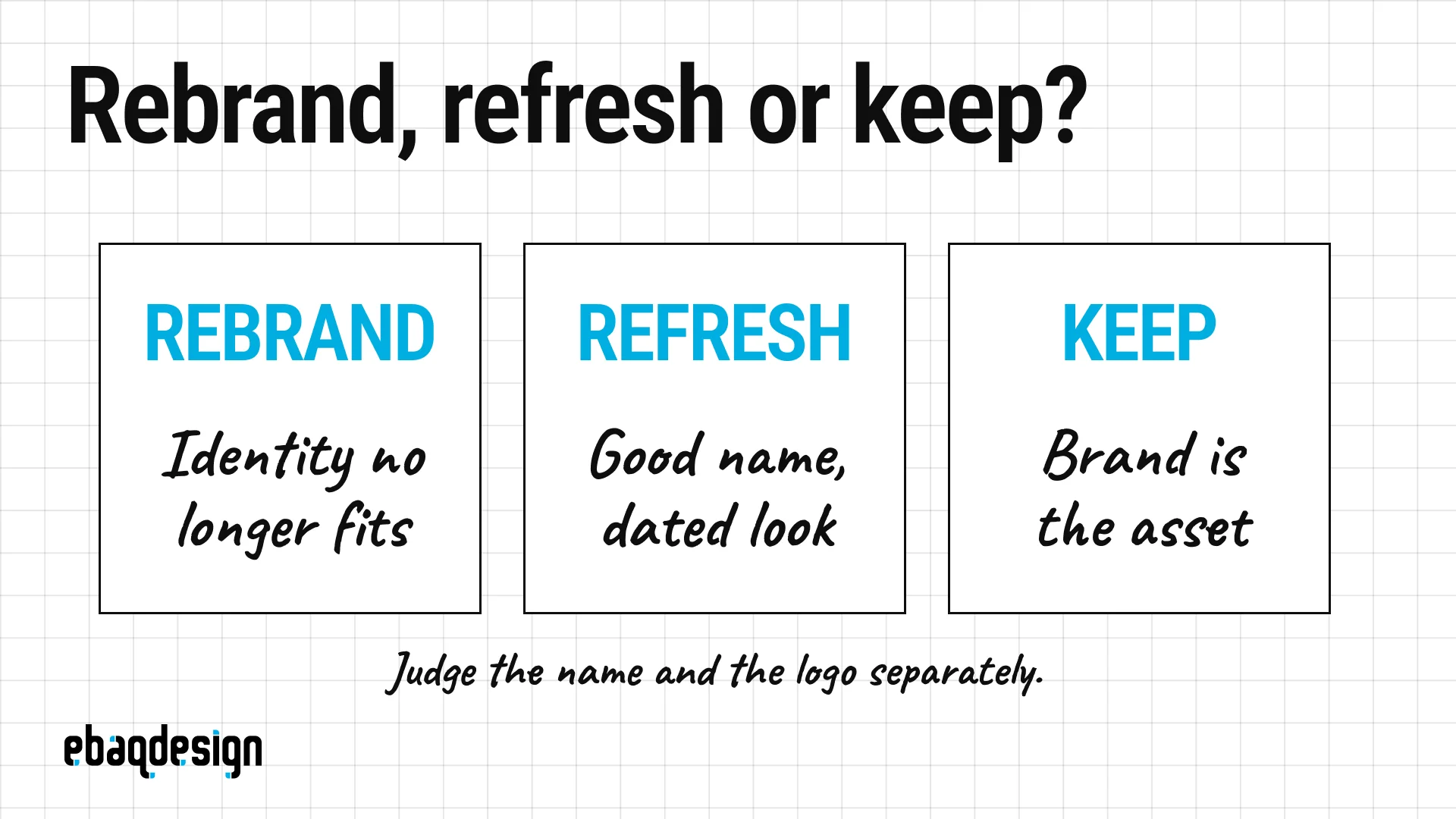
After an acquisition, rebrand when the old look no longer fits, refresh when it is only dated, and keep the brand when it is the reason customers call.
Landor’s study of S&P Global 100 deals found that in 74% of deals the acquired brand was rebranded within seven years.
So the real questions are how much and when.
What is the difference between a brand refresh and a full rebrand?
A brand refresh keeps the name and the logo idea and tidies everything around them, while a full rebrand replaces the logo, the name or both.
A full rebrand usually follows a change in who the business is for.
If you own no other brand, find your row in this decision table.
| Your situation | Do this | What changes |
|---|---|---|
| Customers ask for you by name, and the logo works anywhere | Keep | Nothing visible. Fix the website and listings. |
| A known logo that looks tired or is hard to use | Refresh | Colors, type, templates. Logo tidied. |
| A known name whose look no longer fits | Redesign | New logo, colors, type and website. Same name. |
| Founder leaving, name not transferred, or several businesses merging | Rename | New name and identity. |
Airport Executive was a redesign.
Sometimes the right answer is the first row, which means doing almost nothing.
Should the company rebrand or reposition?
Reposition first, then rebrand: repositioning changes who the business is for, and rebranding changes how it looks and sounds.
Settle the brand positioning before any design work, because the rebrand should follow a decision about the business.
A new logo will not fix an unclear offer.
What are the brand architecture options after an acquisition?
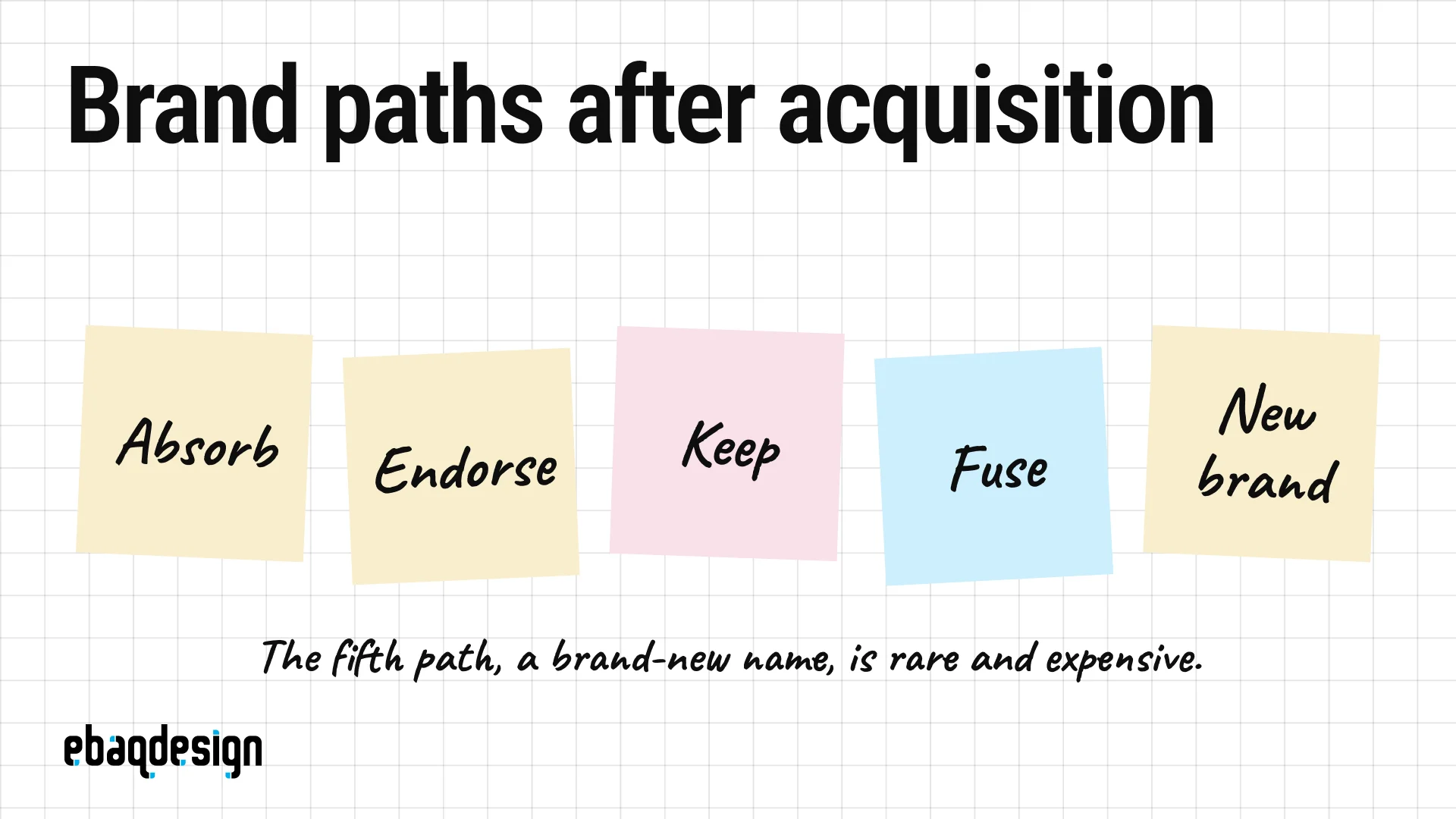
After an acquisition there are five brand architecture options: absorb, endorse, keep separate, fuse or create a new brand.
Brand architecture means how a company’s brands sit next to each other, and my brand architecture guide covers the four types.
These five options answer whose name goes on the door.
Keep, refresh, redesign or rename answers how much of the look changes.
If you bought one business and own no other brand, skip to timing.
- Absorb: the acquired name is retired. T-Mobile retired the Sprint brand on a single day in August 2020, repainting thousands of stores magenta.
- Endorse: the name stays and a parent line is added. Instagram gained “from Facebook” in 2019, then “from Meta.”
- Keep separate: only the ownership changes. Amazon kept Whole Foods Market, and said so in the deal announcement.
- Fuse: names or symbols combine. Kraft Heinz put both wordmarks on one line in 2015.
- New brand: both corporate names retire. Fiat Chrysler and PSA became Stellantis in 2021, while Fiat, Peugeot and Jeep kept their own names.
A bridge period, used in the table below, is a set window when the old and new names appear together.
This post-merger brand architecture table shows when each option fits and what it risks.
| Option | Fits when | Main risk |
|---|---|---|
| Absorb | The buyer’s name is better known locally | High. Loyal customers leave, so plan a bridge period. |
| Endorse | Both names add trust | Medium. Customers may assume the team changed. |
| Keep separate | The brand is why you bought it | Low. Two brands cost more to run. |
| Fuse | Merger of equals | Medium. Design by committee. |
| New brand | Neither name fits the future | Highest. Nobody knows the new name. |
Siegel+Gale’s review of US financial-services deals from 2019 to 2023 found half kept separate brands, 23% absorbed and only 4% endorsed.
My biggest rebrands roundup covers famous cases, and my types of brand names guide covers compound names, the naming term for fused ones.
How long after an acquisition should you rebrand?
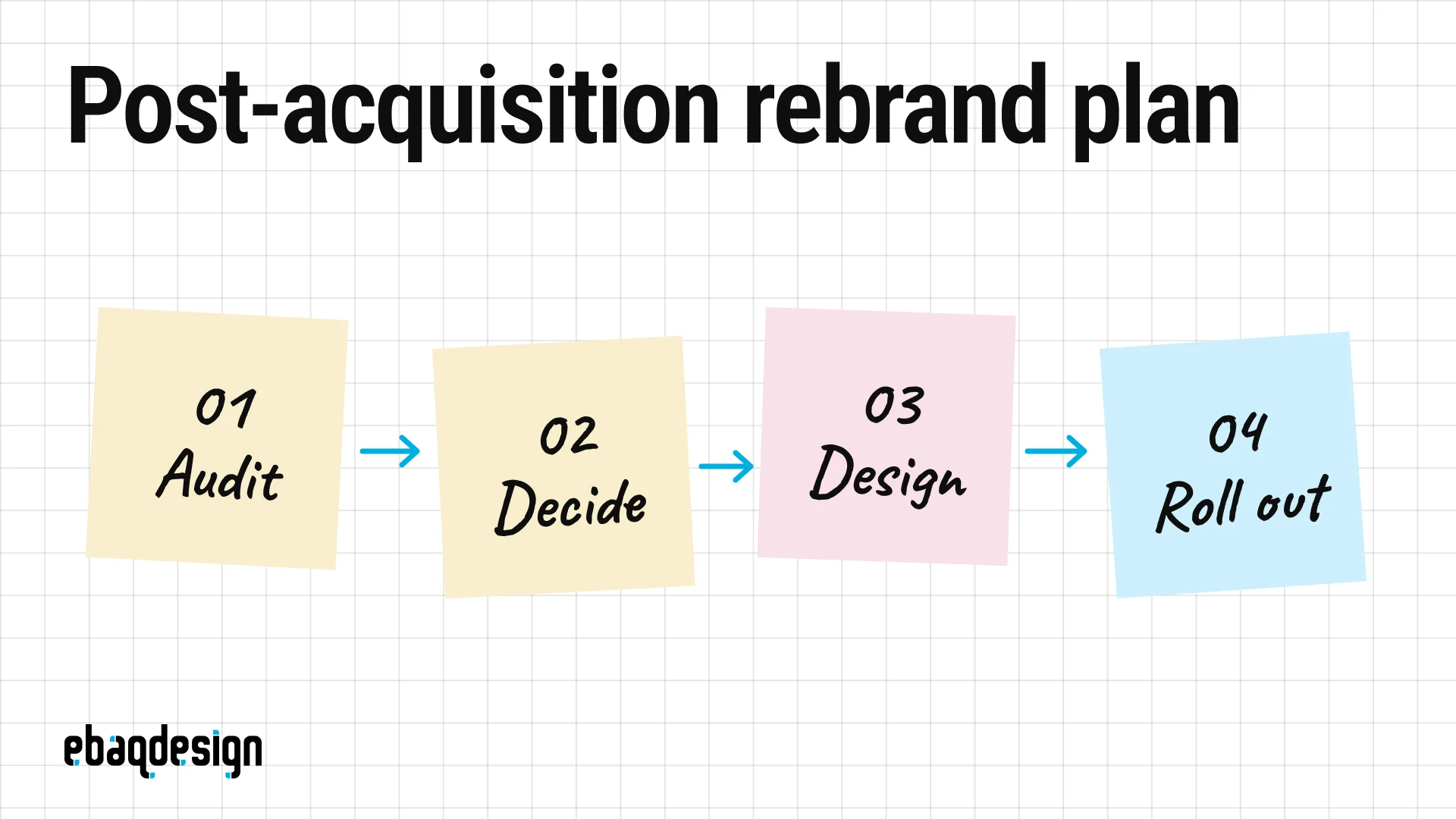
Launch the new identity three to six months after the deal closes.
Decide whose name goes on the door by the time the deal closes, and announce the new ownership on day one.
Use the first 90 days to listen, decide and design, not to launch.
Brand day is the one date when everything digital switches.
This post-acquisition rebrand timeline shows what happens when.
| When | What happens | In hand |
|---|---|---|
| By close | Agree whose name goes on the door and list name, domain, logins and files in the deal. | Written decision |
| Day 1 | Send the announcement. | Staff note, customer email |
| Days 1–30 | Brand equity audit, photos, seller handover, baseline numbers. | Keep, refine, replace list |
| Days 31–60 | Choose keep, refresh or redesign, or confirm a rename the deal already forced. Set the budget. Your attorney confirms the name is yours or runs a clearance search on a new one. | Signed designer brief |
| Days 61–90 | Your designer creates the identity and starts the website. Sign shops quote. | Approved identity |
| Months 3–6 | Designer and developer finish the site. Brand day. | Live site, renamed profiles |
| By month 12 | Sign shop installs vehicle graphics and signs. Uniforms and print follow. | Finished rollout, day-180 numbers |
McKinsey’s survey of 50 leaders of large mergers and acquisitions (M&A) found 65% finish the brand transition within 12 months.
Yet only about 40% base the new positioning on facts, so audit before you design.
When to rebrand sooner
Four situations justify moving inside the first 90 days.
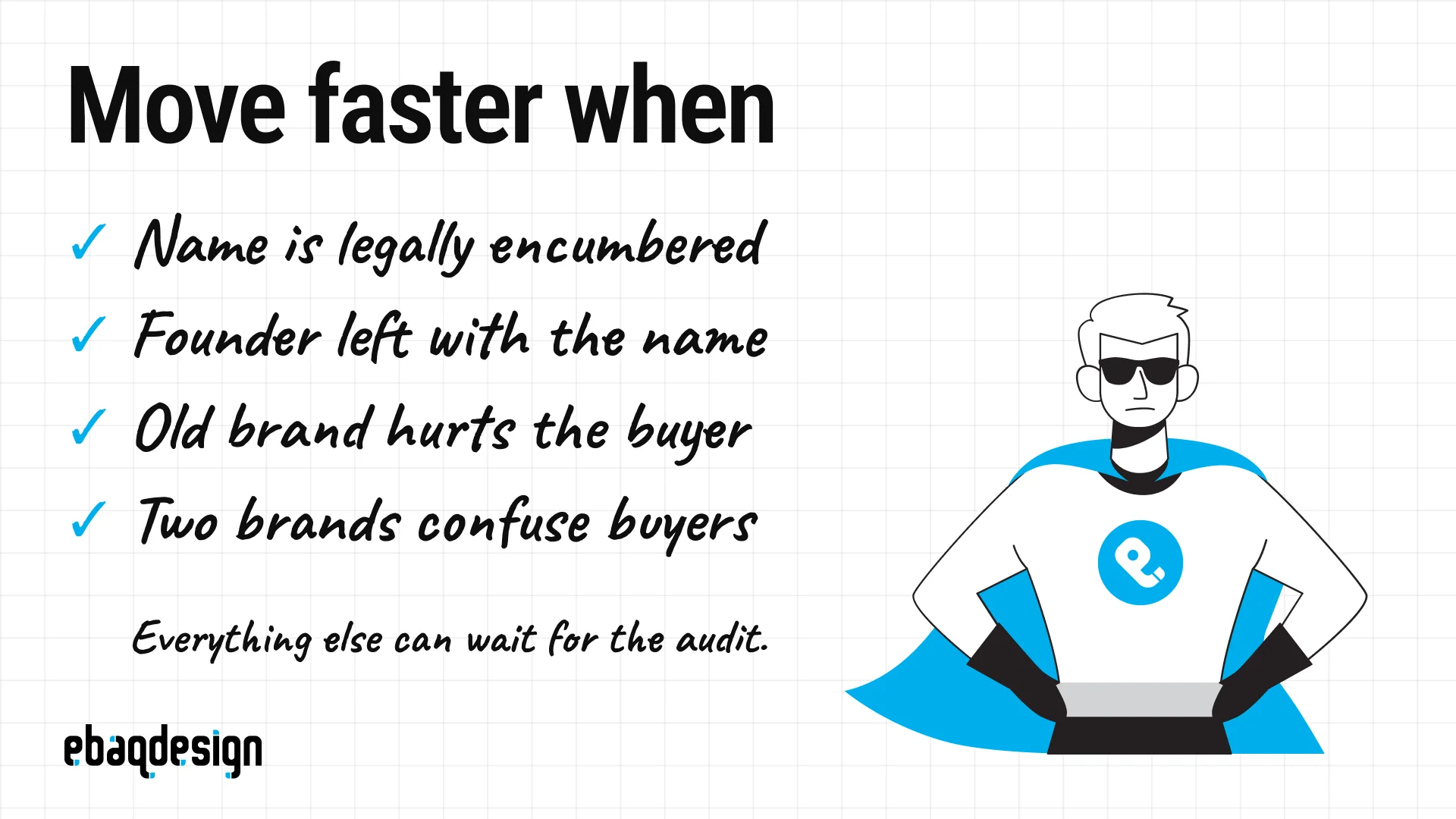
- The right to use the old name did not transfer.
- The founder’s surname is on the door and the founder has left.
- The acquired brand is hurting the buyer’s reputation.
- Customers already confuse the two businesses.
Even then, do a fast version: fix the name, put up a temporary “under new ownership” line and still run the one-week audit.
If reputation is the problem, fix the service before the name, because the same service earns the same reviews under any logo.
If you bought one healthy local business, wait: customers search for the old name and you have not yet heard what they call it.
What to do in the first week after closing
If the deal has already closed, do four things this week, in this order.
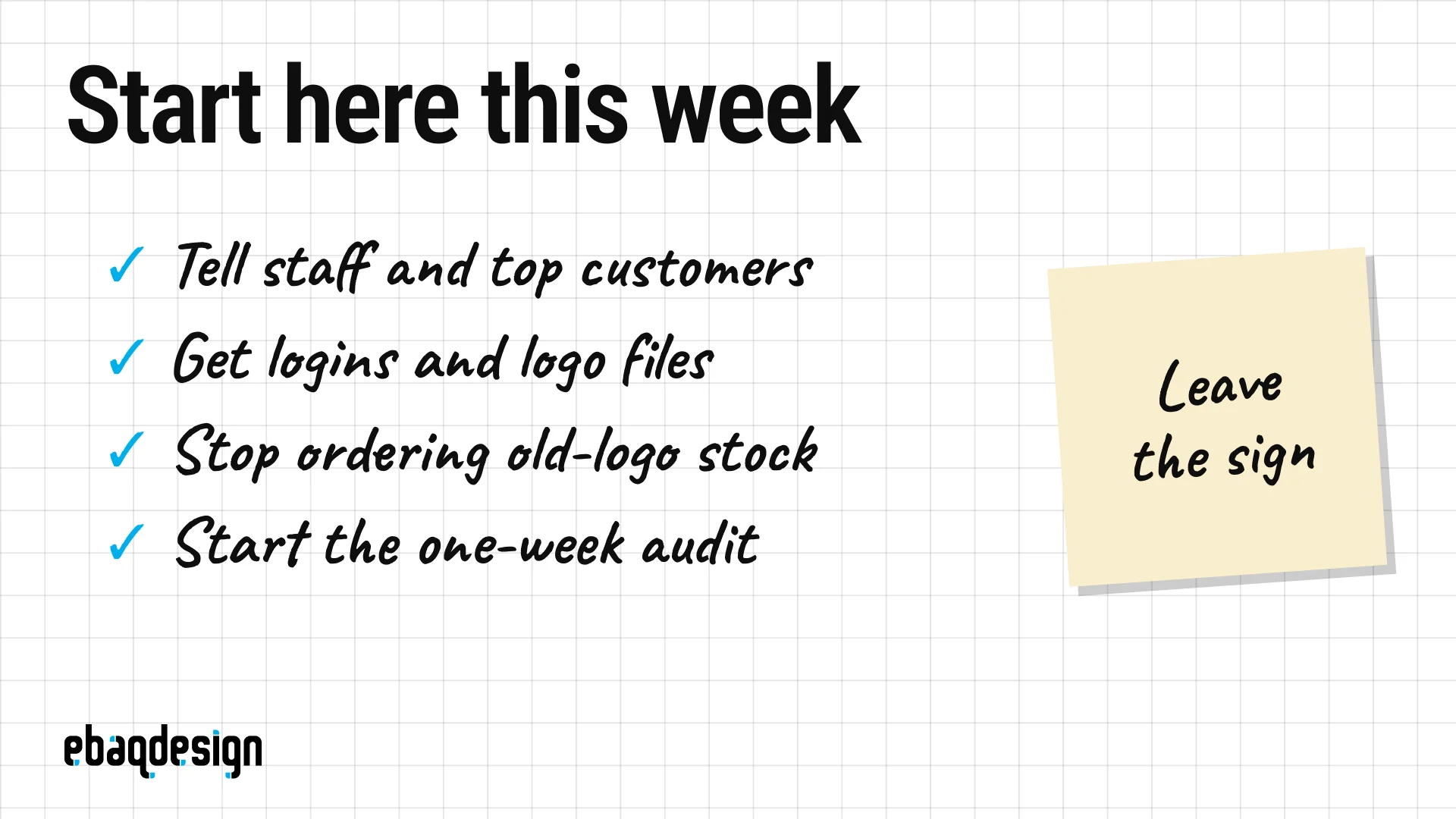
- Send the announcement (below), because late is better than silent.
- Get the logins and files from the seller.
- Stop ordering anything with the old logo on it.
- Write down your baseline numbers (see measuring), then start the one-week brand equity audit.
Do not touch the sign yet.
How do you announce new ownership to staff and customers?
Tell staff first, then customers within hours, and say what stays the same before what changes.
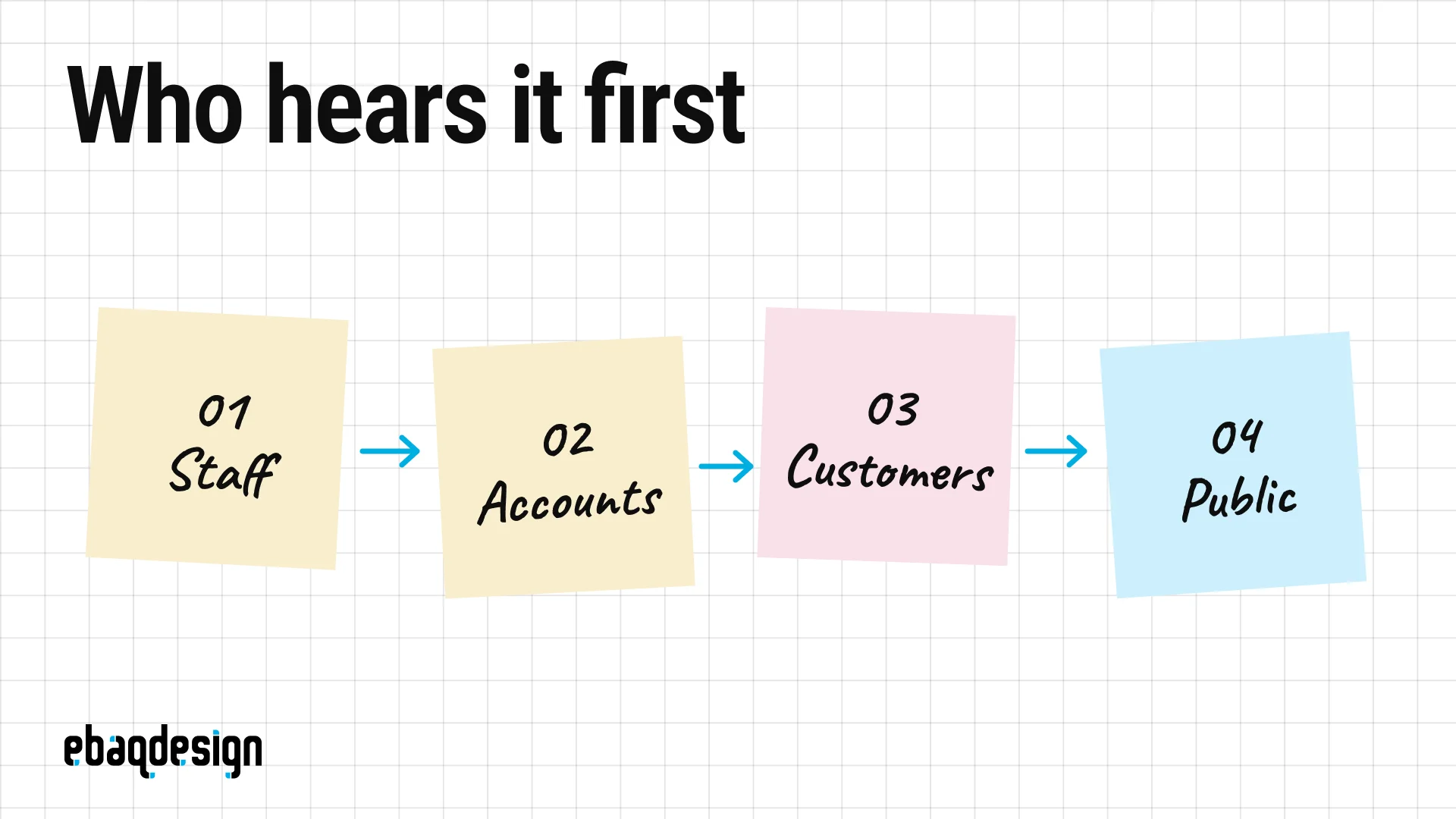
What stays is usually the name, team, service, prices, phone number and contacts.
State the ownership change once, in plain words.
- Staff: tell them first, in person where you can.
- Top accounts: phone your top 10 to 20 before the email goes out.
- Every customer: send the email within hours of telling staff.
- The public: pin a notice on the website, social profiles and Google Business Profile, your listing on Google Search and Maps.
A Bain article on post-merger customer loss notes First Union lost 20% of its customers in the year after buying CoreStates in 1997.
So repeat the message at least three times in the first 90 days.
What your team will ask
Answer four questions in a one-page FAQ first: job safety, reporting lines, what to tell customers and email signatures.
Show staff the new look before the public sees it, and give one switch-off date for old templates and logo files.
If the seller is staying on, send the first message from both of you and say who customers call next.
Templates you can copy
Swap the [brackets] and send.
Staff note
Team, as of [date], [Business name] is owned by [Owner name].
Your jobs, your managers and our customers stay the same.
What changes: [one line, or nothing yet].
If a customer asks what changed, say: same team, same service, new owner, and [one thing that gets better].
Questions go to [Name] on [phone or email].
Customer email
Subject: [Business name] has a new owner, and here is what stays the same
Hi [First name],
I’m [Your name], the new owner of [Business name].
The name, the team, your prices and [phone number] all stay the same.
Over the next few months you will notice [one improvement].
If you have questions, reply to this email or call me on [number].
Acquired or renamed: lines to swap in
Acquired, name stays: [Business name] has joined [Parent], and our name stays the same.
Name changing: [Old name] becomes [New name] on [date].
Both: Your contacts, contract and prices stay the same.
Site banner and signature: [Old name] is now [New name], with the same team and number.
Phone greeting, 90 days: Thank you for calling [New name], formerly [Old name].
How do you audit brand equity after an acquisition?
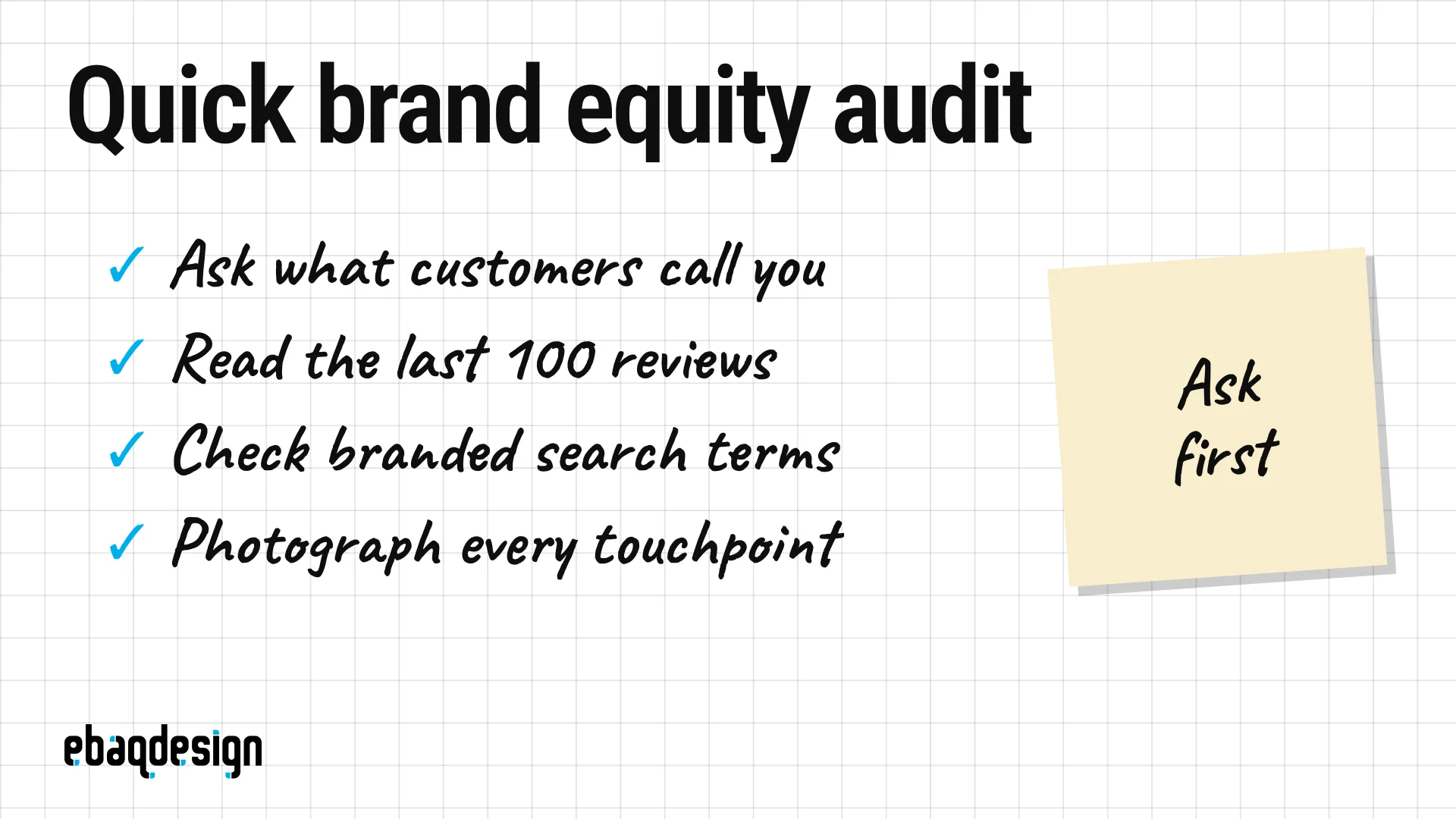
Audit brand equity after an acquisition with four checks: what customers call you, the last 100 reviews, branded searches and photos of every logo.
Brand equity is the recognition and trust a name, color or symbol has already earned.
- Ask whoever answers the phone what customers call the business.
- Read the last 100 reviews and note the words that repeat.
- Check branded searches, meaning searches that include your business name, in Google Search Console, Google’s free search report.
- Photograph every place the logo appears, from vehicles to invoices.
Within a week, and without a research firm, you will know where recognition lives: the name, a color, a symbol or the vehicles.
Separate what changed behind the scenes from what customers need to see change, because new owners do not automatically mean a new look.
My brand audit and brand discovery guides cover a fuller version.
How to read the results
These are my rules of thumb.
- Nobody mentions the logo or color in 100 reviews: it carries little equity and can go.
- Customers use a short form or initials: design around it.
- Searches for the name are a real share of clicks: the name stays.
- Staff describe the vehicles before the logo: the vehicle color is your anchor.
Pick one anchor element and hold it constant, so customers can connect old and new.
Record every element as keep, refine or replace on one page, and sign it off before design starts, because it goes to your designer with the brief.
What should you keep and what should you change in an acquired brand?
Keep what customers use to find and recognize the business, usually the name and sometimes a color.
Refine what is familiar but dated, and replace what no longer fits, usually the logo, typography and website.
Keep the name when customers search for it
Keep the name if people search for it, reviews and contracts carry it, and signs and vehicles wear it.
You can signal new ownership without renaming, in two ways.
- “[Name], under new ownership” on the window and site banner, for up to a year.
- An endorsement line, “[Name], a [Parent] company” (see the acquired-company section).
Put an end date on every temporary line, and remember that keeping the name does not mean keeping the look.
Before you design around a name, check that you own it.
If the name must change, settle it before identity work starts, using my company name and business name guides.
Refine a logo people recognize, replace one they do not
Before I recommend replacing a logo, I test it small, in one color, in production and alone.
- Small: does it read at favicon size, the tiny icon in a browser tab, and as an app icon?
- One color: can it be cut from vinyl for a vehicle window?
- Production: does it survive foil, embossing or embroidery?
- Alone: does the symbol work without the name and tagline?
A recognized logo that fails one of these tests gets refined, and an unrecognized one gets replaced.
Judge old and new in the same three places, a vehicle, a card and the site header, never on a white slide.
My logo redesign and logo presentation guides go deeper.
Upgrade typography, color and tone
Change a generic palette, but keep a signature color customers recognize.
Fonts are often licensed to the previous owner, so buy new licenses and record them in the style guide.
Airport Executive’s old tagline, “Travel with a difference,” was about the company, while the new campaign line, “Your chauffeur awaits,” is about the passenger.
After a change of ownership, write about the customer’s experience, in the voice your brand strategy sets.
Rebuild the website even when the domain stays
Keep the domain if the name stays, but rebuild the site, because customers check there whether the change is real.
This keep-or-change table sums up each element.
| Element | Keep when | Change when | Airport Executive |
|---|---|---|---|
| Name | Searched for and in reviews | Founder leaving, not transferred, businesses merging | Kept |
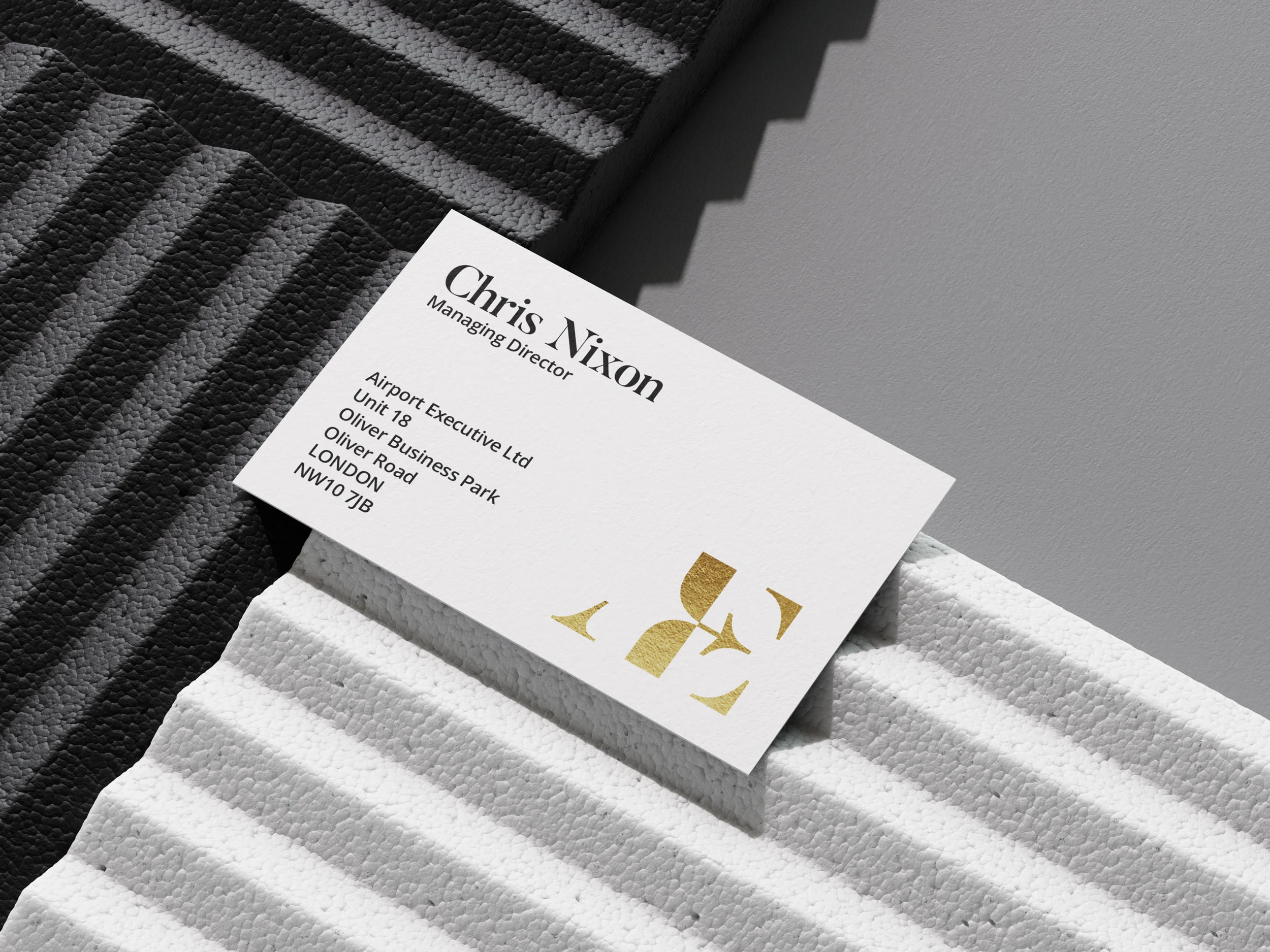
| Logo | Recognized and works small | Dated, busy or weak on vehicles | Replaced with the AE monogram |
| Color | A recognized signature color | Generic or the old owner’s taste | Red and gray became black, white, gold, gray |
| Typography | Licensed and on-brand | Dated or unlicensed | New serif wordmark |
| Tagline and tone | Still true to the offer | Tied to the old owner’s voice | Tagline retired, campaign lines added |
| Website | Recently rebuilt, same positioning | Look no longer matches, or booking path dated | Rebuilt |
Rebranding case study: Airport Executive under new ownership
In 2025 Airport Executive, a London chauffeur service, rebranded under new ownership: it kept its name and replaced the logo, type, colors and website.
It has been in business for more than 25 years, and the new owners needed the brand to support global expansion.
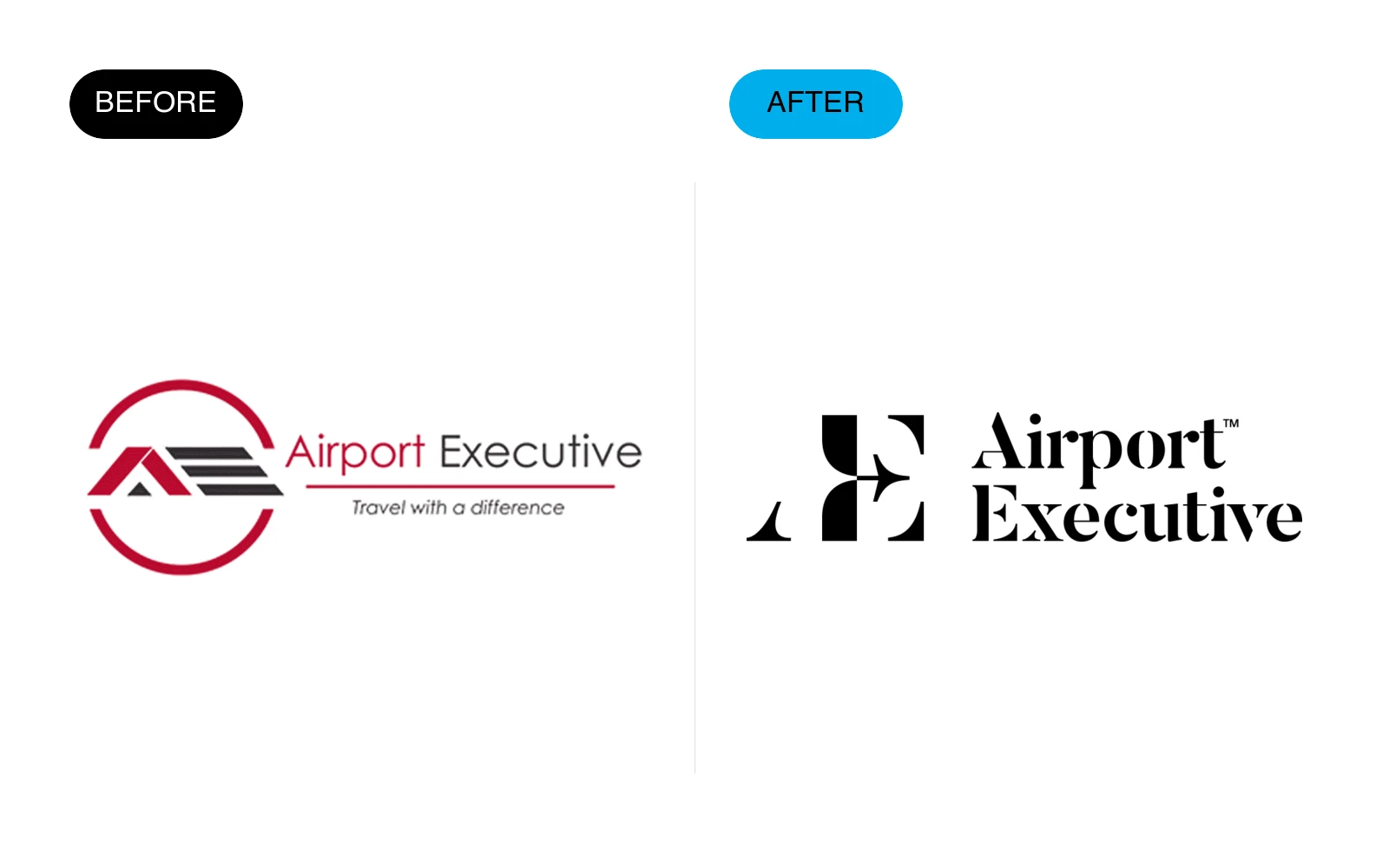
The old logo was a red circular emblem with a roof and stripe motif, a mixed red and gray wordmark and the tagline “Travel with a difference.”
An emblem, a wordmark and a tagline in one logo fail two of the four logo tests: small and alone.
What changed and what stayed
The name was the anchor, so the mark was free to change.
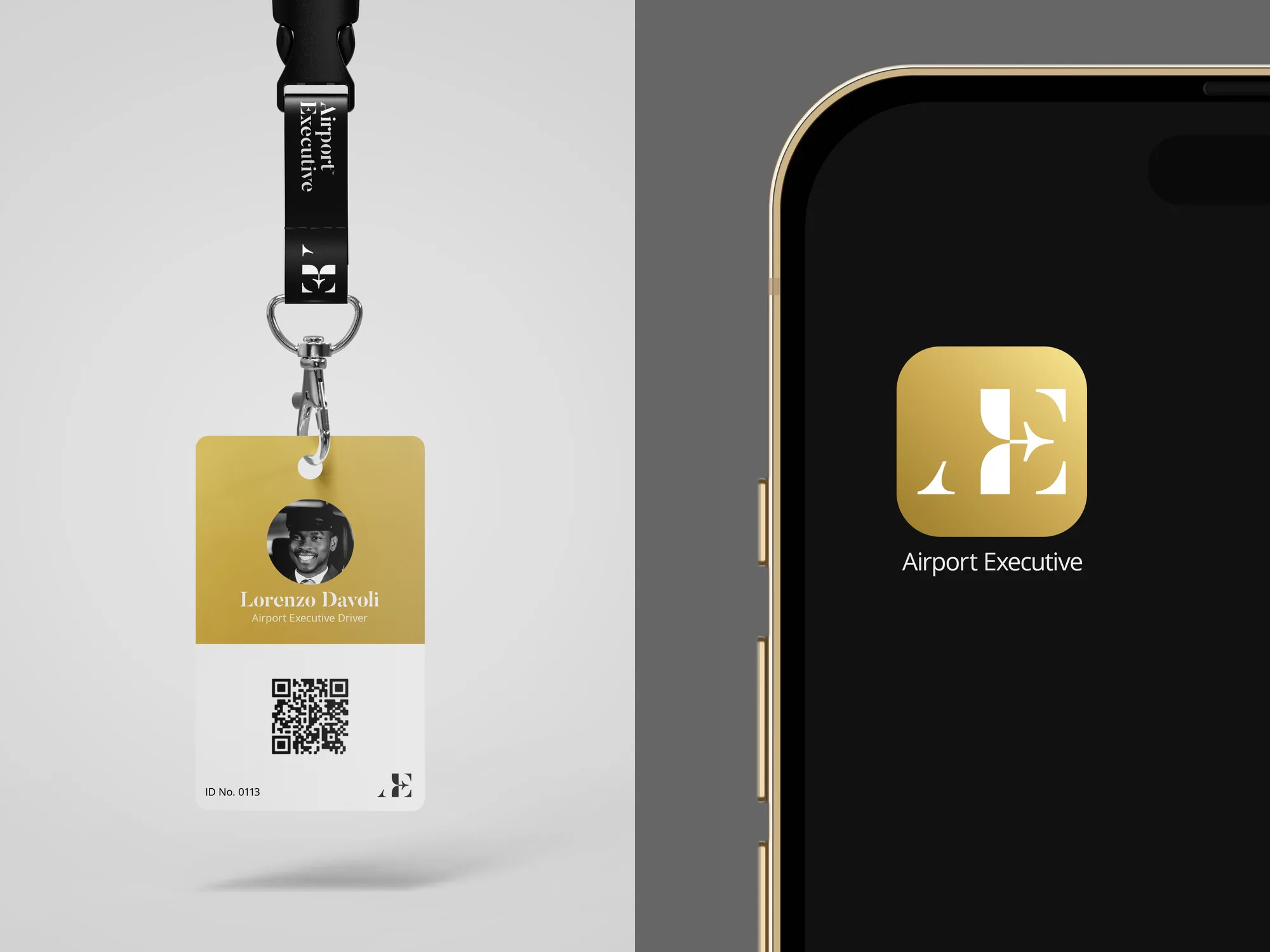
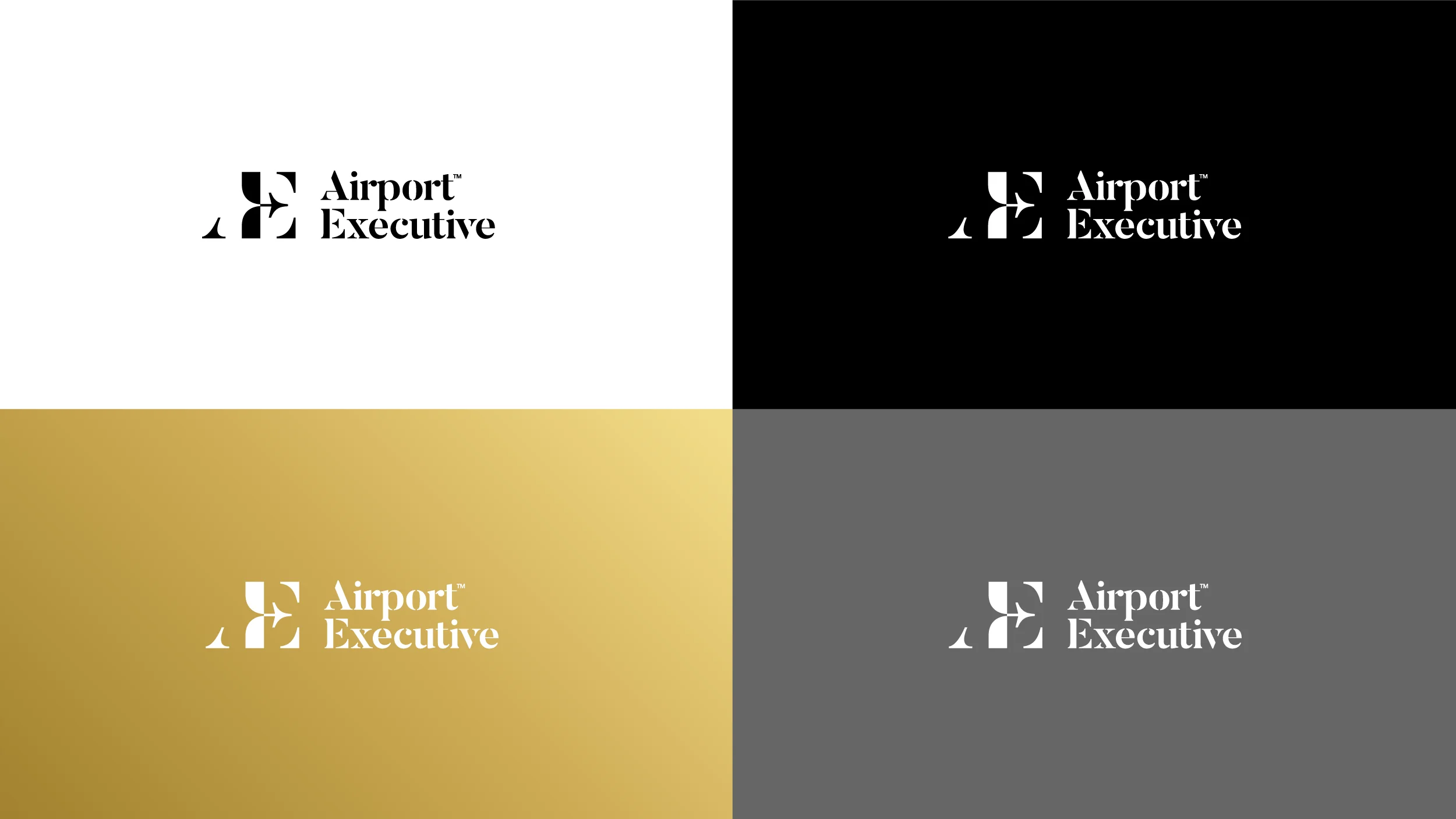
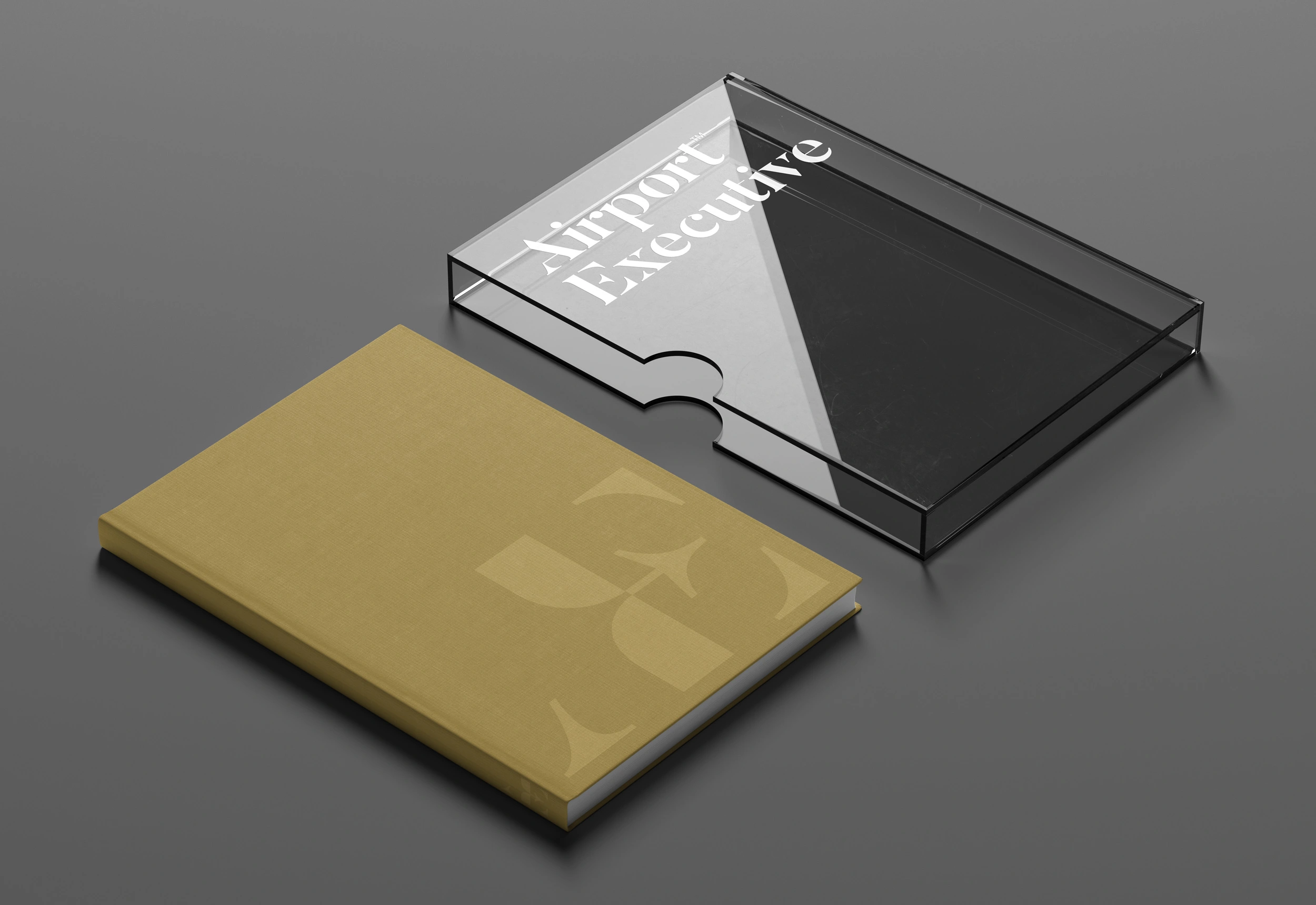
I replaced the emblem with a black AE monogram, a mark made from initials, whose inner space forms a subtle jet.
A serif wordmark and a palette of black, white, gold and gray completed the system.
The scope was brand strategy, visual identity, motion and web design.
- Identity: logo system in color variations.
- Print: business cards and a branded book with an acrylic slipcase.
- Digital: website, mobile app icon and an escalator video.
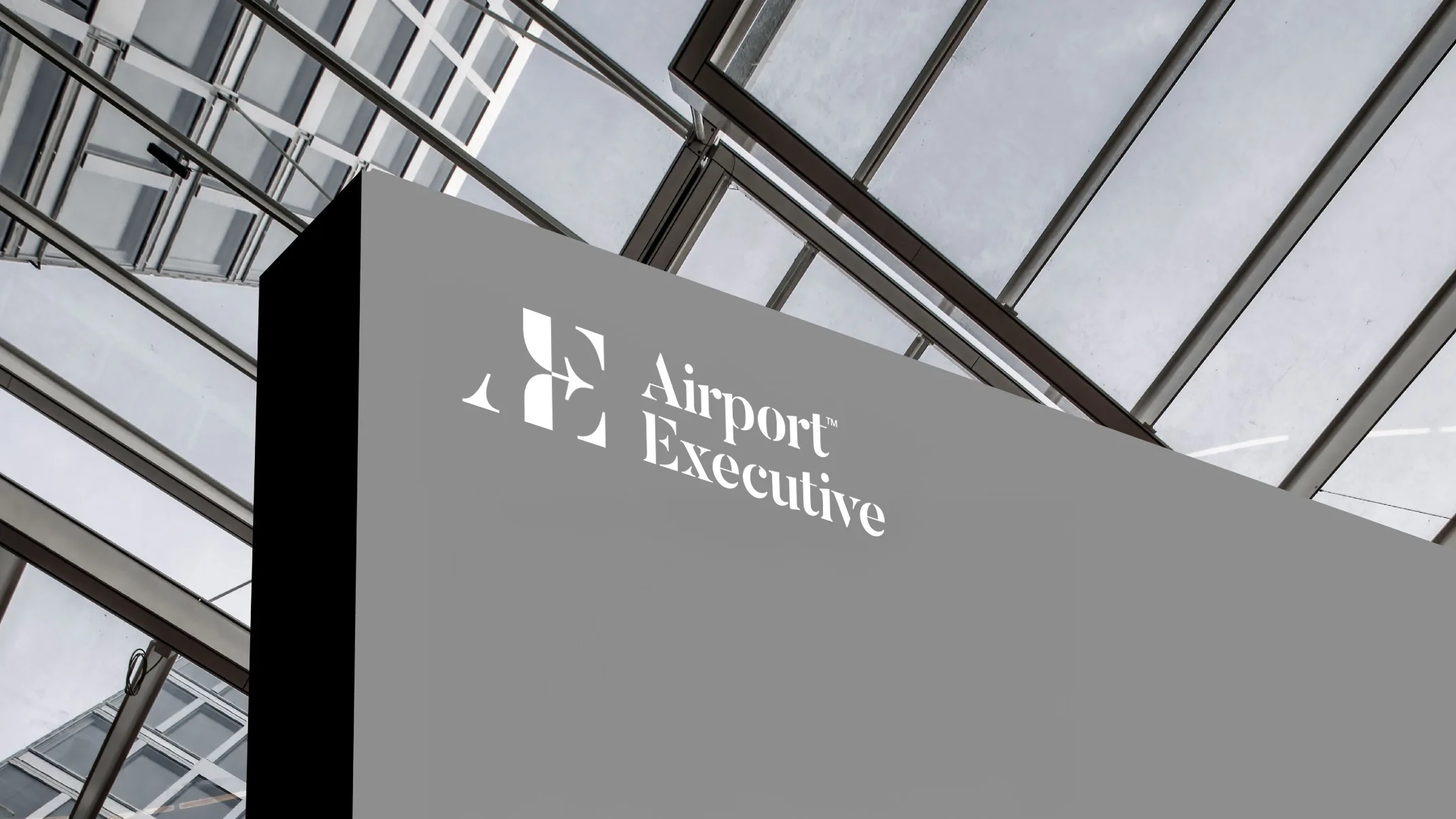
- Physical: chauffeur ID badge and lanyard, vehicle window decal, merchandise, environmental signage and campaign banners (“Arrive in style, depart in comfort” and “Your chauffeur awaits”).
See the full Airport Executive case study and the live site.
My rebranding examples cover six more case studies, and my branding process shows the steps.
“Arek is a branding expert with extensive experience in graphic design, logos, and web design. We have collaborated with him on several rebranding projects. I highly recommend him.”
Chris Nixon, Airport Executive.
What happens to the website, domain and Google reviews when ownership changes?
The website, domain, Google reviews and social accounts can all move to the new owner, so rename and redirect them, and never recreate them.
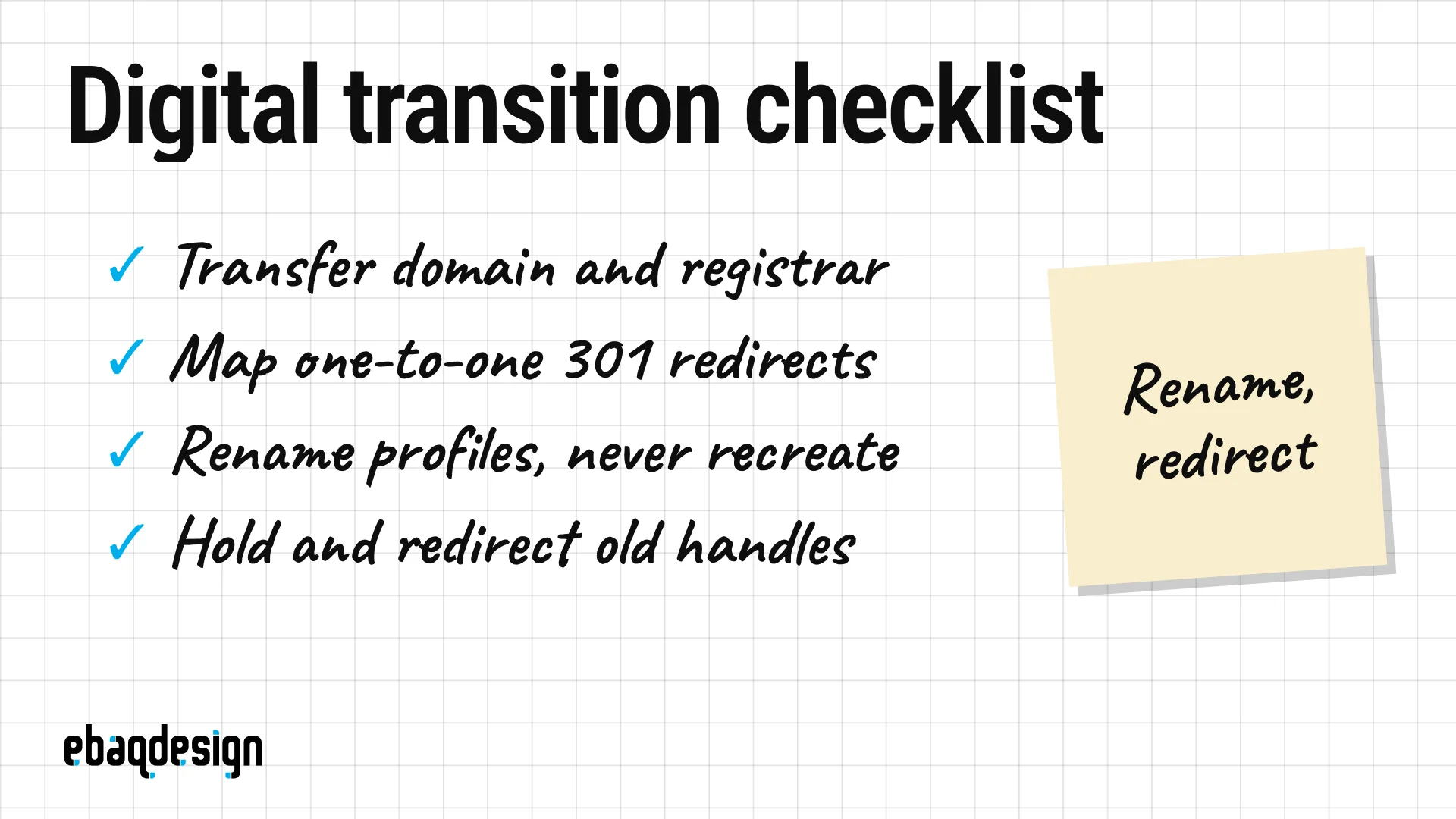
A recreated Google Business Profile starts with no reviews, and a new domain without page-to-page redirects loses its rankings.
In an asset purchase they only move if the agreement lists them.
Get these from the seller
Ask for these in the purchase agreement, or this week, while the seller still picks up the phone.
- Logins: domain registrar (the company your web address is registered with), website, hosting and analytics.
- Accounts: Google Search Console, social and ad accounts, the email list and phone numbers.
- Google Business Profile: primary ownership, not just access.
- Logo files: the editable vector originals, in AI, EPS or SVG format.
- Licenses and artwork: font licenses, photo and video rights, templates, guidelines, and sign and vehicle artwork.
Check that the name is legally yours
How the name transfers depends on the type of deal.
- Asset purchase (you buy the assets, not the company): the name only comes with the deal if the agreement lists it, with the trademarks, domain and social handles.
- Stock or share purchase (you buy the company itself): the company still owns the name, so check registrations are in its name, not the founder’s.
- Seller’s rights: ask whether the seller kept any right to use the name or the surname.
- New company: in the US you may need to register the old name as a trade name, also called a DBA.
I am a designer, not a lawyer, so confirm this with your attorney, who also records any trademark transfer.
The transfer steps, in order
Work through three lists: domain, Google profile, then accounts.
Domain and search
- Transfer the domain and the registrar account to the buyer.
- Map every old web address to its new one with 301 redirects, which are permanent forwards.
- Keep the redirects for at least a year per Google’s site-move documentation, and keep the old domain registered for good.
- Submit a Change of Address in Search Console when the domain changes, and keep “formerly [Old name]” in the homepage title until old-name searches fade.
Google profile and listings
- Hand over the Google Business Profile: the seller adds you, then transfers primary ownership per Google’s ownership-transfer help page.
- Expect a seven-day wait before a new owner can manage every feature, as the same Google page says.
- Plan for re-verification after a name change, per Google’s profile-editing help page.
- Update every other listing the same day with the identical name, address and phone number.
- Cover Apple Maps, Bing Places, Yelp, Facebook, directories, and booking and invoicing software.
Google says reviews stay when only the owner changes, but a big name change may count as a new business.
Accounts and legal
- Rename social accounts, then re-register the old handle and point it at the new one.
- Forward old email addresses for at least a year.
- File to trademark the new logo and any new name, each of which should have passed a clearance search, a check that nobody owns something similar, before you approved it.
Launch the site on brand day
Plan the new site with the identity, following my web design process, so the launch is one event.

Launch the site, the deck and the brochure together, so they stop looking like three different companies.
How do you roll out a rebrand under new ownership?
Roll out in two waves: everything digital on one day, then physical items, most visible first.
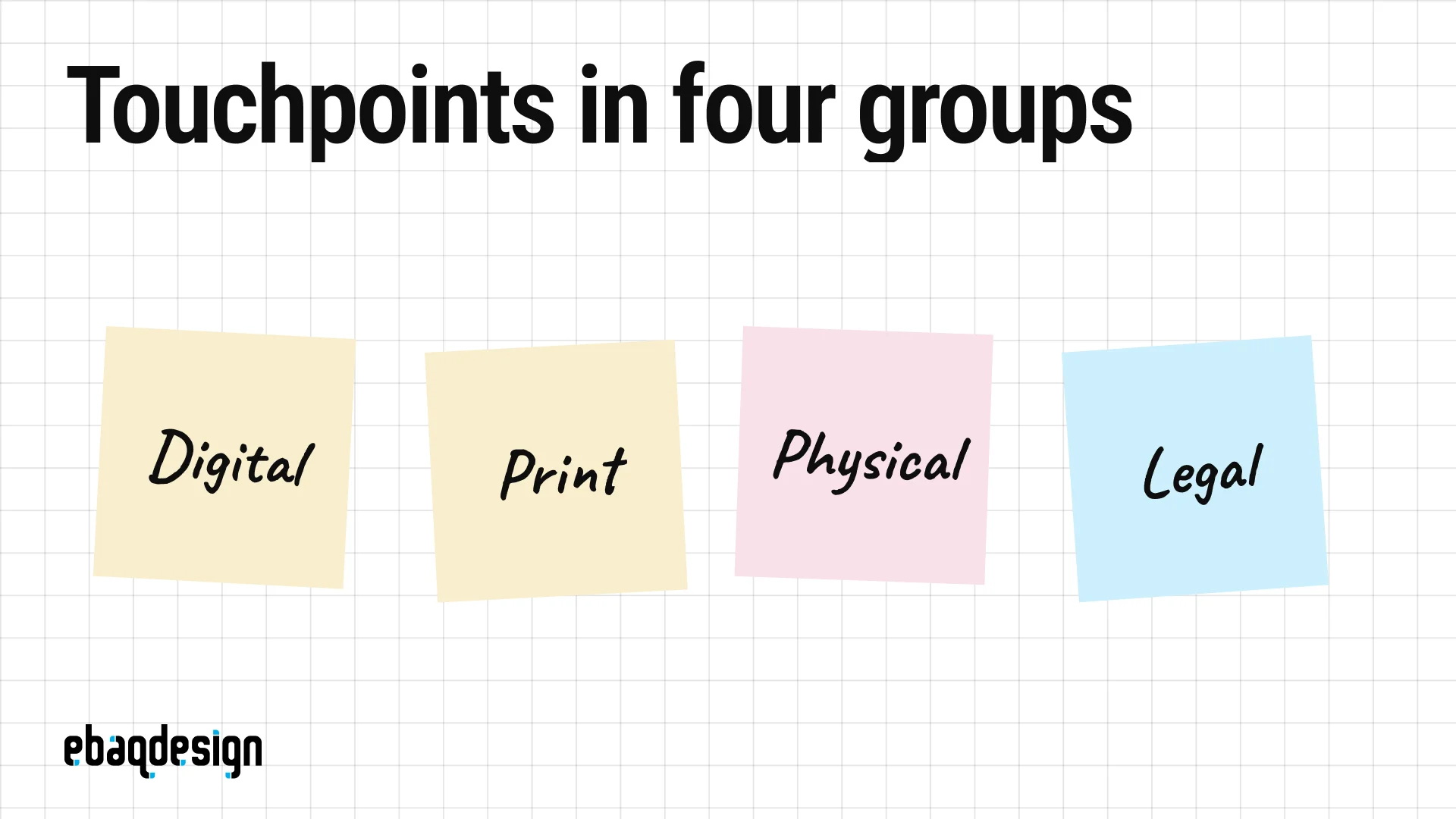
Every place the old brand appears falls into four groups: digital, print, physical and legal.
Signs and vehicle graphics run on the fabricator’s schedule, so ask for lead times early.
One launch day for everything digital
Test the redirects the night before, then switch the site, profiles, social handles, email and templates together.
In the brand-day message, show the new logo once and skip the before-and-after comparison.
Old and new materials will overlap for a while, so write the overlap rules into the brand guidelines.
- The old and new logos never appear on the same item, and only a dated bridge line may name both.
- From brand day, nothing new is made, posted or printed with the old logo.
- Invoices, forms and old stock run out by [date], then get recycled.
- A rename adds dated bridge items: the site banner, signature line and phone greeting from the templates above, plus an invoice insert and temporary vinyl.
Everything else, in order of visibility
Replace the rest in the order customers see it.

- Vehicle decals and driver ID badges: cheap, visible and fast.
- Exterior signage: permits, landlord approval and fabrication take time, so use temporary vinyl.
- Uniforms, print, packaging and job-site signs: replaced as stock runs out.
- Invisible touchpoints: voicemail greetings, contracts, supplier portals and PDF proposals.
- Legal and admin: licenses, permits and insurance certificates, plus the bank, payment processor and key suppliers.
My branding checklist covers building a brand from scratch.
How do you measure whether the rebrand worked?
Measure a rebrand by comparing calls, name searches, reviews and repeat customers at 30, 90 and 180 days after brand day against a baseline.
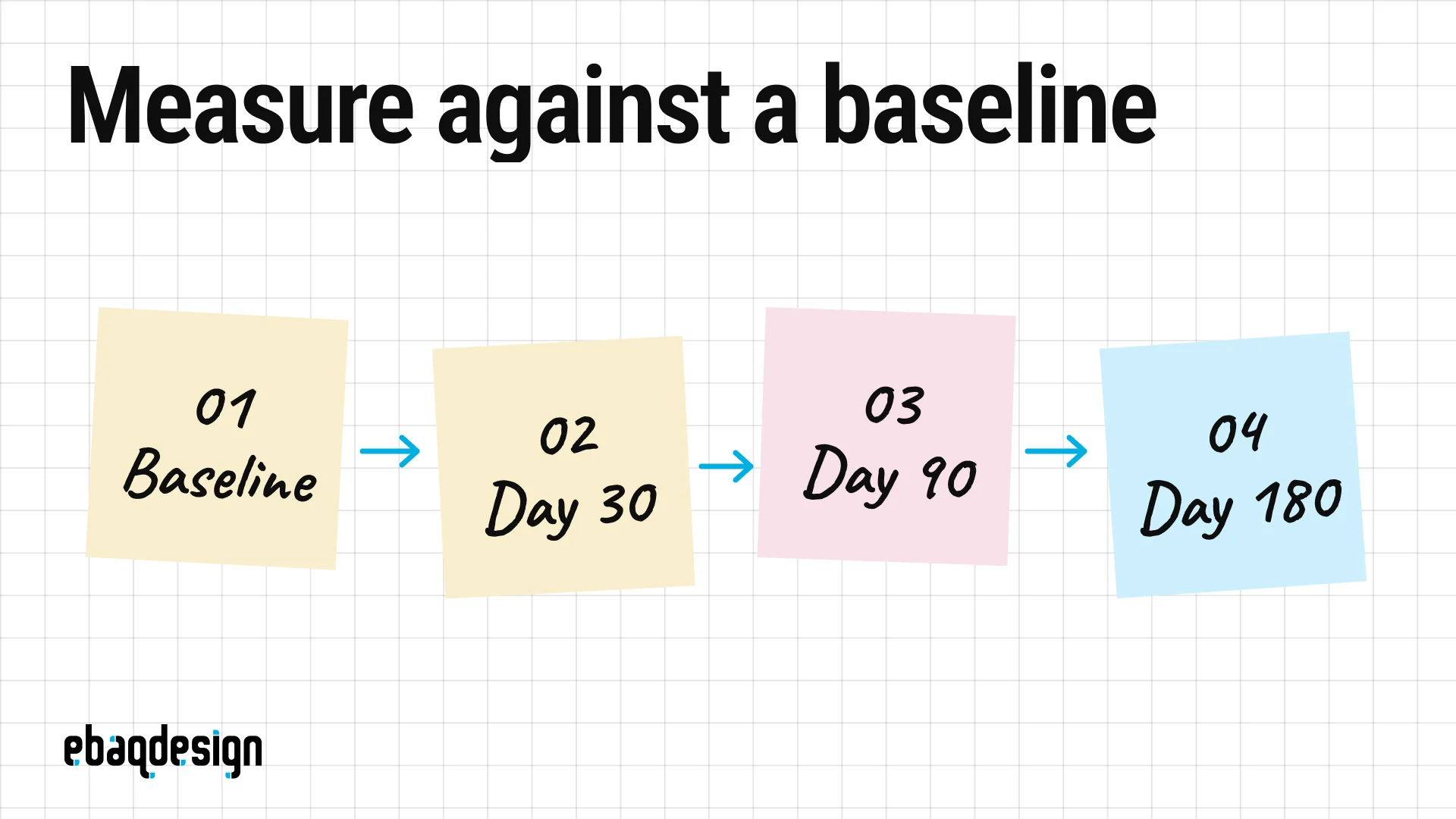
Write the numbers down before brand day, or you will have nothing to compare.
| Check | Where | Good sign |
|---|---|---|
| Calls and inquiries per week | Phone log or booking system | Steady or rising |
| Searches for your name | Google Search Console | Steady. After a rename, new name rising, old name falling. |
| Reviews: count, rating, wording | Google Business Profile | Same pace, and nobody asking if you are the same company |
| Repeat customers | Invoices or customer records | Top accounts still booking |
| Redirect errors | Google Search Console | None after the first weeks |
If callers still ask whether you are the same company at the 90-day check, repeat the announcement and keep the bridge line longer.
How much does rebranding after an acquisition cost?
Rebranding after an acquisition costs from $3,000 for my core identity package to $25,000 and up with a branding firm.
My logo cost guide breaks that market range down by who does the work.
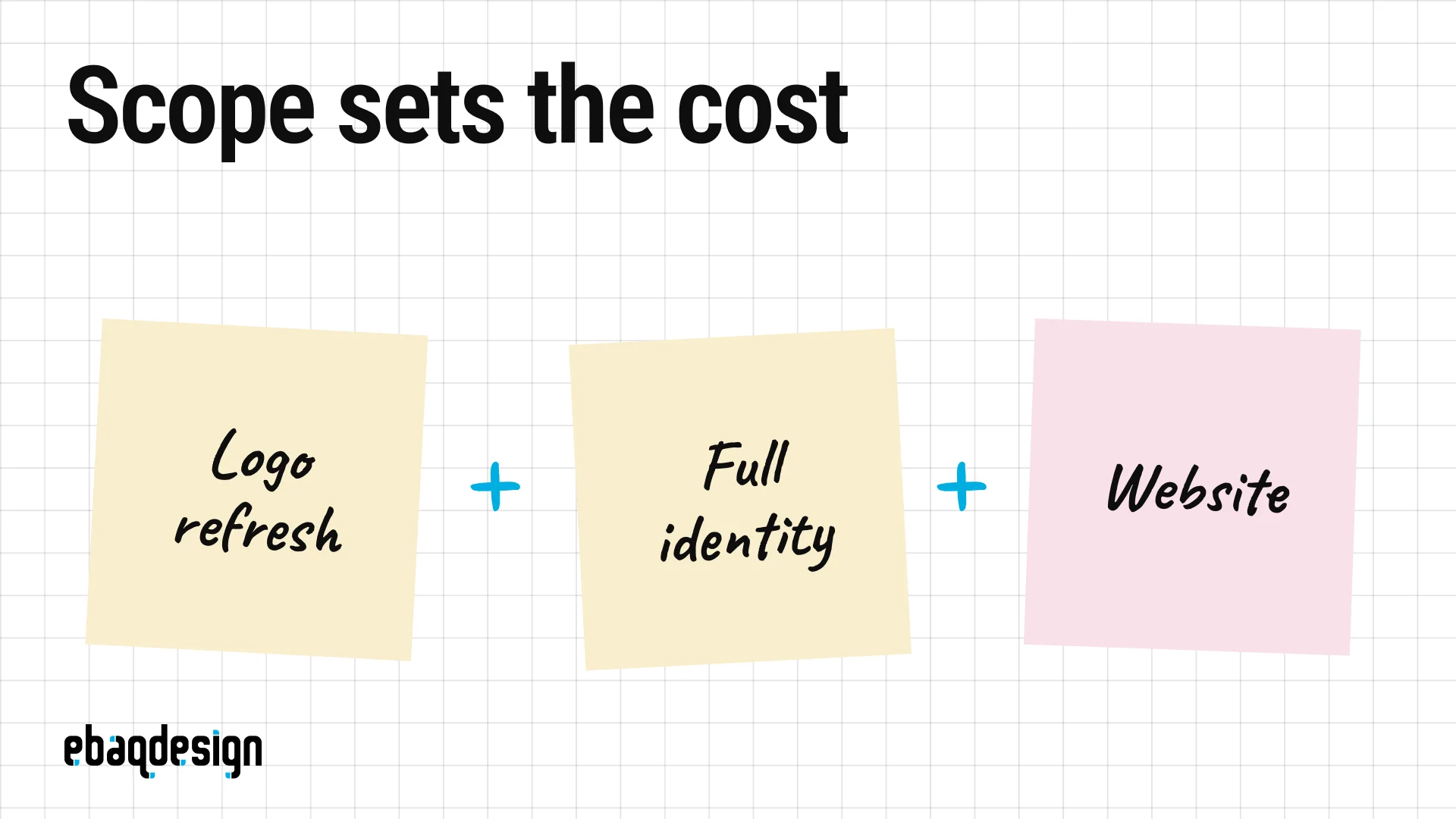
Website, signs and vehicles are extra, and scope sets the total, not the deal size.
My core package takes about one week, and my branding package guide lists what it includes.
A website is quoted on top, depending on page count, integrations, content and platform, and my web design process shows each stage.
| Scope | What you get | My price |
|---|---|---|
| Logo refresh | Tidied logo, colors, type and templates | Quoted per project |
| Full identity (core package) | Logo package, typography, color palette, one-page online style guide | $3,000, about one week |
| Identity plus website | The above plus site design and build | Quoted per project |
| Identity, website and applications | The above plus cards, vehicle graphics, signage, banners and motion | Quoted per project |
Airport Executive sits in the fourth tier, with brand strategy added.
Your budget has five lines: designer fee, website, vehicles, signs, and uniforms and print.
Get the sign-shop and vehicle quotes before you approve a design, because those bills come from local vendors, not the designer.
Clear Digital’s guide suggests holding back 20 to 30% for surprises.
What raises the cost, and what keeps it down
A new name, several businesses to unify, several locations and a rushed timeline push the budget up.
Keeping the name, domain and a recognized color, launching on one day, and replacing physical items as stock runs out keep it down.
Before you ask any designer for a quote, fill in the one-page brief below, because its touchpoint line sets the scope.
Send me that brief and book a call for a quote.
What should a rebrand brief to your designer include?
A rebrand brief tells your designer what is changing, what is already decided, what recognition to keep, which touchpoints matter most and who approves.
Copy the one-page version below.
One-page designer brief
What is changing in the business, and why now: [ ]
Decisions already fixed: [name stays / parent line required / none]
Decisions still open: [ ]
Recognition we must keep: [name, color, symbol]
Must a parent or sister brand appear, and whose guidelines control how: [ ]
Pages and physical items that matter most: [site, vehicles, signs]
Who approves, and what must be ready first, by when: [name], [item], [date]
Repeat buyers only, future acquisitions this identity must absorb or endorse: [how many a year]
Attach the one-page audit, photos of every logo, the seller’s logo files, the trademark status and any dates that cannot move.
If you were acquired, add the parent’s guidelines, the endorsement artwork and the approver’s name.
Expect guidelines and production-ready logo files at handover.
What if a larger company acquires your business?
If a larger company acquires your business, find out the end state and the date, prove what your brand is worth, and control the message.
The parent decides the brand’s future, not you.
Seven questions to ask the parent in week one
- Will our brand be absorbed, endorsed or kept separate?
- Is that the end state or step one?
- By what date?
- Who makes the final brand decision, and who approves our marketing until then?
- Whose guidelines govern our materials?
- What happens to our domain, social accounts, product names and customer logins?
- Who pays for the changeover, and what can we tell staff and customers today?
Get the answers in writing.
A “now part of” line ages badly when the parent’s name means nothing to your customers, and it is often step one of a slow absorption.
Your one-page audit is your evidence pack, and the customer email has wording for your side.
If the parent controls the announcement, ask to add one line on the brand, and never promise the name stays until the parent confirms it.
What an endorsement line looks like
An endorsement line comes in three weights: light, medium and heavy.
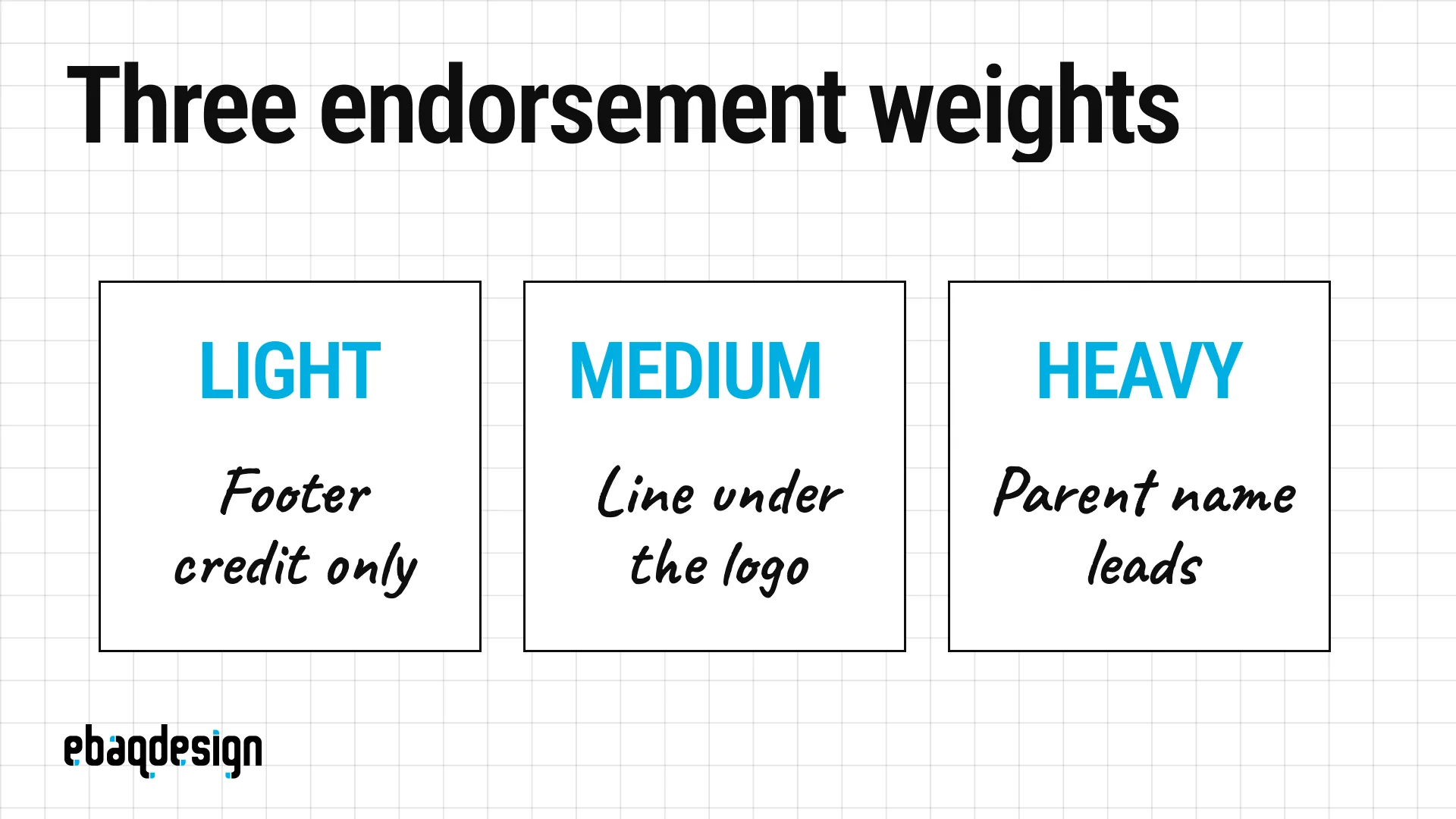
- Light: “[Name], a [Parent] company” in the footer and legal line only.
- Medium: “[Name] by [Parent]” under the logo, for when the parent adds trust.
- Heavy: the parent’s name leads, as in Google Fitbit, and it is often the last step before your name retires.
Google used “Fitbit by Google” from 2022, switched to “Google Fitbit” in 2024, and in May 2026 began turning the Fitbit app into the Google Health app.
If the parent’s name is unknown or unwelcome to your customers, propose the light version.
A lockup is the fixed arrangement of a logo and the line beside it.
Get the parent’s lockup artwork, clear-space rules, approver and review date into the brand guidelines.
If you are absorbed, plan the bridge
Agree on the bridge period in writing before anything changes.
- Use a dual name such as “[Name], now [Parent]” on the site header, signatures, invoices and phone greeting, with an end date.
- Agree who owns the redirect map when the parent’s web team runs the new site.
- Tell staff when email addresses, signatures, LinkedIn employer name and business cards change.
How should repeat buyers brand the companies they acquire?
If you buy several companies a year, score each local name against your own the same way every time, then absorb, endorse or keep it.
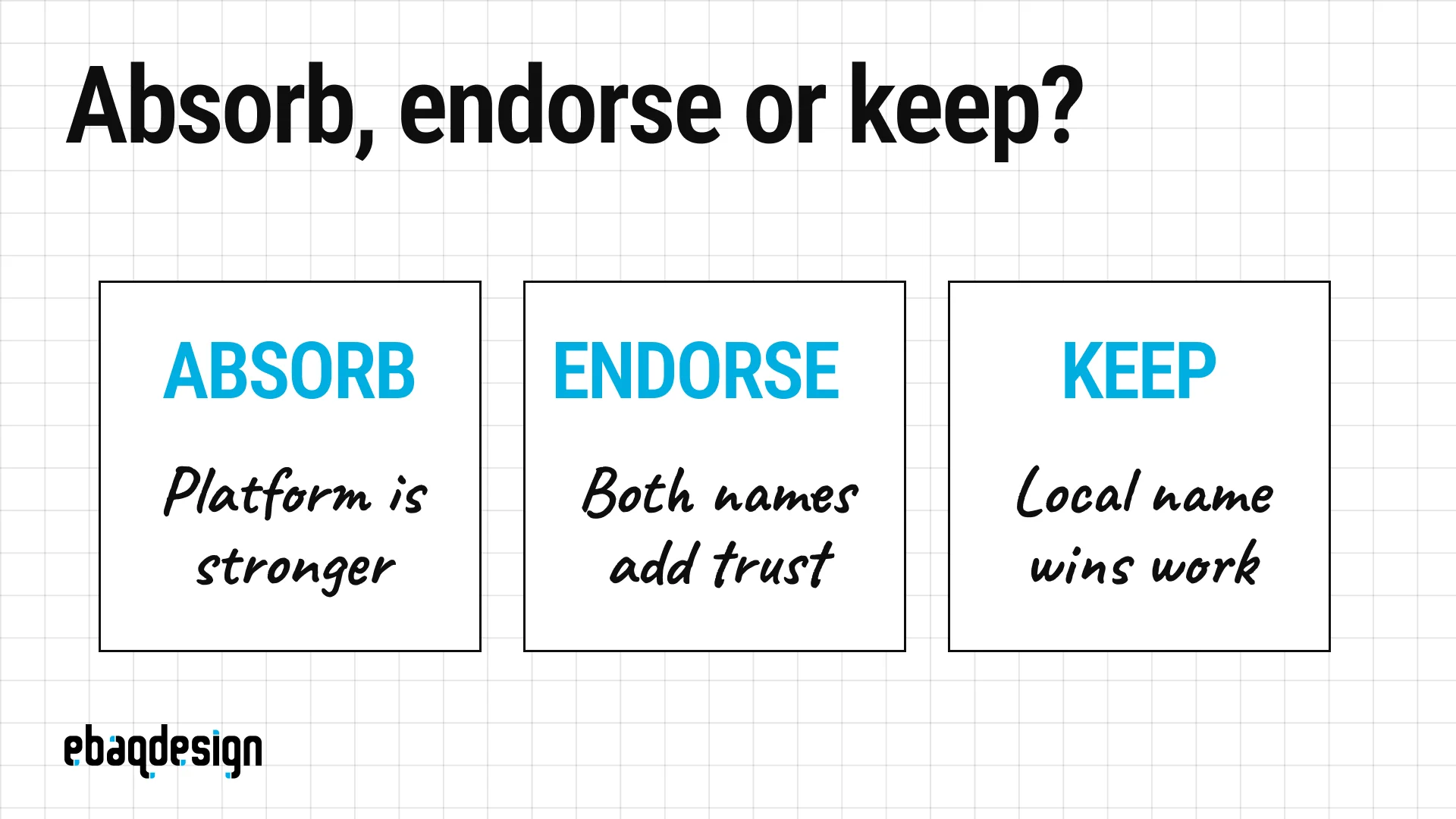
This scorecard is my rule of thumb, not data.
| Question | Keep or endorse | Absorb |
|---|---|---|
| Do callers ask for the business by name? | Most do | Few do |
| Do people search for the local name? | More than they search yours in that town | Hardly |
| Reviews against your nearest listing | More and better | Fewer or worse |
| Founder’s name on the door | Founder staying | Founder leaving |
| Do you already operate in that town? | No | Yes, your brands compete |
| Reputation | Clean | Complaints or legal baggage |
| Contracts, licenses or permits tied to the name | Many | None |
Mostly “absorb” answers mean absorb with a bridge period, and a split means endorse now and set a review date.
When two acquired brands overlap in one town, keep the one with more reviews, more searches and the more neutral name.
When the founder’s name is on the door
If the founder is staying, keep the name, add an endorsement line, and decide its future before they leave.
If the founder is leaving, run the name check, then introduce the successor team in the same message as the name change.
Highground, a home-services group built from nine acquisitions, folded its three regional brands into one new name.
Its talk, “Killing the founder’s name,” says the new name surprised some customers, and its rule now is to tell them at least three times.
It kept the old phone numbers live, so callers heard about the name change.
It reports close rates rising from 35% to 46% within five months.
It left the old websites up, and I would redirect them.
Build the system once
Build a master identity, an endorsement lockup, co-brand rules, vehicle and sign templates, and a site template with a page per location.
Each new acquisition then becomes an implementation job, not a new design project.
Common mistakes when rebranding after an acquisition
The most common mistakes are announcing the deal without a brand decision and changing everything at once.

All six mistakes below are about communication and sequencing, not the logo.
- Announcing the deal without the brand decision: put the brand promise in the day-one message.
- Making the sale the story: Airport Executive’s campaign lines sell the experience, not the change of hands.
- Adding the parent’s name too soon: lead with the benefit to customers, then the credit.
- Changing name, logo, pricing and systems at once: stage them, as Capital One’s Discover announcement did by keeping the brand and leaving accounts unchanged.
- Rolling out in random order: cars and building disagree for months, so go most visible first.
- Running two brands by accident: give each a role and a budget, or the acquired one drifts into a discount tier.
My worst rebrands and branding mistakes lists have more.
Rebranding after an acquisition: FAQ
These are common questions about rebranding after an acquisition, answered so each one stands on its own.
Do I have to change the name when I buy a business?
No, you do not have to change the name when you buy a business, and the name is usually part of what you paid for.
Change it when the founder’s surname is on the door and the founder is leaving, the name did not transfer, or several businesses merge.
Can you keep the same company name but change the logo after an acquisition?
Yes, you can keep the company name and change the logo, and in my view that suits most small businesses.
Airport Executive in business for more than 25 years, kept its name and got a new AE monogram, serif wordmark and website.
What happens to a brand after it is acquired?
A brand that is acquired gets absorbed, endorsed, kept separate, fused or replaced, which is a brand architecture decision.
Landor found that in 74% of deals the acquired brand was rebranded within seven years, so ask for the end state and the date in week one.
Why do companies rebrand after a merger or acquisition?
Companies rebrand after a merger or acquisition because one brand is stronger, two brands cost more than one, or the offer has changed.
Brand Finance lists seven commercial reasons, including legal necessity when the seller still uses the name.
How do you keep brand equity when rebranding after an acquisition?
Keep brand equity by auditing what customers recognize before changing anything, then holding one anchor element constant.
Keep the name where you can, and redirect every old web address for at least a year.
Tell customers what stays the same before you show them what changes.
What is the stronger horse strategy in M&A branding?
In M&A, the stronger horse strategy means the better-known brand carries on and the other is retired, as Finch Brands explains.
I call it absorb in this guide, and the risk is losing customers loyal to the retired name, so plan a bridge period.
What is the first 100 days rule in post-merger branding?
The first 100 days rule says the choices made in the 100 days after closing set the tone for the integration.
For the brand, audit in days 1 to 30, decide by day 60 and design in days 61 to 90.
Nothing new launches in the first 90 days unless one of the four reasons to move sooner applies.
How do you get a brand ready for an acquisition?
To make a brand acquisition-ready, make it easy to hand over: register the name, trademark and domain to the company, not to you personally.
Keep logo files, font licenses, guidelines and logins in one folder, because a tidy branding package is easier to value and keep.
Need help rebranding an acquired business?
Once the positioning is settled, my logo design and refinement service can help translate that direction into the visual identity.
A good rebrand makes the next version of the business clearer and keeps the recognition you paid for.
Deciding what to keep, what to change and what to do first is the work I do.
Book a call, or see the full Airport Executive case study first.
Ready to build a brand people remember?
Tell me what you’re launching, changing, or trying to make look better.